
The Unicorn: Scotland's National Animal
Contents
The unicorn is Scotland's national animal. It stands, chained, on the royal arms, sits on top of mercat crosses across the country, and once gave its name to a Scottish gold coin. But Scotland did not invent the unicorn: it is one of the oldest and most widely shared imaginary animals in the world. This card tests how Scotland came to adopt it, and how official its status really is.
TL;DR
- established The unicorn is not Scottish in origin. The Greek writer Ctesias described a one-horned wild ass in India around 400 BC, and the creature passed through Greek, Roman and Christian writing into medieval Europe.
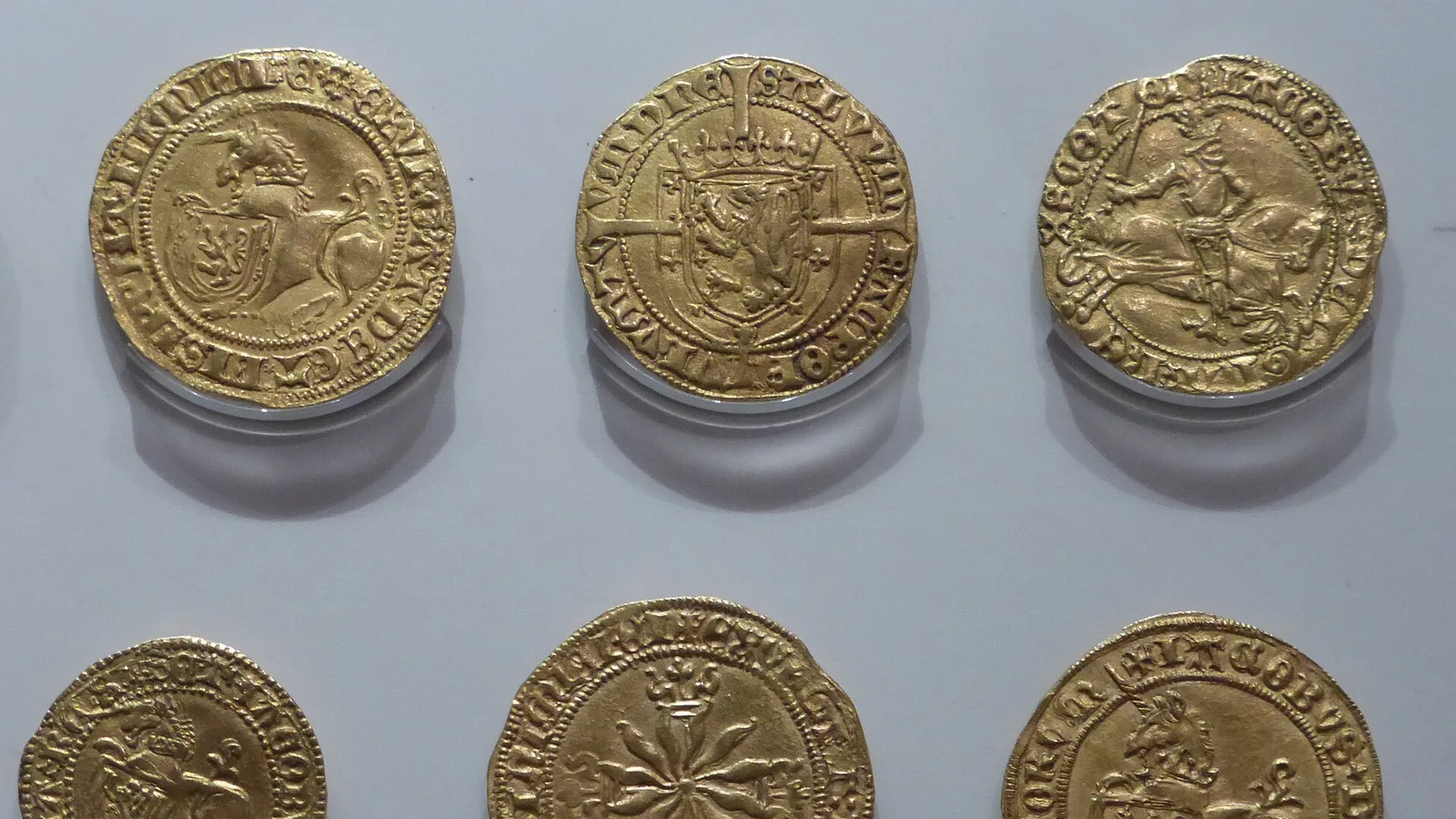
- established Scotland used the unicorn as a royal symbol by the 15th century. James III issued a gold coin called the unicorn, showing a crowned unicorn, from 1484.
- established Before 1603 the Scottish royal arms were supported by two unicorns. When James VI became King of England, one unicorn was replaced by the English lion, giving the lion and unicorn of the British royal arms.
- traditional Scottish heraldic unicorns are shown in gold chains. The usual explanation, that only a Scottish king could tame so wild a beast, is an interpretation; the original reason is not known.
- shared The unicorn is widely called Scotland's official national animal, including by the National Trust for Scotland, but no Act of Parliament or government order has been found that designates it.
Key Facts
- Earliest written description
- Ctesias, Indica, c.400 BC
- Scottish gold coin
- The unicorn, issued 1484–1525
- Value of the coin
- 18 shillings Scots, later 20 and 22
- Unicorn Pursuivant
- Scottish officer of arms; first known holder appointed 1426
- Royal arms before 1603
- Supported by two unicorns
- After 1603
- One unicorn replaced by the English lion
- Heraldic detail
- Gold chains
- Stirling Castle tapestries
- Seven recreated unicorn tapestries, 14 years' work, completed 2015
A Note on Claims and Evidence
Each major claim carries one of three labels. established means supported by primary records, official bodies or several independent reliable sources. shared means the core fact is sound but sources disagree on details, dates or interpretation. traditional means widely repeated but not traceable to a primary or independent source.
The heraldic and coin evidence is strong. The weak points are dates and meanings. Some sources say the unicorn entered Scottish heraldry in the 12th century; the documented evidence begins in the 15th. The meaning of the chains and the exact legal standing of "national animal" are not settled by any document found.
Timeline
Ctesias, a Greek physician at the Persian court, describes a one-horned wild ass in India.
Aristotle accepts the single-horned "Indian ass".
Pliny the Elder describes the monoceros, with elephant's feet and a boar's tail.
Greek translators of the Old Testament render a Hebrew word for wild ox as "one-horned"; the unicorn enters Christian symbolism as a figure of Christ.
The first known Unicorn Pursuivant, an officer of arms, is appointed in Scotland.
James III issues the gold unicorn coin.
The unicorn coin ends; it is replaced under James V by the gold crown.
Two unicorns support the Scottish royal arms.
The Union of the Crowns; the English lion replaces one unicorn on the royal arms.
The last of seven recreated unicorn tapestries is unveiled at Stirling Castle.
Details
An ancient, international creature
established The unicorn is far older than Scotland. Around 400 BC Ctesias, a Greek physician at the Persian court, described a one-horned wild ass in India, possibly a garbled account of the Indian rhinoceros. Aristotle accepted the single-horned "Indian ass", and in the 1st century AD Pliny the Elder described the monoceros with elephant's feet and a boar's tail. Seals from the Indus Valley show an animal some scholars call a unicorn, though many historians think it is a two-horned animal drawn in profile.
established The unicorn reached the Bible by translation. Greek translators of the Old Testament rendered a Hebrew word for a wild ox as monoceros, "one-horned", and so "unicorn" appears in some English Bibles, including the King James Version. Early Christian writers used the unicorn as a symbol of Christ, and medieval bestiaries spread it across Europe. Traders sold narwhal tusks as unicorn horns for large sums.
The unicorn in Scotland
established By the 15th century the unicorn was a Scottish royal symbol. A Scottish officer of arms, the Unicorn Pursuivant, is first recorded with John Fraser's appointment in 1426. In 1484 James III issued a gold coin called the unicorn, showing a crowned unicorn; it was worth 18 shillings Scots and was struck until 1525.
shared Two unicorns supported the Scottish royal arms by the 16th century. The National Trust for Scotland dates the unicorn's introduction to the royal coat of arms to about the mid-1500s; other accounts claim it goes back to William I in the 12th century, but that early date is not documented.
The lion and the unicorn
established In 1603 James VI of Scotland also became James I of England. To show the union of the two crowns, one of the Scottish unicorns on the royal arms was replaced by the English lion. The lion and the unicorn have supported the royal arms ever since.
Why is the unicorn chained?
traditional Scottish heraldic unicorns are shown with gold chains. The usual explanation is that the unicorn was believed to be untameable, and that only the King of Scots was strong enough to tame it. The National Trust for Scotland notes that the real reason is not known for sure.
Is the unicorn officially Scotland's national animal?
shared The unicorn is universally described as Scotland's national animal, and the National Trust for Scotland says it "really is the official national animal of Scotland". But no Act of Parliament, government order or other formal designation has been found. Its official role is heraldic: as a supporter of the royal arms and a royal badge. Its national status rests on long custom.
Where to see unicorns
established Unicorns top the mercat crosses of many Scottish towns, including Edinburgh, Culross, Prestonpans, Dunfermline and Falkland. HMS Unicorn, one of the oldest warships afloat, has a unicorn figurehead and is preserved in Dundee. At Stirling Castle, seven tapestries based on the late medieval Unicorn Tapestries in the Metropolitan Museum of Art were woven over 14 years by West Dean Tapestry Studio for Historic Scotland, recreating the palace interiors of the 1540s. James V's inventories record that he owned more than 100 tapestries.
Did You Know?
- The earliest written unicorn, around 400 BC, was a one-horned wild ass from India.
- Pliny the Elder gave the unicorn elephant's feet and a boar's tail.
- The "unicorn" in the King James Bible comes from a translation of a word for wild ox.
- Narwhal tusks were sold in the Middle Ages as unicorn horns.
- Scotland had a gold coin called the unicorn from 1484.
- Before 1603 the Scottish royal arms had two unicorns.
- The Stirling Castle unicorn tapestries took 14 years to weave.
- Unicorns top mercat crosses in towns across Scotland.
FAQ
1Why is the unicorn Scotland's national animal?
It was a royal symbol of the Scottish kings from at least the 15th century, and long custom made it the national animal.
2Did Scotland invent the unicorn?
No. It was described by Greek writers around 400 BC.
3When did Scotland adopt the unicorn?
The documented evidence begins in the 15th century, including James III's unicorn coin of 1484.
4Why are Scottish unicorns chained?
Traditionally, to show that only the King of Scots could tame such a wild animal. The real reason is not known.
5What happened to the unicorns in 1603?
When James VI became King of England, one unicorn on the royal arms was replaced by the English lion.
6Is the unicorn's status official?
It is widely called official, but no formal legal designation has been found. Its official role is heraldic.
7Is the unicorn in the Bible?
Only through translation. The Hebrew word meant a wild ox.
8What was the unicorn coin?
A Scottish gold coin issued from 1484 to 1525, showing a crowned unicorn.
9Where can I see unicorns in Scotland?
On mercat crosses, on the royal arms, at Stirling Castle, and on HMS Unicorn in Dundee.
10What is the Unicorn Pursuivant?
A Scottish officer of arms in the Court of the Lord Lyon, first recorded in 1426.
Sources and Further Reading
Primary/Institutional
- National Trust for Scotland, "The unicorn: Scotland's national animal" (nts.org.uk)
- West Dean College, "Recreating 15th-century textile art: final handwoven tapestry unveiled at Stirling Castle", 2015 (westdean.ac.uk)
Scholarly/Critical
- World History Encyclopedia, "The Unicorn Myth" (worldhistory.org)
General
- Wikipedia, "Unicorn (coin)" (en.wikipedia.org)
- Wikipedia, "Unicorn Pursuivant" (en.wikipedia.org)
Caveats: Myths and Disputed Claims
- Do not say Scotland invented the unicorn.
- Do not date the unicorn in Scottish heraldry to the 12th century as fact.
- Do not present the "only a Scottish king could tame it" explanation of the chains as documented.
- Do not say a law makes the unicorn Scotland's national animal unless a source is found.
- Do not say the Bible originally described a unicorn; the word comes from translation.
Card 030 · Traditions