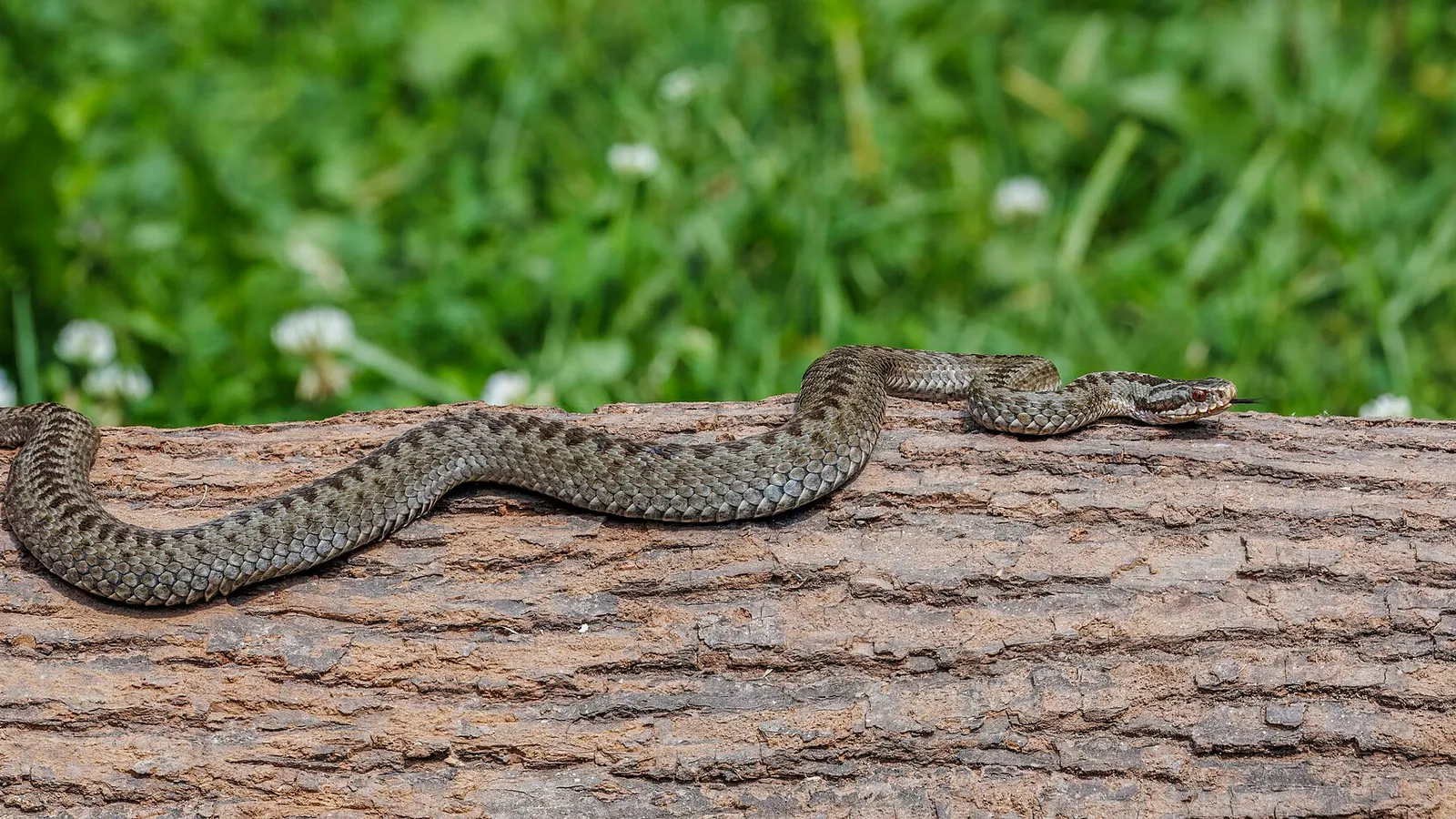

Adder (Vipera berus)
Contents
TL;DR
- established The adder is Scotland's only native venomous snake, but it is statistically far less dangerous to humans than popularly believed: only 14 deaths have been officially recorded from adder bites across the entire UK over 145 years, with the last fatality in 1975, making a person statistically more likely to be killed by a wasp or bee sting than an adder bite — this article states this directly rather than allowing the species' venomous status to overstate its real threat to people.
- established A 2022–24 NatureScot survey, replicating an original 1994 study, found occupied 10km squares recording adders had fallen from 567 before 1994 to 364 from 1994 onwards — a 36% contraction in reported distribution across Scotland, with the species now absent from the Central Valley, Outer Hebrides, Northern Isles, and much of the upland region between Glasgow and Inverness.
- disputed NatureScot's own Amphibians and Reptiles Advisor has stated plainly that researchers have not been able to draw robust conclusions about changes in adder population size, even though the documented distribution contraction is itself "quite alarming" — this article states this distinction directly, since a shrinking recorded range and a confirmed population decline are not the same claim, and the underlying data supports the former with more certainty than the latter.
- established A 2019 University of Reading study found that adders frequently disturbed during their vulnerable spring emergence period experience stress severe enough to prevent feeding for prolonged periods, sometimes stopping them eating altogether, directly threatening survival during a season when regular feeding and skin-shedding are essential — a specific, documented physiological mechanism this article names directly rather than a vague reference to "disturbance."
- established That same research warned adders could all but disappear from the UK countryside by 2032 if disturbance during this critical period continues at current levels, alongside continuing habitat loss and fragmentation isolating remaining populations into disconnected pockets — a stark, specific projection this article states plainly given its basis in dedicated peer-reviewed research.
Key Facts
- Scientific name
- Vipera berus
- Category
- Reptiles
- Status
- Scotland's only native venomous snake
- UK adder-bite deaths recorded (145 years)
- 14 (last in 1975)
- Scottish distribution contraction (pre-1994 to 1994+)
- 36% (567 to 364 occupied 10km squares)
- Projected UK disappearance risk
- By 2032, if disturbance continues (University of Reading, 2019)
Scottish Impact Index (SI Score)
- Scottish Significance
- 8/10
- Ecological Persistence
- 8/10
- Ecological Importance
- 8/10
- Biological Distinctiveness
- 8/10
- Conservation Significance
- 7/10
- Recognition
- 9/10
48/60
Ranked =29th of 42 in Wildlife
A Note on Claims and Evidence
Bite fatality statistics are drawn from historical UK medical and toxicological records. Scottish distribution figures are drawn from NatureScot's own 2022–24 survey, directly replicating a 1994 baseline study. The stress-disturbance mechanism and 2032 projection are drawn from peer-reviewed University of Reading research. This article treats the distribution contraction as Established while treating the inference from that contraction to an equivalent population decline as genuinely Disputed, reflecting NatureScot's own stated acknowledgement of this specific evidential limitation.
Timeline
Adders are present across much of mainland Scotland, Scotland's only native venomous snake species.
Only 14 deaths are officially recorded from adder bites across the entire UK, with the most recent fatality occurring in 1975.
Adders are recorded across 567 occupied 10km squares in Scotland.
A baseline national distribution survey establishes the reference point against which later Scottish range change is measured.
A University of Reading study documents stress-driven feeding disruption in disturbed adders during spring emergence, and projects the species could all but disappear from the UK countryside by 2032 if current disturbance levels continue.
NatureScot conducts a replication survey using questionnaires, re-surveys of original 1994 study sites, and historical records, finding occupied 10km squares had fallen to 364 — a 36% contraction — with adders now absent from the Central Valley, Outer Hebrides, Northern Isles, and much of the Glasgow-to-Inverness uplands.
NatureScot states the documented distribution contraction is alarming while explicitly acknowledging that robust conclusions about underlying population size change cannot yet be drawn from current data.
Details
A venomous reputation stated honestly against the real risk
This article names the adder's venomous status directly while immediately correcting the popular overestimate of danger it tends to produce: only 14 deaths have been officially recorded from adder bites across the entire UK over 145 years, the last in 1975, making death by wasp or bee sting statistically more likely than death by adder bite. This article states this comparison directly because an honest account of the species requires correcting the disproportionate fear its venomous status often generates, without denying that bites do occur and occasionally cause serious illness, particularly in vulnerable groups such as young children, elderly people, and those with pre-existing health conditions.
A distribution contraction stated with its real, measured scale
This article presents the Scottish adder's documented range change with its actual figures: occupied 10km squares fell from 567 before 1994 to 364 from 1994 onwards, a 36% contraction, with the species now absent from several specifically named regions including the Central Valley, Outer Hebrides, Northern Isles, and much of the Glasgow-to-Inverness uplands. This article states this figure directly because it represents a genuinely measured, substantial change in the species' recorded Scottish distribution over three decades.
A distinction between range contraction and population decline, stated honestly
This article names directly a specific evidential limitation NatureScot's own researchers have acknowledged: while the documented contraction in recorded distribution is real and described as "quite alarming," researchers have explicitly stated they cannot yet draw robust conclusions about underlying changes in overall population size from this data alone. This article treats this distinction as genuinely important because a shrinking recorded range could reflect fewer surveyors looking in certain areas, genuine local extinction, or population consolidation into remaining suitable habitat — and conflating "range contraction" with "population decline" without this caveat would overstate what the current evidence precisely establishes.
A specific physiological mechanism, not a vague reference to disturbance
This article names the documented stress mechanism behind disturbance-related adder decline with real specificity: frequent disturbance during the species' vulnerable spring emergence period can prevent feeding for prolonged periods, sometimes stopping adders eating altogether, directly threatening survival during a season when regular feeding and skin-shedding are biologically essential. This article states this mechanism directly because it clarifies precisely how human disturbance — dog walking, trampling, habitat visitor pressure — translates into genuine physiological harm, rather than remaining an abstract concern.
A stark projection, stated with its documented basis
This article presents the 2019 University of Reading projection that adders could all but disappear from the UK countryside by 2032 directly and without softening, because it derives from dedicated, published peer-reviewed research specifically modelling the combined effects of disturbance-driven stress and ongoing habitat fragmentation. This article names this projection plainly given its documented research basis, while this article's broader presentation of the range-versus-population distinction above means this specific projection should be read as a modelled risk under continued current pressures, not a guaranteed inevitability.
Did You Know?
- The adder is Scotland's only native venomous snake, but is statistically far less dangerous to humans than popularly believed.
- Only 14 deaths have been officially recorded from adder bites across the entire UK over 145 years, with the last in 1975.
- You are statistically more likely to be killed by a wasp or bee sting than by an adder bite.
- Scotland's recorded adder distribution contracted by 36% between a pre-1994 baseline and a 2022–24 resurvey.
- Adders are now absent from the Central Valley, Outer Hebrides, Northern Isles, and much of the uplands between Glasgow and Inverness.
- Researchers have found that frequent human disturbance during spring can cause stress severe enough to stop adders feeding, threatening their survival.
- A 2019 study projected adders could all but disappear from the UK countryside by 2032 if disturbance levels continue.
FAQ
1Is the adder dangerous to humans?
Less than commonly believed — only 14 deaths have been recorded from adder bites across the UK in 145 years, with the last in 1975, making wasp or bee stings statistically more dangerous.
2Are adders declining in Scotland?
Their recorded distribution has contracted by 36% since before 1994 — but NatureScot states it cannot yet draw robust conclusions about whether the underlying population has declined by the same degree.
3Where have adders disappeared from in Scotland?
The Central Valley, Outer Hebrides, Northern Isles, and much of the uplands between Glasgow and Inverness.
4Why does human disturbance harm adders?
Frequent disturbance during their vulnerable spring emergence period can cause stress severe enough to stop them feeding for prolonged periods, threatening survival during a biologically critical season.
5Could adders disappear from the UK entirely?
A 2019 study projected they could all but disappear from the UK countryside by 2032 if current disturbance levels continue, though this is a modelled projection based on continued current pressures, not a certainty.
6Are adder bites dangerous to dogs?
Yes — around 100 adder bites are reported in dogs annually in the UK, and veterinary attention is recommended.
7What should I do if I see an adder?
Observe from a distance and avoid disturbing it, particularly during spring, when disturbance-related stress poses a genuine documented survival risk.
8Is habitat loss also a factor in decline?
Yes — habitat loss and fragmentation are identified as isolating remaining adder populations into disconnected pockets across Scotland.
Sources and Further Reading
Caveats: Myths and Disputed Claims
- Correction: The adder's popular reputation as highly dangerous to humans is not well supported by the fatality record; only 14 UK deaths have been recorded in 145 years, and wasp or bee stings are statistically more dangerous.
- Clarification: This article does not equate the documented 36% distribution contraction with a confirmed equivalent population decline; NatureScot's own researchers state robust population-size conclusions cannot yet be drawn from current data.
Card 035 · Wildlife