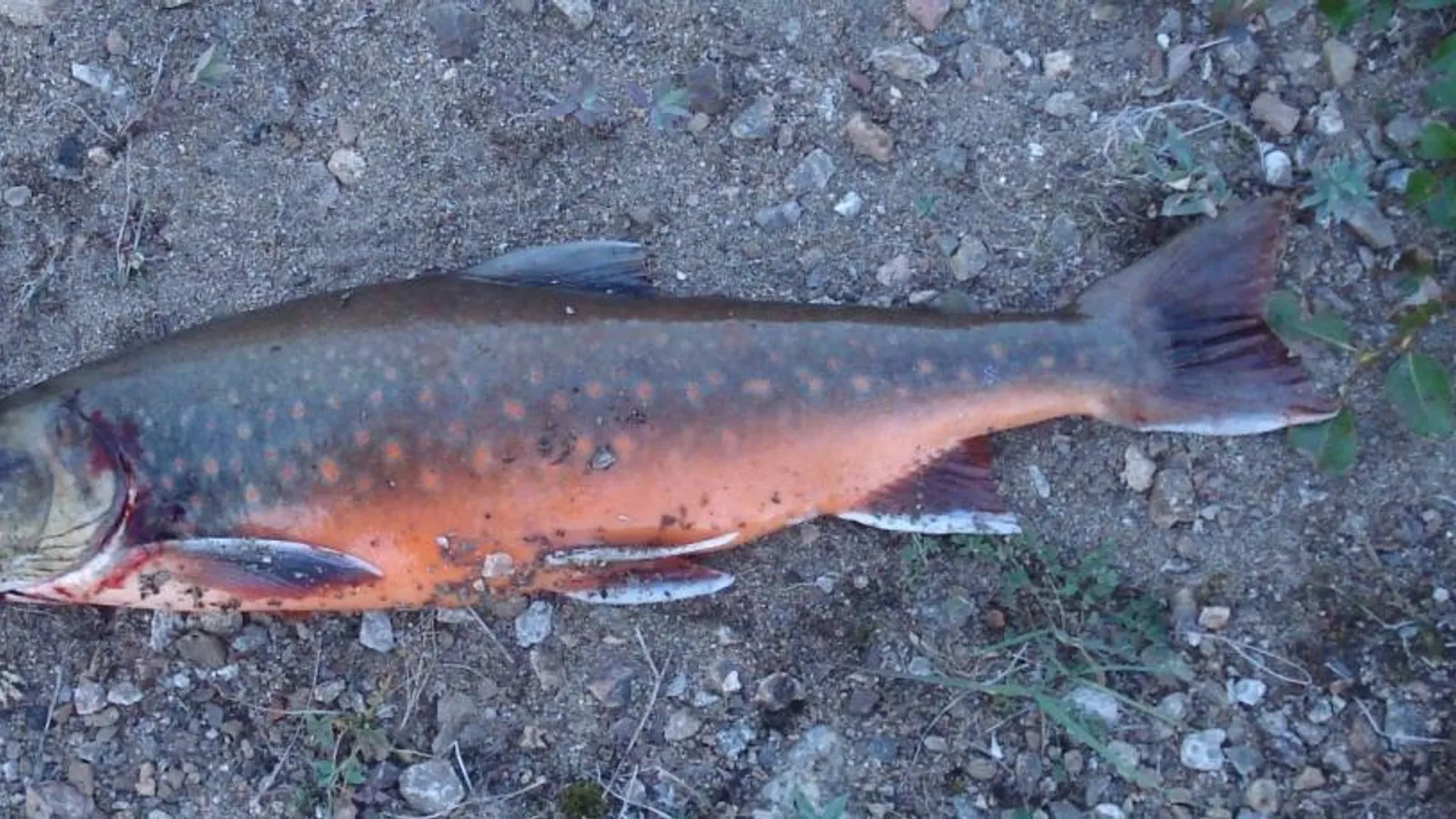

Arctic Charr (Salvelinus alpinus)
Contents
TL;DR
- established Arctic charr were the first freshwater fish to recolonise Scotland after the last Ice Age, and Scotland remains a genuine stronghold for the species within the British Isles today, with around 258 lochs holding charr populations — a specific, quantified national significance this article states directly rather than a vague claim of importance.
- established At least five distinct Scottish charr populations in the south and central parts of the country have already become locally extinct due to water acidification, a documented historical loss this article states plainly rather than presenting the species' Scottish status as uniformly secure.
- established Across the UK, fewer than 300 known charr waterbodies exist, and only a small fraction benefit from formal protection, with significant gaps in long-term monitoring data on abundance, recruitment, and genetic diversity — a documented conservation shortfall this article names directly.
- established The 2025 Arctic Charr Symposium identified rising water temperature as the most significant current threat to the species, reducing survival rates for eggs and early life stages, compounded by habitat degradation from nutrient enrichment and siltation, predation pressure from invasive fish species, and hydrological disruption from dam and hydroelectric operations.
- disputed Delegates at the same symposium warned that the current six-year population monitoring cycle is inadequate given the pace of environmental change, and that delayed conservation responses risk irreversible population losses — a specific, urgent concern this article presents as the documented expert view driving calls for more frequent monitoring and coordinated funding, while noting the precise scale and timing of risk across individual populations remains genuinely difficult to quantify.
Key Facts
- Scientific name
- Salvelinus alpinus
- Category
- Fish
- Status in Scotland
- Ice Age relict; first freshwater fish to recolonise after glaciation
- Scottish lochs with charr populations
- Approximately 258
- Documented extinctions (south/central Scotland)
- At least 5, due to acidification
- UK waterbodies with charr
- Fewer than 300
- Primary current threat
- Rising water temperature (climate change)
- Formal protection
- 5 SSSIs and multiple SACs in Scotland; only a small fraction of UK sites protected overall
Scottish Impact Index (SI Score)
- Scottish Significance
- 8/10
- Ecological Persistence
- 8/10
- Ecological Importance
- 7/10
- Biological Distinctiveness
- 9/10
- Conservation Significance
- 8/10
- Recognition
- 7/10
47/60
Ranked #34 of 42 in Wildlife
A Note on Claims and Evidence
Scotland's stronghold status, loch population numbers, and documented historical extinctions are drawn from NatureScot's own published assessment. UK-wide protection gaps, monitoring inadequacy, and the identified primary threats are drawn from the 2025 Arctic Charr Symposium's published findings. The urgency and adequacy of the current monitoring cycle is treated as the documented expert consensus from that symposium, while this article notes that quantifying precise population-level risk and timing remains a genuine, ongoing scientific challenge.
Timeline
Arctic charr become the first freshwater fish species to recolonise Scotland following the retreat of the last Ice Age, establishing populations across numerous lochs as the landscape opened up.
At least five distinct charr populations in south and central Scotland become extinct due to water acidification, a documented, specific historical loss.
Scotland is recognised as hosting around 258 charr-populated lochs, a genuine stronghold for the species within the British Isles, while across the UK as a whole fewer than 300 waterbodies are known to hold charr populations.
Protection is formally established across five Sites of Special Scientific Interest and multiple Special Areas of Conservation in Scotland, though only a small fraction of all UK charr sites receive formal protection.
The Arctic Charr Symposium identifies rising water temperature as the most significant current threat to the species, alongside habitat degradation, invasive predator pressure, and hydrological disruption, and calls for more frequent population monitoring than the current six-year cycle, warning that delayed responses risk irreversible population losses.
Details
An ancient Scottish coloniser, stated with its real significance
This article presents the Arctic charr's status in Scotland with its actual documented distinction: it was the first freshwater fish species to recolonise Scottish waters after the last Ice Age, and the country remains host to around 258 charr-populated lochs today, a genuine stronghold for the species within the British Isles. This article states this precise figure because it conveys Scotland's real, measurable national and international significance to the species' survival, not a loosely asserted claim of importance.
A history that includes real, documented loss
This article does not present Scotland's Arctic charr population as uniformly secure: at least five distinct populations in the south and central parts of the country have already become extinct due to water acidification, a specific, documented historical loss this article states directly. This detail matters because it demonstrates that the species' Scottish stronghold status, while genuine, has not been unbroken or guaranteed across all areas and time periods.
A protection gap named specifically
This article states plainly the documented shortfall in Arctic charr conservation across the UK: of fewer than 300 known charr waterbodies, only a small fraction benefit from formal legal protection, and significant gaps remain in long-term monitoring data covering abundance, recruitment, and genetic diversity. This article names this gap directly, rather than assuming the existence of five Scottish SSSIs and multiple Special Areas of Conservation means the species' overall UK protection picture is adequate.
A specific, named primary threat — not a vague climate reference
This article states the 2025 Arctic Charr Symposium's identified primary threat with real specificity: rising water temperature, which reduces survival rates for eggs and early life stages, rather than a general invocation of "climate change." This article also names the compounding pressures identified alongside it — nutrient enrichment and siltation degrading spawning habitat and lowering oxygen levels, invasive fish species affecting recruitment through predation, and dam and hydroelectric operations disrupting spawning success through altered water flow — because these specific, documented mechanisms clarify how the overall threat to the species actually operates.
An urgent expert warning, stated honestly
This article presents the symposium delegates' warning that the current six-year population monitoring cycle is inadequate given the pace of environmental change, and that delayed conservation responses risk irreversible losses, as the documented expert position driving current calls for reform — while noting honestly that precisely quantifying the scale and timing of risk facing individual Scottish charr populations remains a genuine, ongoing scientific and data challenge, reflecting the gaps in long-term monitoring data the symposium itself identified.
Did You Know?
- Arctic charr were the first freshwater fish to recolonise Scotland after the last Ice Age.
- Scotland hosts around 258 charr-populated lochs, a genuine stronghold for the species in the British Isles.
- At least five Scottish charr populations have already become extinct due to water acidification.
- Fewer than 300 charr waterbodies are known across the entire UK, and only a small fraction receive formal protection.
- Rising water temperature was identified by the 2025 Arctic Charr Symposium as the species' most significant current threat.
- Invasive fish species, habitat degradation, and hydroelectric dam operations all compound the climate threat to charr populations.
- Experts have warned the current six-year population monitoring cycle is too infrequent given the pace of environmental change.
FAQ
1How long have Arctic charr been in Scotland?
Since shortly after the last Ice Age — they were the first freshwater fish species to recolonise Scottish waters as glaciers retreated.
2How important is Scotland to the species?
Very — Scotland hosts around 258 charr-populated lochs, a genuine stronghold within the British Isles.
3Have Scottish charr populations ever gone extinct?
Yes — at least five populations in south and central Scotland have been lost to water acidification.
4Are Arctic charr well protected?
Only partially — while Scotland has five SSSIs and multiple SACs for the species, only a small fraction of all UK charr sites receive formal protection, and monitoring data gaps remain significant.
5What is the biggest current threat to Arctic charr?
Rising water temperature, which reduces survival rates for eggs and early life stages, according to the 2025 Arctic Charr Symposium.
6What other threats affect the species?
Habitat degradation from nutrient enrichment and siltation, predation from invasive fish species, and hydrological disruption from dam and hydroelectric operations.
7Is current population monitoring adequate?
Experts have warned it is not — the current six-year monitoring cycle is considered too infrequent given the pace of environmental change.
8Could population losses still be prevented?
Possibly, but delegates have warned that delayed conservation responses risk irreversible losses, underscoring the urgency experts attach to the situation.
Sources and Further Reading
Primary/Institutional
- Arctic charr — NatureScot
- Arctic Charr Symposium 2025 highlights urgency for conservation action — Freshwater Biological Association
Scholarly/Critical
- The Status of Arctic charr Salvelinus alpinus in Britain and Ireland — Maitland, Ecology of Freshwater Fish (Wiley)
- From anecdotes to evidence: Environmental DNA detection of Arctic charr at the southern limit of its circumpolar range — Journal of Fish Biology
General
Caveats: Myths and Disputed Claims
- Clarification: This article does not claim a precise, confirmed timeline or scale for future Arctic charr population losses; experts warn of urgent risk, but significant monitoring data gaps mean the precise picture for many individual populations remains genuinely uncertain.
- Note: This article does not present Scotland's charr stronghold status as evidence of uniform security; documented historical extinctions in south and central Scotland show the picture has included real, localised losses.
Card 018 · Wildlife