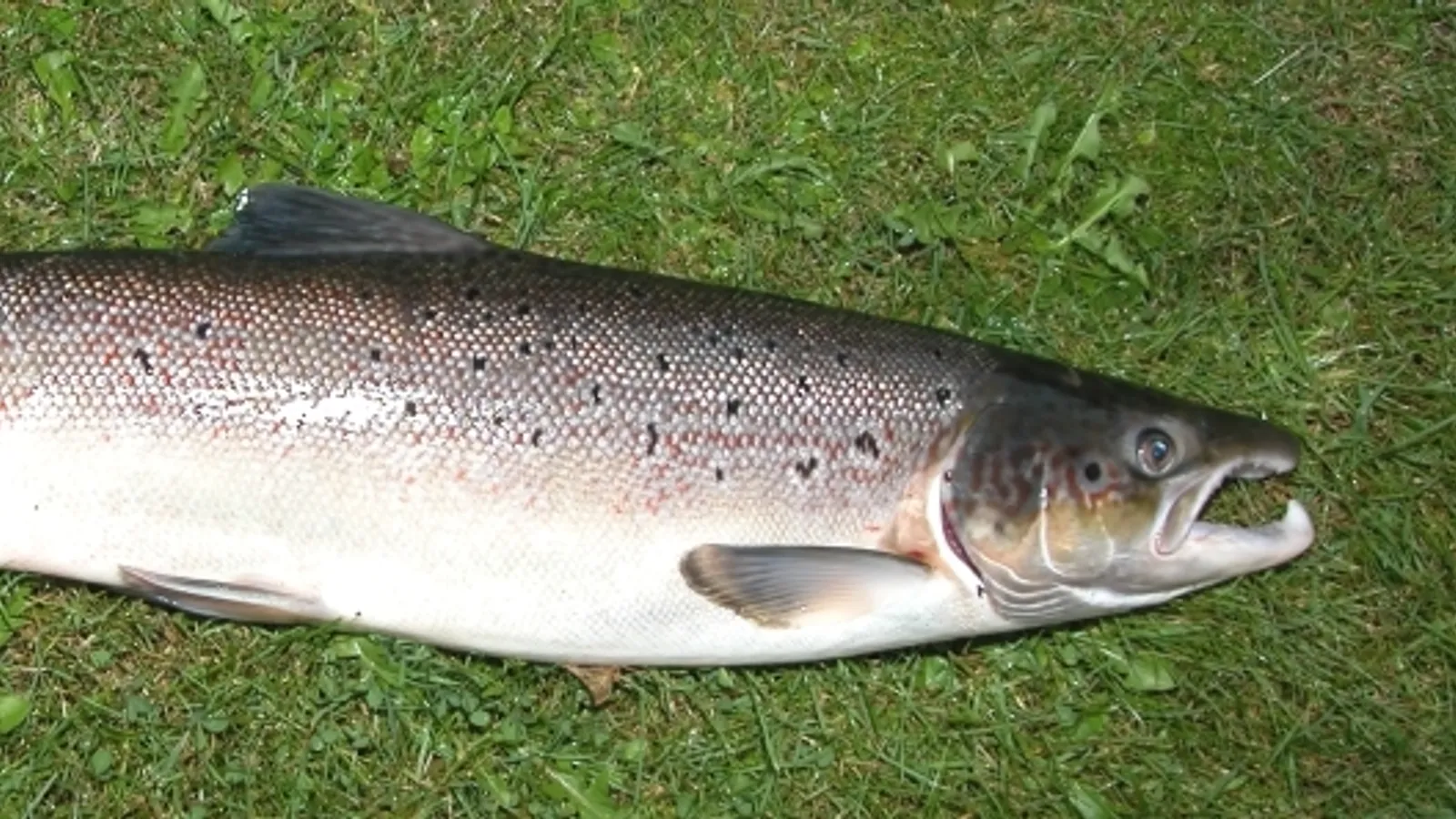

Atlantic Salmon (Salmo salar)
Contents
TL;DR
- established Scotland's 2025 wild salmon rod catch fell to 28,020 fish — the lowest total since records began in 1952, a 41% fall from 2024's catch of 47,618, and a collapse from the 2010 peak of 111,405 — this article states the species' decline with its real, severe, precisely documented scale rather than a vague sense of fewer fish.
- established Scotland's Chief Scientific Adviser (Marine) has confirmed that sea lice originating from salmon farms have the potential to cause significant impacts on wild salmon populations, explicitly rejecting industry claims that the underlying science had been misrepresented — a specific, documented official scientific finding this article states directly.
- established Peer-reviewed modelling has found that sea lice infestation levels as low as 0.24 lice per gram of fish body weight cause near-certain mortality in migrating young salmon, and that lice originating from salmon farms can disperse tens of kilometres, creating overlapping exposure zones across multiple farm sites — a specific, quantified biological mechanism this article states precisely rather than describing sea lice impact in general terms.
- disputed The Scottish Government attributes the overall wild salmon decline to multiple factors, citing climate change as having a major impact, while anglers' organisations and wild fish conservation groups point more heavily to sea lice from fish farms and genetic introgression from escaped farmed salmon — a genuine, unresolved disagreement over the relative weight of these causes this article presents from both documented positions rather than adjudicating.
- established Scotland currently lacks an operational regulatory system to assess the cumulative sea lice impact of multiple salmon farms across a shared region, a specific regulatory gap identified directly by the Chief Scientific Adviser's own review as needing remedy — this article states this gap plainly rather than implying current regulation already accounts for cumulative effects.
Key Facts
- Scientific name
- Salmo salar
- Category
- Fish
- 2025 rod catch (Scotland)
- 28,020 — lowest since records began in 1952
- Fall from 2024
- 41%
- Fall from 2010 peak (111,405)
- Over 70%
- Lethal sea lice threshold (juvenile salmon)
- ~0.24 lice per gram of body weight
- Key disputed factor
- Relative weight of climate change vs. salmon farming impacts
Scottish Impact Index (SI Score)
- Scottish Significance
- 10/10
- Ecological Persistence
- 6/10
- Ecological Importance
- 10/10
- Biological Distinctiveness
- 8/10
- Conservation Significance
- 10/10
- Recognition
- 10/10
54/60
Ranked =7th of 42 in Wildlife
A Note on Claims and Evidence
Catch figures are drawn from official Scottish Government fisheries statistics. The sea lice dispersal and lethality findings are drawn from peer-reviewed hydrodynamic and biological modelling research, corroborated by Scotland's Chief Scientific Adviser (Marine) and an independent NASCO review. The relative contribution of climate change versus salmon farming impacts to the overall population decline is treated as genuinely Disputed, reflecting an active, unresolved disagreement between the Scottish Government's stated position and that of angling and conservation organisations.
Timeline
Official Scottish rod catch records for wild Atlantic salmon begin.
Scottish rod catches reach a modern peak of 111,405 salmon.
Catches decline sharply, alongside the expansion of commercial salmon farming and documented environmental change affecting the species' marine and freshwater habitats.
Peer-reviewed hydrodynamic modelling, including studies focused on Scotland's South Skye–Torridon salmon farming area, documents sea lice dispersal of tens of kilometres from farm sites and establishes lethal infestation thresholds for migrating juvenile salmon.
The North Atlantic Salmon Conservation Organization concludes that sea lice remain one of the principal human pressures affecting wild Atlantic salmon populations internationally.
Scotland's Chief Scientific Adviser (Marine) confirms sea lice from farms have the potential to cause significant impacts on wild salmon populations, and identifies the absence of a cumulative regional impact assessment system as a regulatory gap.
Scotland's wild salmon rod catch falls to 28,020, the lowest recorded since 1952, a 41% drop from 2024; spring salmon catches and sea trout catches also reach historic lows.
Details
A decline stated with its full, severe scale
This article presents the state of Scotland's wild Atlantic salmon with the actual documented figures rather than a general sense of scarcity: a 2025 rod catch of 28,020 fish, the lowest since records began in 1952, down 41% from 2024's catch of 47,618, and representing a fall of more than 70% from the 2010 peak of 111,405. This article states these figures precisely because the severity and recent acceleration of the decline are themselves significant, documented facts, not merely background context for a more general conservation story.
A specific, quantified biological threat
This article names the sea lice threat to migrating juvenile salmon with real scientific precision rather than a general reference to "lice problems": peer-reviewed modelling has found that infestation levels as low as 0.24 lice per gram of fish body weight cause near-certain mortality in young salmon during their marine migration, and that lice originating from salmon farms can disperse tens of kilometres from their source, creating overlapping zones of exposure across multiple farm sites within a shared region. This article states these specific figures because they represent documented, methodologically established biological findings rather than anecdotal industry or conservation claims.
An official scientific finding, stated directly
This article presents Scotland's Chief Scientific Adviser (Marine)'s confirmation that farm-origin sea lice have the potential to cause significant impacts on wild salmon populations as the specific, authoritative scientific finding it is, including the Adviser's explicit rejection of industry claims that the underlying science had been misrepresented. This article names this directly because it represents the Scottish Government's own official scientific position, not an outside advocacy claim.
A genuine, unresolved dispute over relative cause
This article treats directly, rather than resolving in either direction, a real and ongoing disagreement over what is primarily driving the overall wild salmon decline. The Scottish Government has attributed the decline to multiple factors, citing climate change as having a major impact, while anglers' organisations and conservation groups including WildFish point more heavily toward sea lice from fish farms and genetic introgression from escaped farmed salmon interbreeding with wild populations. This article presents both documented positions without declaring a winner, since the established science confirms sea lice can cause significant harm without that finding by itself resolving what share of the overall national decline each factor is responsible for.
A regulatory gap named specifically, not assumed resolved
This article states plainly that Scotland currently has no operational system for assessing the cumulative sea lice impact of multiple salmon farms operating within a shared region — a specific shortcoming identified directly within the Chief Scientific Adviser's own review as needing remedy. This article names this gap because it represents a concrete, documented regulatory limitation rather than an assumption that existing farm-by-farm licensing already accounts for combined regional effects.
Did You Know?
- Scotland's 2025 wild salmon rod catch, at 28,020 fish, was the lowest recorded since official records began in 1952.
- The 2025 catch represented a 41% fall from 2024 and a drop of more than 70% from the 2010 peak of 111,405 fish.
- Juvenile salmon can suffer near-certain mortality from sea lice infestation levels as low as 0.24 lice per gram of body weight.
- Sea lice originating from salmon farms have been shown to disperse tens of kilometres, creating overlapping exposure zones across multiple farms.
- Scotland's Chief Scientific Adviser (Marine) has confirmed sea lice from farms can cause significant impacts on wild salmon populations.
- Scotland currently lacks a system to assess the cumulative sea lice impact of multiple farms operating in the same region.
- Scottish sea trout catches also fell to a historic low in 2025, alongside wild salmon.
FAQ
1How severe is Scotland's wild salmon decline?
Very severe — the 2025 rod catch was the lowest since records began in 1952, down 41% from 2024 and over 70% from the 2010 peak.
2Do sea lice from salmon farms harm wild salmon?
Yes — Scotland's own Chief Scientific Adviser has confirmed farm-origin sea lice can cause significant impacts on wild salmon populations, a finding supported by peer-reviewed research.
3What is the main cause of the overall decline?
This remains genuinely disputed — the Scottish Government points to multiple factors including climate change, while anglers and conservation groups emphasise sea lice and farmed-fish genetic introgression more heavily.
4How much sea lice infestation is dangerous to young salmon?
As little as 0.24 lice per gram of body weight can cause near-certain mortality during migration, according to peer-reviewed modelling.
5Does current regulation account for multiple farms' combined impact?
No — Scotland currently lacks an operational system to assess cumulative sea lice impact across multiple farms in a shared region, a gap officially identified as needing remedy.
6Has the salmon farming industry disputed the science?
Yes, historically — though Scotland's Chief Scientific Adviser has explicitly rejected claims that the underlying science has been misrepresented.
7Are other wild fish species affected too?
Yes — Scottish sea trout catches also reached a historic low in 2025, alongside wild salmon.
8Is the decline a recent phenomenon?
No — catches have fallen substantially since the 2010 peak, with the decline continuing and recently accelerating.
Sources and Further Reading
Primary/Institutional
- Decline in adult salmon numbers — The status of salmon in Scotland: 2025 — gov.scot
- Scotland's 2025 wild salmon catch was lowest since records began — Fish Farming Expert
Scholarly/Critical
- Planning system ignores salmon farms' cumulative risk to wild fish — WildFish
- Scottish salmon farmers back inquiry into wild salmon decline — Responsible Seafood Advocate
General
Caveats: Myths and Disputed Claims
- Clarification: This article does not claim sea lice from farms are the sole or primary cause of Scotland's overall wild salmon decline; the established science confirms sea lice can cause significant harm, but the relative share of responsibility among climate change, sea lice, and other factors remains genuinely disputed.
- Note: This article does not suggest Scotland's current farm licensing system already accounts for the cumulative regional impact of multiple farms; this is a specifically identified, unresolved regulatory gap.
Card 016 · Wildlife