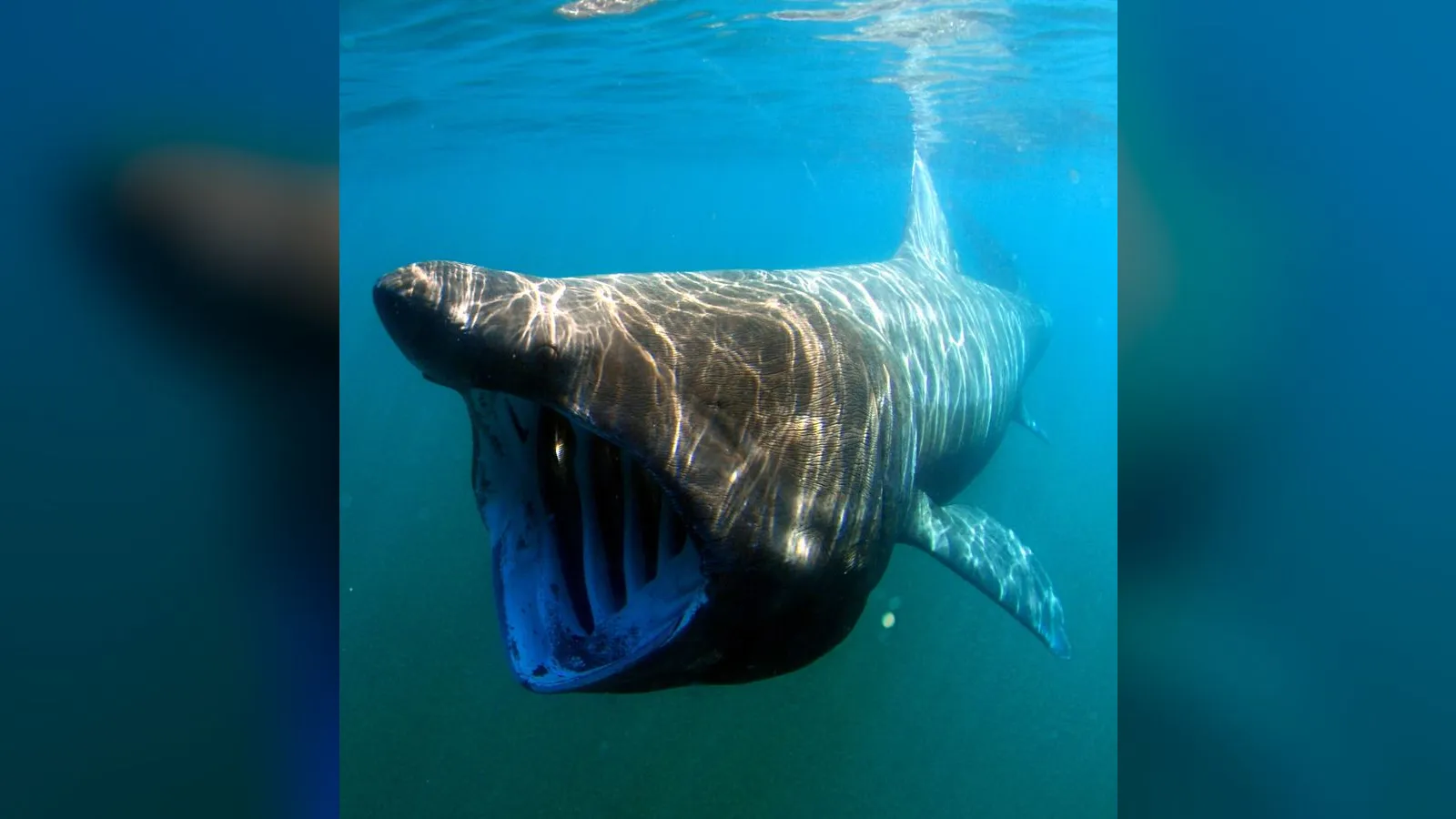

Basking Shark (Cetorhinus maximus)
Contents
TL;DR
- established Basking sharks, the second-largest fish species on Earth, were hunted on a genuinely industrial scale across the North Atlantic in the 20th century — an estimated 100,000 or more individuals removed, primarily for their enormous livers, valued for squalene oil — a specific, documented historical toll this article states directly rather than treating the species' modern rarity as unexplained.
- established Scottish basking shark fisheries, which hunted the species for meat, fins, cartilage, liver oil, and skin, did not close until the 1990s — a documented timeline this article states precisely, since it places large-scale hunting within living memory rather than as a distant historical episode.
- established Despite legal protection in UK and Irish waters since 1998, basking sharks remain listed as endangered by the IUCN, with imprecise population estimates owing to the genuine difficulty of studying a highly migratory, deep-diving species — this article states this uncertainty honestly rather than asserting a precise recovery figure the evidence does not support.
- established In 2020, the Sea of the Hebrides became the world's first Marine Protected Area specifically designated for basking sharks, recognising the area as critical feeding habitat where large groups gather from May to October to exploit nutrient-rich plankton blooms — a genuine, specific conservation milestone this article credits directly.
- disputed Recent Hebridean sightings data recorded a sharp, documented fall in basking shark observations even as minke whale sightings reached record highs, and researchers have not established a confirmed cause for this decline, with candidate explanations including shifts in zooplankton availability and sharks remaining present but undetected at depth — a genuinely open scientific question this article presents as such.
Key Facts
- Scientific name
- Cetorhinus maximus
- Category
- Marine
- Size
- Second-largest fish species on Earth
- Historical North Atlantic hunting toll
- Estimated 100,000+ individuals
- Scottish fisheries closed
- 1990s
- Legal protection (UK/Ireland)
- Since 1998
- IUCN status
- Endangered
- World's first basking shark MPA
- Sea of the Hebrides, designated 2020
Scottish Impact Index (SI Score)
- Scottish Significance
- 9/10
- Ecological Persistence
- 8/10
- Ecological Importance
- 9/10
- Biological Distinctiveness
- 9/10
- Conservation Significance
- 9/10
- Recognition
- 10/10
54/60
Ranked =7th of 42 in Wildlife
A Note on Claims and Evidence
Historical hunting figures, fishery closure dates, and legal protection details are drawn from NatureScot and Basking Shark Scotland published records. The cause of the recently documented decline in basking shark sightings is treated as genuinely Disputed, reflecting the explicit scientific position that researchers have not yet confirmed why sightings have fallen even as other large marine species' sightings have risen.
Timeline
Basking sharks are hunted on an industrial scale across the North Atlantic, primarily for their enormous, squalene-rich livers, with an estimated 100,000 or more individuals removed over the period.
Dedicated Scottish fisheries target basking sharks for meat, fins, cartilage, liver oil, and skin.
Scottish basking shark fisheries close.
Basking sharks gain legal protection in UK and Irish waters, making it illegal to intentionally kill, injure, or harass them.
Basking sharks are added to CITES Appendix II, regulating international trade in the species.
The Scottish Government proposes the Sea of the Hebrides as a Marine Protected Area specifically for basking sharks, opening public consultation.
The Sea of the Hebrides is formally designated, becoming the world's first Marine Protected Area created specifically for basking sharks.
Hebridean surveys record a historic low for basking shark sightings (0.07 per 100km; just seven individuals across both summers) — the lowest count since monitoring began in 2002 — occurring in the same period as a record high for minke whale sightings, a correlation researchers have not yet explained.
Details
An industrial-scale hunting toll, stated with its real figures
This article states the scale of 20th-century basking shark hunting directly rather than describing the species' decline vaguely: an estimated 100,000 or more individuals were removed from the North Atlantic, hunted primarily for their enormous livers — which could constitute up to a third of a shark's body mass — valued for squalene oil historically burned in lamps and later used in aviation, medicine, and cosmetics. This article presents this figure because it establishes, concretely, why the species' current rarity reflects a documented historical cause rather than an unexplained natural scarcity.
Hunting within living memory, not a distant episode
This article states precisely that Scottish basking shark fisheries did not close until the 1990s, a detail included deliberately because it places large-scale, targeted hunting of the species within recent decades rather than allowing readers to assume it was a 19th-century or pre-war practice. Slow-moving, surface-feeding basking sharks were genuinely vulnerable to harpooning and netting, making them a viable commercial target until the fishery's closure.
Protected status with an honestly uncertain recovery picture
This article states directly that although basking sharks have held legal protection in UK and Irish waters since 1998, they remain listed as endangered by the IUCN, and precise population estimates remain genuinely difficult to establish given the species' highly migratory behaviour and extensive time spent at depth. This article does not supply a confident recovery figure the underlying data does not support, presenting the ongoing endangered status and estimation difficulty as the honest current picture.
A genuine, specific conservation milestone
This article credits the 2020 designation of the Sea of the Hebrides as the world's first Marine Protected Area created specifically for basking sharks as a real, concrete achievement, recognising the documented ecological importance of the area as a seasonal feeding ground where large groups gather from May to October to exploit nutrient-rich plankton blooms formed where cold and warm waters mix. This article names this milestone directly because it represents a specific, world-first conservation measure rather than a general habitat protection claim.
A worrying recent trend, left honestly unexplained
This article addresses directly, rather than passing over, a striking and recent development: Hebridean surveys recorded a historic low for basking shark sightings in 2022–2023, even as minke whale sightings in the same waters reached a 20-year high. Researchers have identified this inverse pattern but have not confirmed its cause, with candidate explanations including shifts in zooplankton food availability — potentially linked to broader environmental change — and the possibility that sharks remain present at depth but simply go undetected during surface surveys. This article presents this as a genuinely open scientific question rather than asserting a confident explanation, consistent with researchers' own stated uncertainty.
Did You Know?
- The basking shark is the second-largest fish species on Earth, surpassed only by the whale shark.
- An estimated 100,000 or more basking sharks were hunted from the North Atlantic during the 20th century, primarily for liver oil.
- Scottish basking shark fisheries remained active until the 1990s — within living memory for many people today.
- A basking shark's liver can account for up to a third of its total body mass.
- The Sea of the Hebrides became the world's first Marine Protected Area designated specifically for basking sharks, in 2020.
- Basking sharks gather in the Hebrides from May to October to feed on plankton blooms where cold and warm waters mix.
- Recent Hebridean surveys recorded the lowest basking shark sighting count since monitoring began in 2002, a trend researchers cannot yet explain.
FAQ
1Why did basking sharks become so rare?
Industrial-scale 20th-century hunting across the North Atlantic, primarily for liver oil, removed an estimated 100,000 or more individuals.
2When did Scottish basking shark hunting end?
Scottish fisheries closed in the 1990s, within recent living memory.
3Are basking sharks protected today?
Yes — they have held legal protection in UK and Irish waters since 1998 and are listed on CITES Appendix II.
4Are basking shark populations recovering?
This remains genuinely unclear; they are still listed as endangered by the IUCN, and precise population trends are difficult to establish.
5What is special about the Sea of the Hebrides for basking sharks?
It became the world's first Marine Protected Area designated specifically for basking sharks in 2020, protecting a key seasonal feeding ground.
6Why have recent sightings fallen so sharply?
This is genuinely unresolved; researchers have observed the decline but have not confirmed its cause.
7What are basking sharks' current main threats?
Vessel collisions, entanglement in fishing gear and ghost gear, disturbance, and international fishing activity encountered during migration beyond UK waters.
8Do basking sharks pose a danger to people?
No — they are filter feeders that eat only plankton and pose no threat to humans.
Sources and Further Reading
Primary/Institutional
- Basking shark — NatureScot
- Sharks and Skates of Scotland Report: Basking shark — NatureScot
- Support the world's first basking shark MPA — Scottish Wildlife Trust
Scholarly/Critical
- Are Basking Sharks Endangered? — Basking Shark Scotland
- Scottish Basking Shark sightings show 'worrying' decline — BirdGuides
General
Caveats: Myths and Disputed Claims
- Clarification: This article does not claim basking shark populations are confirmed to be recovering; the species remains listed as endangered, and reliable population trend data remains genuinely difficult to obtain.
- Note: This article does not assert a confirmed cause for the recent drop in Hebridean basking shark sightings; researchers themselves describe this as unexplained.
Card 015 · Wildlife