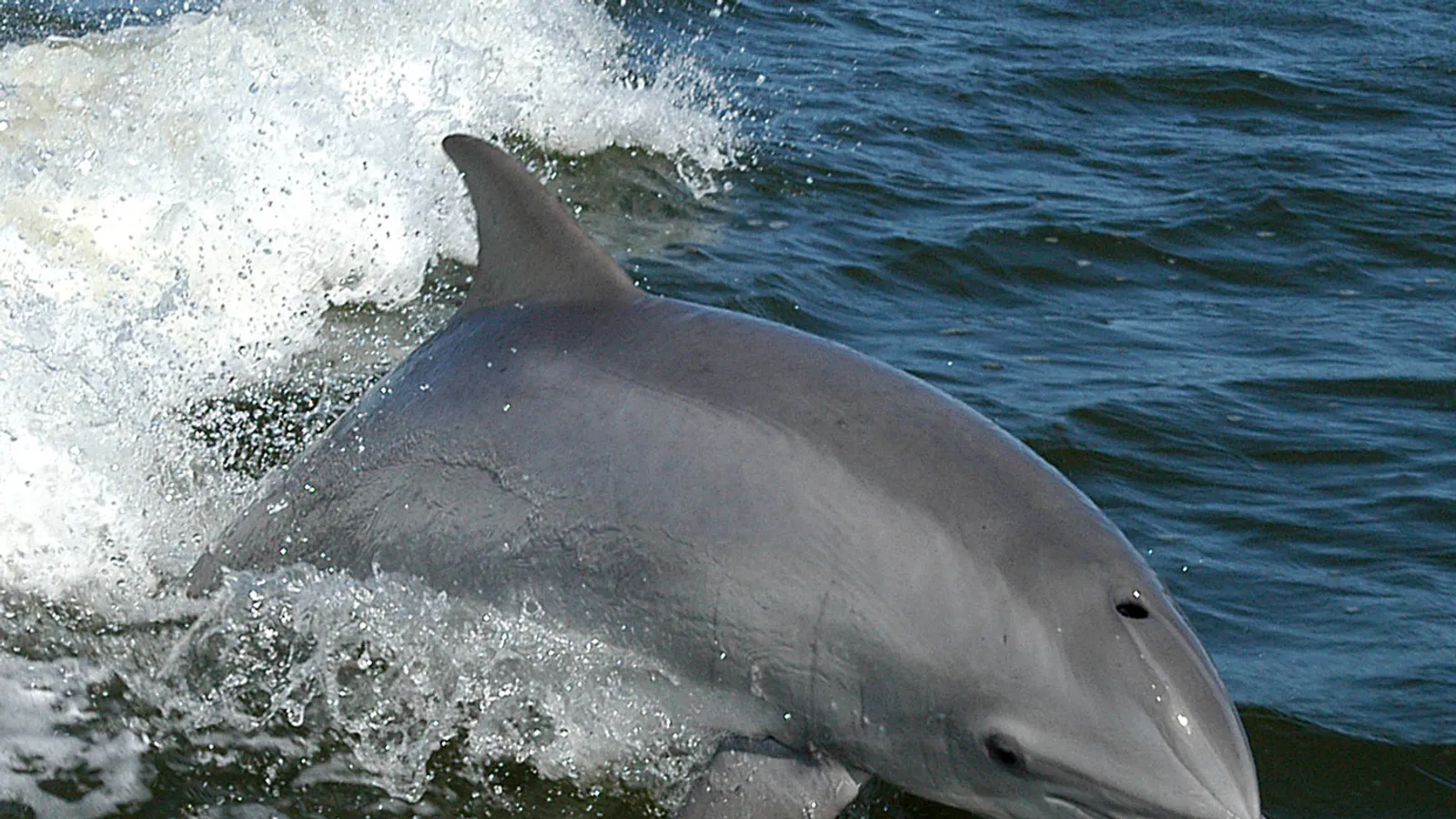

Bottlenose Dolphin (Tursiops truncatus)
Contents
TL;DR
- established The Moray Firth is home to the world's most northerly known resident population of bottlenose dolphins — around 200 individuals — a specific, scientifically notable distinction this article states directly rather than simply describing Scotland as "good dolphin habitat."
- established Moray Firth dolphins are documented as unusually large for the species, an adaptation widely attributed to the demands of surviving in Scotland's cold, challenging marine environment — a genuine physical distinction, not folklore.
- established The Moray Firth was designated a Special Area of Conservation for bottlenose dolphins in 1996 (gaining full protection by March 2005), and the population has since been assessed as stable or increasing — but this article states directly that whether this improvement is actually caused by the SAC designation, broader management measures, or other factors remains genuinely unclear, rather than crediting the designation with a causal certainty the evidence does not establish.
- disputed Dolphins from this population have documented an expanding range, now regularly recorded along the Aberdeenshire coast, in the Tay and Forth estuaries, and as far as north-east England, Ireland, and Denmark — but the reasons for this range expansion remain genuinely unknown to researchers, an open scientific question this article states as such rather than speculating a confident explanation.
- established The population faces a specific, documented set of modern industrial pressures — oil and gas seismic surveys, Ministry of Defence exercises including live firing and active sonar, increasing shipping traffic, dredging, and unmanaged commercial dolphin-watching boat traffic — named directly rather than left as a vague list of "human impacts."
Key Facts
- Scientific name
- Tursiops truncatus
- Category
- Marine Mammals
- Moray Firth population
- Approximately 200 (world's most northerly resident population)
- Conservation status
- Special Area of Conservation (SAC) since 1996/2005
- Population trend
- Stable or increasing (cause not fully established)
- Documented range
- Moray Firth core; extending to Aberdeenshire, Tay, Forth, north-east England, Ireland, Denmark
- Key threats
- Seismic surveys, military sonar/live firing, shipping, dredging, unmanaged boat-watching traffic
- Status in 1991 (Handbook)
- Small, scattered inshore populations; the Moray and Cromarty Firths one of three main concentrations in Britain and Ireland
- Breeding (Handbook)
- Births peak March–May; gestation c. 12 months; calving interval mainly 2–3 years
Scottish Impact Index (SI Score)
- Scottish Significance
- 9/10
- Ecological Persistence
- 8/10
- Ecological Importance
- 9/10
- Biological Distinctiveness
- 8/10
- Conservation Significance
- 9/10
- Recognition
- 10/10
53/60
Ranked =10th of 42 in Wildlife
A Note on Claims and Evidence
Population figures, the SAC designation history, and the documented range expansion are drawn from Whale and Dolphin Conservation and Scottish Environment LINK reporting on long-term monitoring data. Whether the population's recovery is directly attributable to SAC protection, and why the dolphins' range has expanded, are both treated as genuinely open questions, reflecting the explicit acknowledgement in the underlying scientific and conservation literature that these causes remain unresolved.
The historical status of the species in British waters, and general biology, come from P. G. H. Evans's cetacean chapter in The Handbook of British Mammals (3rd edition, 1991). That account reflects knowledge in 1991 and is used here as dated history.
Timeline
Bottlenose dolphins are present in the Moray Firth, among the most northerly waters inhabited by the species anywhere in the world.
The bottlenose dolphin, once among the commonest inshore cetaceans in Britain and Ireland, declines, especially in the southern North Sea and the English Channel.
The Handbook of British Mammals names the Cromarty and Moray Firths, Cardigan Bay and the west coast of Ireland as the most important concentrations in Britain and Ireland.
Whale and Dolphin Conservation begins sustained research, monitoring, and advocacy work focused on the Moray Firth population.
The Moray Firth is first designated a Special Area of Conservation in recognition of its importance to bottlenose dolphins.
Full SAC designation and legal protection for the Moray Firth bottlenose dolphin population takes effect.
Population monitoring records approximately 198 dolphins in the Moray Firth population.
The population is assessed as stable or increasing, while researchers document an expanding range extending into Aberdeenshire, the Tay and Forth estuaries, and occasionally as far as north-east England, Ireland, and Denmark.
The population continues to face cumulative, poorly quantified pressure from industrial activity, military exercises, shipping, and an expanding, largely unmanaged marine wildlife-watching industry.
Details
A specific, globally notable distinction
This article states the Moray Firth population's significance with its actual scientific distinction rather than general enthusiasm: it is the world's most northerly known resident population of bottlenose dolphins, numbering around 200 individuals. This specific framing matters because it explains why the population has attracted sustained international research interest beyond its purely local or national conservation value.
A genuine physical adaptation, not folklore
This article credits Moray Firth dolphins' notably large body size directly to the documented demands of surviving in a cold, physically challenging marine environment at the edge of the species' global range — a real, scientifically recognised adaptation rather than a loosely repeated claim about "hardy Scottish dolphins."
Protection with an honestly uncertain causal story
This article states plainly that while the Moray Firth's Special Area of Conservation designation — first made in 1996, with full protection from March 2005 — has coincided with a population that is now assessed as stable or increasing, the underlying scientific and conservation literature explicitly acknowledges that whether this improvement is directly caused by SAC protection, by specific management measures, or by other factors, remains unclear. This article presents the correlation and the designation honestly without asserting a causal certainty the evidence does not support.
An expanding range with a genuinely open explanation
This article names the documented extent of the population's range expansion specifically: dolphins from this population are now regularly recorded along the Aberdeenshire coast and in the Tay and Forth estuaries, with individuals occasionally documented as far as north-east England, Ireland, and Denmark. This article states directly that the reasons behind this expansion remain genuinely unknown to researchers — presented as an open question rather than filled in with a plausible-sounding but unconfirmed explanation such as prey shifts or climate change, since the primary sources themselves state this remains unresolved.
A named, specific set of modern pressures
This article lists the population's documented threats with real specificity rather than a vague gesture toward "human impact": oil and gas seismic survey noise, Ministry of Defence military exercises including live firing and active sonar within the Firth, increasing shipping traffic, dredging activity, potential ship-to-ship oil transfers, and — notably — an expanding commercial dolphin-watching tourism industry that, despite its growth, remains without dedicated regulatory management in Scotland. This article names the absence of management for wildlife-watching traffic directly, since it represents a specific, documented gap rather than an assumption that tourism itself is harmless to the species.
The view from 1991
A species in retreat. P. G. H. Evans, writing in The Handbook of British Mammals (1991), described the bottlenose dolphin in the north-east Atlantic as locally common in southern Europe but present around Britain and Ireland only as small populations in scattered bays and estuaries, mainly in the west and north. The most important concentrations he listed were on the west coast of Ireland, in Cardigan Bay, and in the Cromarty and Moray Firths. He noted that the species had once been among the commonest inshore cetaceans in Britain and Ireland but had declined over the previous 20 years, particularly in the southern North Sea and English Channel. Because bottlenose dolphins were not hunted in the region, he looked to other causes, including coastal pollution, changes in fish stocks and drowning in fishing nets. Read against that background, and this is an inference rather than the Handbook's own claim, the Moray Firth population looks less like a northern oddity and more like one of the few British concentrations to come through a wider decline.
An inshore animal. Most sightings in 1991 came from within 10 km of land, and most between July and September, although some populations were more or less resident. Groups were usually of single animals or up to about 25. Studies elsewhere had shown long-term bonds, particularly between mothers and calves and among adult females, lasting at least eight years.
Feeding. The diet is a wide variety of fish, with squid offshore and cuttlefish inshore. Dolphins feed alone or in small groups, sometimes working together to herd fish into tight shoals at the surface. They often breach while feeding.
Breeding. Births are spread over a long season, with a peak from March to May and possibly a second in August to September. Gestation lasts about 12 months, lactation about 19 months, and the interval between calves is probably mainly two to three years. Such a slow rate of breeding means a small population like the Moray Firth's can recover only slowly from any loss.
Body size. The Handbook notes that coastal and offshore bottlenose populations often differ in size, and that colouring varies geographically. That fits the large size of the Moray Firth animals, though it does not by itself explain it.
Did You Know?
- The Moray Firth hosts the world's most northerly known resident population of bottlenose dolphins.
- Moray Firth dolphins are notably larger than bottlenose dolphins elsewhere, an adaptation linked to their cold-water environment.
- The Moray Firth became a Special Area of Conservation for bottlenose dolphins in 1996, with full protection from March 2005.
- Individual dolphins from this population have been recorded as far away as north-east England, Ireland, and Denmark.
- In 1991 the Cromarty and Moray Firths were named as one of only three major bottlenose dolphin concentrations in Britain and Ireland.
- Bottlenose dolphins were once among the commonest inshore cetaceans around Britain, before declining in the southern North Sea and Channel from about 1970.
- Whether SAC protection has directly caused the population's recent stability or growth remains scientifically unclear.
- The reasons behind the population's documented range expansion into Aberdeenshire and beyond are not yet understood.
- Scotland's expanding marine wildlife-watching tourism industry currently has no dedicated management framework, despite its growth around this population.
FAQ
1How many bottlenose dolphins live in the Moray Firth?
Approximately 200, making it the world's most northerly known resident population of the species.
2Why are Moray Firth dolphins unusually large?
This is attributed to a genuine physical adaptation for surviving the cold, demanding marine environment at the edge of the species' global range.
3Is the population protected?
Yes — the Moray Firth has been a Special Area of Conservation for bottlenose dolphins since 1996, with full protection from March 2005.
4Has protection caused the population to recover?
The population is assessed as stable or increasing, but whether this is directly caused by SAC protection or other factors remains scientifically unclear.
5Do these dolphins stay in the Moray Firth?
No — individuals range widely, with documented sightings in Aberdeenshire, the Tay and Forth estuaries, north-east England, Ireland, and Denmark.
6Why has their range expanded?
This remains genuinely unknown; researchers have not established a confirmed explanation.
7What threatens the population today?
Seismic survey noise, military exercises including sonar and live firing, shipping traffic, dredging, and unmanaged commercial dolphin-watching boat traffic.
8Is dolphin-watching tourism regulated in Scotland?
No — despite the industry's growth, it currently lacks dedicated management, a documented gap in current protection.
9Were bottlenose dolphins once more widespread around Britain?
Yes. In 1991 the Handbook described them as formerly among the commonest inshore cetaceans in Britain and Ireland, with declines over the previous 20 years in the southern North Sea and English Channel.
10Were bottlenose dolphins ever hunted in Scotland?
Not as a target species. The Handbook notes they were not hunted in the region, so their decline elsewhere in Britain had other causes.
11How often do bottlenose dolphins breed?
Slowly. Gestation lasts about a year, calves suckle for well over a year, and females usually calve every two to three years.
Sources and Further Reading
Primary/Institutional
- Bottlenose dolphins — Moray Firth, Scotland — Whale and Dolphin Conservation
- How are Scotland's bottlenose dolphins doing? — Scottish Environment LINK
- Nature Champions: Bottlenose Dolphin — Scottish Environment LINK
Scholarly/Critical
- G. B. Corbet and S. Harris (eds), The Handbook of British Mammals, 3rd edn (Blackwell Scientific, 1991), cetacean chapter by P. G. H. Evans.
- The east coast of Scotland bottlenose dolphin population: Improving understanding of ecology outside the Moray Firth SAC — UK Government
General
Caveats: Myths and Disputed Claims
- Clarification: This article does not claim SAC designation has been scientifically proven to have caused the population's stability or growth; the underlying conservation literature explicitly states this causal link remains unclear.
- Note: This article does not speculate on why the population's range has expanded; the primary sources state this reason is genuinely unknown, and no confirmed explanation currently exists.
- Do not claim Moray Firth dolphins have been recorded on the English Channel coast; the documented range reaches north-east England, Ireland and Denmark.
- Do not present the Moray Firth dolphins as Britain's only bottlenose population; in 1991 Cardigan Bay and the west of Ireland held comparable concentrations, and the species had recently been widespread inshore.
Card 012 · Wildlife