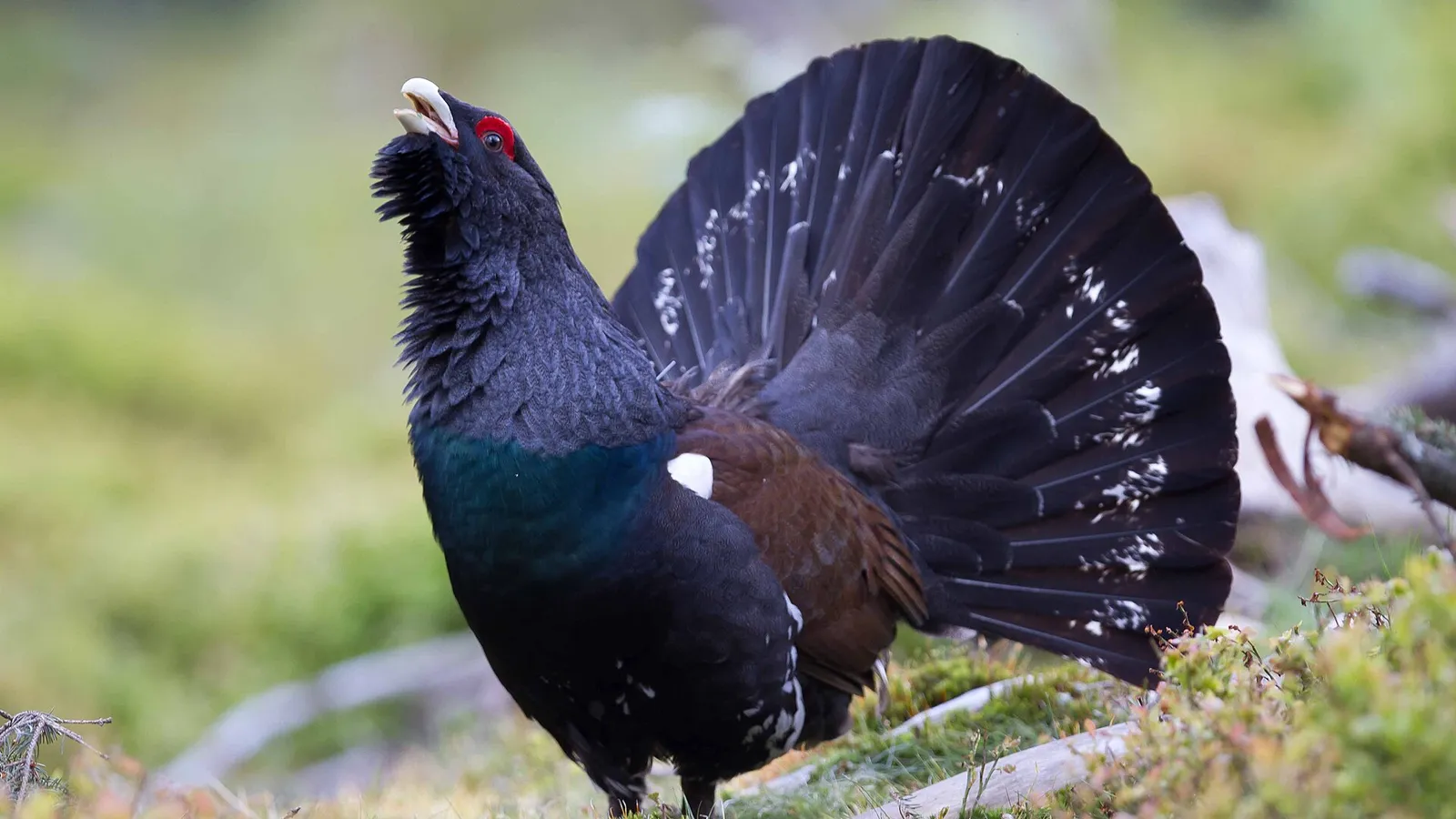

Capercaillie (Tetrao urogallus)
Contents
TL;DR
- established Only 542 capercaillie remain in the entire UK, all in Scotland — a 50% fall from the previous survey just six years earlier, and the first time the population has dropped below 1,000 birds — this article states this collapse with its full, precise, recent severity rather than describing the species as merely "declining."
- established The Cairngorms National Park now holds approximately 85% of the UK's entire remaining capercaillie population, meaning the species' national survival is now concentrated almost entirely within a single geographic area — a specific, documented concentration this article states directly.
- established NatureScot's Scientific Advisory Committee has warned that capercaillie are likely to become extinct again in the UK within two to three decades if the current rate of decline continues — the original Scottish population died out in the 18th century (the last native birds are usually dated to 1785), and the species was reintroduced from Sweden at Taymouth Castle in Perthshire in 1837, a historical precedent this article states plainly given its direct relevance to the current warning.
- established The name comes from the Gaelic capull coille, usually translated "horse of the woods", and the bird is the largest grouse in the world; British cocks weigh up to about 4.4kg, as much as three times the size of the hen.
- established Cold, wet spring weather affecting breeding female fitness, predation, and continued forest habitat fragmentation are all named as contributing factors to the decline by conservation scientists — this article states these specific, documented causes rather than a vague reference to "multiple pressures."
- established The Scottish Ornithologists' Club's The Birds of Scotland (2007) traces the earlier crash through winter surveys: about 2,200 birds in 1992–94, about 1,100 in 1998/99 and 1,300–2,800 in 2003/04. It treats the often-quoted 1970s figure of 20,000 as an estimate "of unknown origin but widely repeated".
- established The same account, by Robert Moss, names collisions with deer and forest fences as a major cause of adult deaths, and poorly timed spring warming as the main cause of poor breeding in the 1980s and 1990s.
- disputed Multiple independent studies and a NatureScot review have found that pine marten predation of capercaillie eggs and chicks measurably reduces breeding success, with pine marten populations having increased roughly fourfold in Scottish forests between 1995 and 2009 — but this article states directly that how much relative weight predation carries compared to habitat loss and human disturbance remains a genuinely contested question among researchers, creating a specific, uncomfortable conservation tension given that pine martens are themselves a legally protected, recovering native species.
Key Facts
- Scientific name
- Tetrao urogallus
- Category
- Birds
- UK population
- 542 (all in Scotland)
- Recent decline
- 50% in six years
- Share in Cairngorms National Park
- Approximately 85%
- Extinction warning timeframe
- 2–3 decades at current trend
- Historical status
- Native Scottish population extinct by 1785; reintroduced at Taymouth, Perthshire, from 1837
- Gaelic name
- Capull coille, "horse of the woods" (some scholars prefer gabhar coille, "goat of the wood")
- Population in the 1970s
- Around 20,000 birds (per Birds Britannica, 2005); an estimate of unknown origin, per The Birds of Scotland (2007)
- Winter surveys, 1992–2004
- c. 2,200 (1992–94); c. 1,100 (1998/99); 1,300–2,800 (2003/04)
- Breeding
- Lekking; clutch about 7 eggs; incubation about 26 days; hatching usually early June
- Six main populations (2007)
- Easter Ross, Moray, Strathspey, Deeside and Donside, Perthshire, Loch Lomond islands
Scottish Impact Index (SI Score)
- Scottish Significance
- 10/10
- Ecological Persistence
- 4/10
- Ecological Importance
- 9/10
- Biological Distinctiveness
- 10/10
- Conservation Significance
- 10/10
- Recognition
- 10/10
53/60
Ranked =10th of 42 in Wildlife
A Note on Claims and Evidence
Population figures and the extinction timeline warning are drawn from NatureScot survey data and its Scientific Advisory Committee review. The named contributing causes (weather, predation, habitat fragmentation) reflect the consensus view of conservation scientists working on the species. The history of the first extinction, the reintroductions and the population trend to 2004 is checked against the Scottish Ornithologists' Club's The Birds of Scotland (2007), whose capercaillie account is by Robert Moss; its figures are dated history and do not replace the more recent surveys. Where it differs from Birds Britannica (2005) on the size of the first Taymouth shipment, both figures are given. The relative weight of pine marten predation versus habitat loss and disturbance is treated as genuinely Disputed, reflecting active, documented disagreement within the conservation science and policy community that this article presents from both positions rather than adjudicating.
Timeline
Capercaillie have probably already gone from most of England and Wales.
Scottish capercaillie are still being sold in Perth market.
The Irish population is exterminated.
Thomas Pennant reports the last native capercaillie north of Inverness.
The usual date given for the last of the original Scottish birds: two males shot at Balmoral "on the occasion of a marriage". Over-hunting and clearance of the old Caledonian forest are blamed.
Attempts to reintroduce the bird in Deeside fail. The Welsh naturalist Llewelyn Lloyd also sends a pair to his cousin Sir Thomas Fowell Buxton in Norfolk; those birds fail to prosper too.
Swedish birds are sent to Lord Breadalbane at Taymouth Castle, Perthshire: 28 in 1837 according to The Birds of Scotland (49 according to Birds Britannica), and 16 more the next year. The species is re-established in Scotland.
Within 25 years Breadalbane estimates 1,000 birds on his estate; his head keeper reckons twice as many.
Repeated attempts to introduce capercaillie in the Borders all fail.
A record bag of 150 capercaillie in a single day near Kincardine.
The reintroduced population reaches its greatest extent, breeding from Golspie in Sutherland to Stirling, and from Cowal in Argyll to Buchan.
Felling of mature woods in the two World Wars brings declines.
Numbers recover, then fall for the rest of the century.
The Scottish population is often said to be around 20,000 birds, though the origin of this estimate is unknown.
The last small population in Fife, at Tentsmuir, dies out.
The last Sutherland record, at Carbisdale on 2 November.
Pine martens, a native predator later implicated in capercaillie breeding losses, receive legal protection under the Wildlife and Countryside Act.
A voluntary ban on shooting capercaillie begins and is largely honoured.
Scotland's biggest recorded lek holds at least 40 males; by the late 1990s it has fewer than 20.
A notoriously aggressive cock known as "Mad George" or "Mad Max" confronts walkers, cyclists and vehicles on the RSPB's Abernethy reserve in Speyside.
Winter transect surveys estimate about 2,200 birds.
Heavy use of fox snares in woods next to grouse moors wipes out several large leks in Deeside.
The second national survey finds about 1,100 birds, a fall of roughly 12% a year.
Robert Moss calculates that at 1990s rates the species would be extinct in Scotland again by about 2015. Over 220km of forest fencing is removed or marked that year.
An RSPB winter survey estimates 1,300–2,800 birds, suggesting the decline has stopped for the time being.
Birds Britannica puts the population at 1,000 birds at most and notes the species has been removed from the list of legitimate game birds.
At Glenmore Forest, 13 hens rear 41 chicks, 3.2 per hen, in a year when crows and foxes were controlled.
Pine marten populations in Scottish forests increase approximately fourfold, a documented recovery coinciding with continuing capercaillie decline.
The UK capercaillie population stands notably higher than its current level, before the subsequent 50% collapse.
The UK capercaillie population is recorded at just 542 birds, all in Scotland, the first time the population has fallen below 1,000, with approximately 85% concentrated in the Cairngorms National Park.
Warns that, if the current rate of decline continues, capercaillie are likely to become extinct again in the UK within two to three decades.
The Cairngorms National Park Authority and conservation partners develop and implement a Capercaillie Emergency Plan focused on reversing the decline within the core population area.
Details
A collapse stated with its full, recent severity
This article presents the state of Scotland's capercaillie population with its actual documented figures rather than general concern: just 542 birds remain across the entire UK, all in Scotland, representing a 50% fall from the previous survey only six years earlier — the first time the population has dropped below 1,000. This article states this scale and its recency directly because the speed of the recent decline is itself a critical, documented feature of the species' current crisis, not merely a continuation of a slow historical trend.
A national population now resting on one place
This article names the degree of geographic concentration directly: approximately 85% of the UK's entire remaining capercaillie population now lives within the Cairngorms National Park. This specific figure matters because it means the species' national survival is no longer distributed across multiple strongholds but effectively depends on the success of conservation efforts within a single geographic area.
A second extinction that has happened before
This article states plainly that NatureScot's own Scientific Advisory Committee has warned of renewed UK extinction within two to three decades at current trends, and includes the directly relevant historical precedent that capercaillie already died out in Britain once, with the last native Scottish birds recorded in 1785, before being reintroduced from Sweden from 1837. This article names this history because a second extinction would not be an unprecedented event for this species in Britain, which sharpens rather than lessens the weight of the current warning.
Named, specific contributing causes
This article states the documented drivers of decline specifically rather than vaguely: cold, wet spring weather affecting the fitness of breeding female birds, predation, and continued forest habitat fragmentation despite ongoing habitat enhancement efforts. This article presents these as the actual factors conservation scientists have identified, rather than a generic reference to "environmental pressures."
A genuinely contested, uncomfortable predation question
This article treats directly, rather than resolving in either direction, a real and active scientific and conservation policy disagreement. Multiple independent studies and a NatureScot review have found that pine marten predation of eggs and chicks measurably reduces capercaillie breeding success, with Scottish pine marten populations having increased roughly fourfold between 1995 and 2009 — findings that are themselves relatively well-supported. However, this article states plainly that how much relative weight this predation effect carries compared to habitat loss and human disturbance as drivers of the overall national decline remains genuinely contested among researchers and conservationists, some of whom argue predation is the principal issue while others maintain habitat and disturbance factors matter more. This article names the specific, uncomfortable tension this creates directly: pine martens are themselves a native species that was illegally persecuted to near-extinction and has only recovered since gaining legal protection in 1988, meaning any management response aimed at reducing their impact on capercaillie creates a genuine conservation conflict between two species of real concern, not a straightforward villain-and-victim story.
shared The 2007 Birds of Scotland account took a sceptical line on martens. Moss accepted that martens take eggs, chicks and adults, but noted that the decline was well under way in central Strathspey and Deeside long before martens arrived there in any numbers. He also pointed out that the very good breeding at Glenmore in 2006 followed the killing of crows and foxes while martens were left alone, and concluded that the evidence then available showed crows and foxes doing more damage. Later studies, including those cited above, have given martens more weight, which is one reason the question remains contested.
Horse of the woods: the name
shared Mark Cocker and Richard Mabey, in Birds Britannica (2005), record that the many old spellings, among them "capercailzie", "caperkellie" and "capercally", are all Anglicised forms of the Gaelic capull coille, literally "horse of the woods". Some have linked the horse to the cock's display call, whose opening notes are likened to hooves on cobbles. The authors think the likelier sense is figurative, meaning simply "big", as in horse-radish; the scientific name urogallus ("bull cock") works the same way. Some Gaelic scholars instead derive the name from gabhar coille, "goat of the wood", a nod to the male's ragged beard and aggression. The derivation remains debated.
The first extinction and the Taymouth return
established The original capercaillie had probably gone from most of England and Wales before the 17th century, and the Irish birds were exterminated around 1760. In Scotland, over-hunting and the clearance of the old Caledonian forest finished the native population. The date usually given for the last of them is 1785, when two males were shot at Balmoral during a wedding celebration. Birds had still been sold in Perth market in 1746. The Birds of Scotland (2007) adds that the forests were then at a low ebb after centuries of felling, burning and browsing by cattle, and that the cold, wet summers of the late Little Ice Age may also have made it hard for hens to rear young. Only a single specimen of that indigenous Scottish stock is known to survive, in the Hancock Museum in Newcastle.
established The return was the work of three men: the Welsh naturalist Llewelyn Lloyd, who lived and hunted in Sweden; his cousin Sir Thomas Fowell Buxton of Northrepps Hall, Norfolk; and Lord Breadalbane of Taymouth Castle in Perthshire. After a failed attempt in Norfolk in the 1820s, and failed releases in Deeside in the same decade, Buxton organised the shipment of Swedish birds to Taymouth in 1837, in gratitude for a long visit to Breadalbane's home, and 16 more in 1838. Keepers boosted numbers by putting caper eggs under brooding greyhens (female black grouse). Within 25 years Breadalbane estimated 1,000 birds on the estate.
shared The size of the first shipment differs between sources. Birds Britannica gives 49 birds; The Birds of Scotland (2007), drawing on John Harvie-Brown's 19th-century history of the species, gives 28. Both agree on the 16 that followed in 1838.
established The spread from Taymouth was helped by moving birds from the estate and by fresh imports from Sweden, Austria, Norway and Finland. Releases of birds from at least two subspecies continued, on and off, into the 1990s, so today's population is of mixed European origin. By 1914 capercaillie bred from Golspie in Sutherland to Stirling, and from Cowal in Argyll east to Buchan. Repeated attempts in the Borders between the 1870s and 1950 all failed.
From pest and quarry to protected rarity
established For much of the 20th century the capercaillie was both a game bird and a forestry pest, because it nips out the leading buds of young conifers. Cocker and Mabey report that foresters once shot them with .22 rifles from car windows. A bag of 150 in a single day near Kincardine in 1908 gives a sense of former numbers. By 2005 the book could report a fall from around 20,000 birds in the 1970s to 1,000 at most, and the bird's removal from the list of legitimate quarry. It cites fox predation, fatal collisions with deer fences, overgrazing of the woodland understorey by deer and sheep, and wet Junes killing chicks as contributory causes.
established The Birds of Scotland (2007) gives a more detailed picture. Bags fell after the felling of mature woods in both World Wars, but black grouse, red grouse and ptarmigan fell at the same time, which suggests climate also played a part. All four grouse recovered in the 1960s and early 1970s and then declined. The often-quoted 1970s total of 20,000 is, in Moss's words, "of unknown origin but widely repeated". The first proper surveys, using winter line transects, found about 2,200 birds in 1992–94 and about 1,100 in 1998/99, a fall of around 12% a year. Hens disappeared faster than cocks, at about 18% a year. An RSPB survey in 2003/04 gave 1,300–2,800 birds, and the account judged that the decline had then stopped or even reversed, helped by better weather and conservation work. Later surveys showed that recovery did not last.
Spring weather, fences and snares
established Moss's account puts weather at the centre of the 1980s and 1990s decline. Winter conifer needles are poor food, and hens need a sudden flush of plant growth in mid-April to lay good eggs. In the 1970s April usually started cold and warmed quickly in mid-month, and the birds bred well. From the 1980s early April was milder but the main warming came late and slowly, and breeding success fell. During the 1990s hens reared an average of about 0.9 chicks a year, against the 1.1 needed to keep numbers stable.
established Adult deaths mattered just as much. Flying into deer and forest fences was a major cause of death, and without fence deaths only 0.6 chicks per hen would have been needed. In 2001 Moss calculated that, if 1990s rates had continued, the capercaillie would have died out in Scotland for a second time by about 2015. Over 220km of fencing was removed or marked in 2001, largely with EU money. In the mid-1990s some game consultants recommended large numbers of fox snares in capercaillie woods next to grouse moors, and several big leks in Deeside were wiped out by snaring. At Glenmore Forest in 2006, 13 hens reared 41 chicks, or 3.2 each, showing that the birds could still breed well when conditions allowed.
Leks, nests and broods
established Capercaillie leks are looser than black grouse leks, with cocks spread over several hundred metres. A lek typically holds 2–15 males, and Scotland's biggest recorded lek had at least 40 in 1990. Cocks are usually three or four years old before they win a stance near the centre, so lek counts miss about half the males. Hens are mated in the second half of April and lay about seven eggs, usually 5–9. Incubation takes about 26 days and chicks usually hatch in early June. For their first three or four weeks chicks need insects, especially moth caterpillars, which is why woods rich in blaeberry suit them best. Hybrids with black grouse are occasionally recorded.
Where they lived in 2007
established The Birds of Scotland describes six main populations in the late 20th and early 21st centuries: Easter Ross, Moray, Strathspey, Deeside and Donside, Perthshire and the islands of Loch Lomond. The Loch Lomond birds, up to 40–50 in the 1990s, lived at the highest densities in Scotland, about 30 birds per square kilometre on four islands. A small population at Tentsmuir in Fife survived until the 1980s, and one by Loch Awe in Argyll until 1998. Each lek needs at least 4 square kilometres of forest, and DNA work suggested that the six populations were genetically distinct, with little movement between them. Moss also flagged disturbance and development in Strathspey, then increasing with the new Cairngorms National Park, as a growing problem.
Aggressive cocks of Speyside and Deeside
established Displaying cocks can be among the most aggressive wild animals in Britain, and Scottish forests have produced a body of stories about them. Birds Britannica records a bird at Tillyfourie in 1982 that attacked vehicles, a cock in Glen Tanar that attacked almost anything that moved, one in Rothiemurchus that went for schoolchildren, and one near Brechin that the keeper could summon with his Land Rover horn. The best known was "Mad George" (also "Mad Max"), which in the 1990s held a stretch of the RSPB's Abernethy reserve near Forest Lodge, ambushing walkers and knocking over mountain bikers. In an older hunting method, stalkers crept forward only while a cock was absorbed in the climax of its song, when it is briefly blind and deaf to its surroundings.
Did You Know?
- Only 542 capercaillie remain in the entire UK, all of them in Scotland.
- The population fell by 50% in just six years, the first time it has dropped below 1,000 birds.
- Around 85% of the UK's capercaillie now live within the Cairngorms National Park.
- Capercaillie have gone extinct in Britain once before, in the 18th century, before being reintroduced from Sweden in 1837.
- Only one specimen of the original native Scottish capercaillie is known to survive, in the Hancock Museum, Newcastle.
- In the 1990s the densest capercaillie population in Scotland lived on islands in Loch Lomond.
- At 1990s rates of decline, a 2001 calculation had the species extinct in Scotland again by about 2015.
- To help the reintroduced birds at Taymouth, keepers hatched capercaillie eggs under female black grouse.
- The Gaelic capull coille means "horse of the woods", probably in the sense of "big".
- A cock nicknamed "Mad George" became famous in the 1990s for charging walkers and cyclists at Abernethy in Speyside.
- NatureScot's Scientific Advisory Committee has warned of renewed UK extinction within two to three decades at current trends.
- Pine marten populations in Scottish forests increased roughly fourfold between 1995 and 2009, coinciding with continued capercaillie decline.
- Whether predation or habitat/disturbance factors matter more to the overall decline remains a genuinely disputed question among researchers.
- Pine martens are themselves a legally protected, recovering native species, creating a genuine conservation tension around any predator management response.
FAQ
1How many capercaillie are left in the UK?
Just 542, all in Scotland — a 50% fall from the survey six years earlier and the first time the population has dropped below 1,000.
2Where do most remaining capercaillie live?
Around 85% live within the Cairngorms National Park.
3Could capercaillie go extinct in Britain again?
NatureScot's own Scientific Advisory Committee has warned this is likely within two to three decades at current trends — and it has happened before, in the 18th century.
4What is causing the decline?
Cold, wet spring weather affecting breeding females, predation, and continued forest habitat fragmentation.
5Are pine martens to blame for the decline?
They are a documented contributing factor — predation measurably reduces breeding success — but how much relative weight this carries compared to habitat and disturbance factors remains genuinely disputed among researchers.
6Can pine marten numbers simply be reduced to help capercaillie?
This is contested and complicated — pine martens are themselves a legally protected, recovering native species, creating a genuine conservation conflict rather than a simple management fix.
7What is being done to help capercaillie?
A Capercaillie Emergency Plan (2025–2030) is being implemented by the Cairngorms National Park Authority and conservation partners, focused on reversing the decline in the core population area.
8Has the population always been this low?
No — the current figure represents a dramatic, recent 50% collapse within just six years, not a long-stable low baseline. Birds Britannica (2005) put the 1970s population at around 20,000 birds.
9When and how did capercaillie first die out in Scotland?
Over-hunting and clearance of the Caledonian forest wiped out the native population in the 18th century; the last two native birds are usually said to have been shot near Balmoral in 1785.
10Who brought the capercaillie back?
Sir Thomas Fowell Buxton, prompted by his cousin, the naturalist Llewelyn Lloyd, sent 49 Swedish birds to Lord Breadalbane at Taymouth Castle, Perthshire, in 1837, and 16 more in 1838.
11What does "capercaillie" mean?
It is an Anglicised form of the Gaelic capull coille, "horse of the woods", though some scholars prefer gabhar coille, "goat of the wood".
12How many birds were sent to Taymouth in 1837?
Sources differ: The Birds of Scotland (2007) gives 28, Birds Britannica (2005) gives 49. Both agree that 16 more followed in 1838.
13Why do deer fences matter so much?
Capercaillie fly low and fast through woodland and often hit fences they cannot see. In the 1990s this was a major cause of adult deaths, and over 220km of fencing was removed or marked in 2001.
14How does spring weather affect breeding?
Hens need a sudden burst of plant growth in mid-April to get into condition to lay good eggs. When warming came late and slowly, as it did through the 1980s and 1990s, breeding success fell.
15Do capercaillie really attack people?
Yes, occasionally. Displaying cocks have charged walkers, cyclists and vehicles in Speyside, Deeside and Angus, most famously "Mad George" at Abernethy in the 1990s.
Sources and Further Reading
Primary/Institutional
- Forrester, R. W., Andrews, I. J. et al. (eds), The Birds of Scotland (Scottish Ornithologists' Club, 2007), account by Robert Moss.
- Capercaillie population in Scotland on brink of extinction, RSPB Scotland warns — STV News
- Capercaillie Emergency Plan 2025–2030 — Cairngorms National Park
- Review of Capercaillie Conservation and Management — Report to the Scientific Advisory Committee — NatureScot
Scholarly/Critical
- Mark Cocker and Richard Mabey, Birds Britannica (Chatto & Windus, 2005)
- Are pine martens contributing to capercaillie declines? — What The Science Says
- Capercaillie numbers feared to have fallen by a third in just six years — The Scotsman
General
Caveats: Myths and Disputed Claims
- Clarification: This article does not present pine marten predation as the sole or definitively primary cause of capercaillie decline; the relative weight of predation versus habitat loss and disturbance remains a genuinely contested question among researchers.
- Note: This article does not suggest a straightforward or uncontroversial management solution exists; any response targeting pine marten predation creates a genuine conservation conflict with that species' own protected, recovering status.
- Do not say capercaillie died out across Britain in the 18th century as a single event: they had probably gone from most of England and Wales before the 17th century, from Ireland around 1760 and from Scotland by about 1785.
- Do not treat the 1970s figure of 20,000 birds as a measured count; The Birds of Scotland (2007) calls it an estimate of unknown origin. The first systematic national survey was in 1992–94.
- Do not give a single firm number for the 1837 Taymouth shipment; sources give 28 or 49.
- Do not describe today's capercaillie as pure Swedish stock; later imports came from Austria, Norway and Finland as well.
- Do not present "horse of the woods" as a settled etymology; capull coille is the usual derivation, but gabhar coille, "goat of the wood", has its supporters.
Card 020 · Wildlife