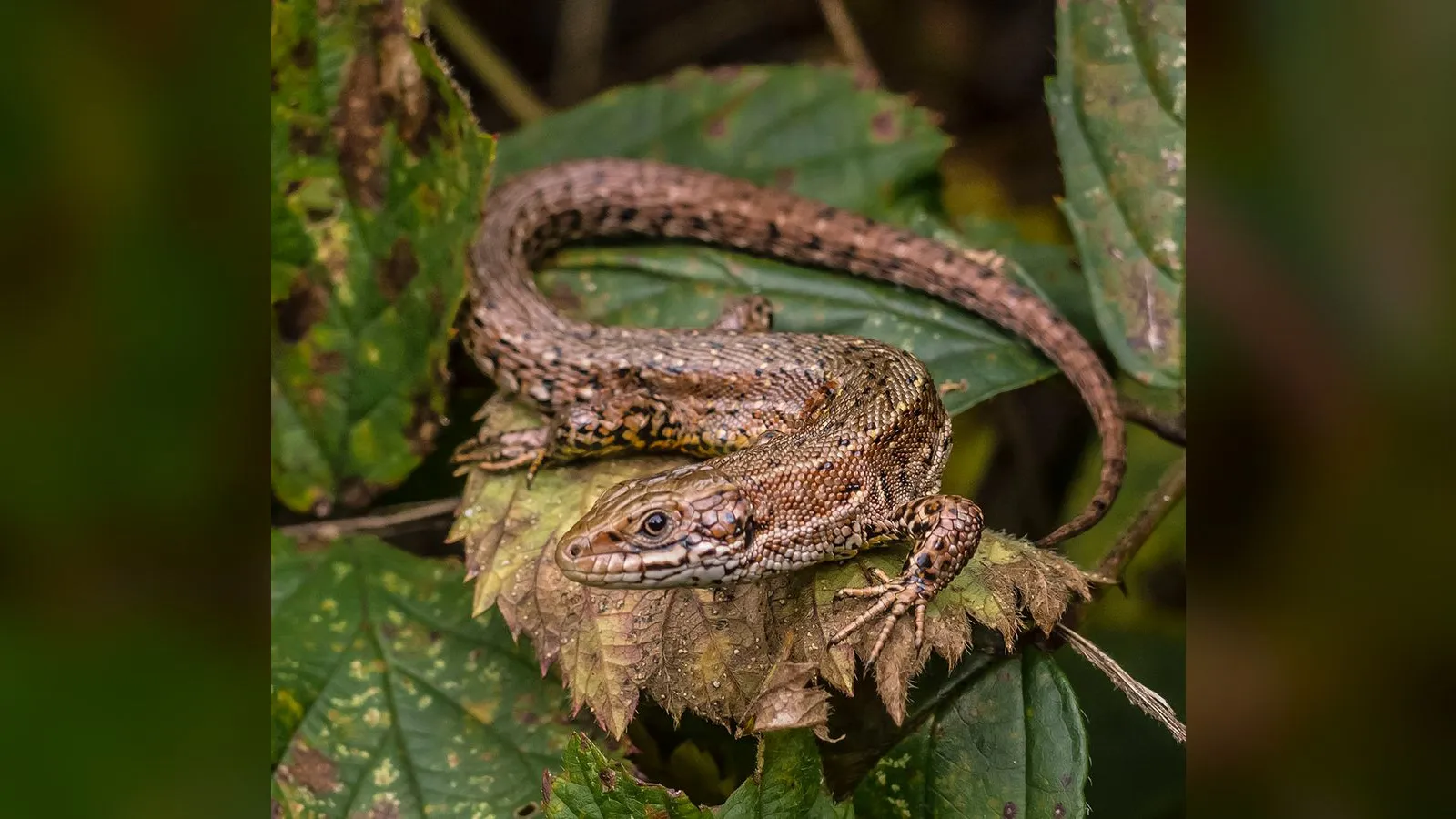

Common Lizard (Zootoca vivipara)
Contents
TL;DR
- established The common lizard holds the Guinness World Record for the most northerly distribution of any lizard species on Earth, found in northern mainland Norway at 66.6°N — well beyond the Arctic Circle — a genuine, documented global distinction this article states directly rather than a vague claim of cold-hardiness.
- established This remarkable cold-climate range is made possible by a specific reproductive adaptation: in cooler parts of its range, including Scotland, the common lizard gives birth to live young rather than laying eggs, allowing offspring to develop internally, protected and warmed by the mother's own body heat, rather than depending on external incubation that Scotland's cool climate often cannot reliably provide — a specific, documented mechanism this article names directly, reflected in the species' scientific name, vivipara.
- established The common lizard is found widely across most of Scotland, Scotland's only native legged reptile, though its presence is uneven — it is less common in the Central Lowlands and entirely absent from the Northern Isles, indicating a dependence on specific warmer microclimates even within its broad Scottish range.
- disputed Whether Scottish common lizard populations are genuinely increasing in range and number, as some field observers have suggested based on more frequent sightings and new site records over recent decades, or whether this apparent pattern instead reflects improved recording effort in previously under-surveyed areas, remains a genuinely unresolved question — this article presents both possibilities directly, noting that documented population crashes following severe winters complicate any simple expansion narrative, and that the honest summary from field researchers themselves is that populations "may or may not be increasing, but they certainly are fluctuating."
- established Severe winter weather has been directly documented as capable of devastating local common lizard populations, with one severe 2001 winter reaching temperatures as low as -17°C substantially affecting local populations — a specific, documented vulnerability this article states directly rather than presenting the species' cold-climate adaptations as making it fully climate-resilient.
Key Facts
- Scientific name
- Zootoca vivipara
- Category
- Reptiles
- Status
- Scotland's only native legged reptile
- World record
- Most northerly lizard species (northern Norway, 66.6°N)
- Key adaptation
- Viviparity (live birth) in cooler range populations
- Scottish distribution
- Widespread, but absent from Northern Isles, less common in Central Lowlands
- Population trend
- Genuinely disputed/uncertain
A Note on Claims and Evidence
The world record for most northerly lizard distribution is drawn from Guinness World Records. Viviparity and Scottish distribution details are drawn from NatureScot's published assessment. Population trend claims are treated as genuinely Disputed, reflecting field researchers' own explicit, honest uncertainty about whether apparent range expansion reflects real population growth or improved recording effort, further complicated by documented severe-winter population crashes.
Timeline
Common lizards are recorded as widely distributed but nowhere very numerous across parts of Scotland, based on early 20th-century naturalist accounts.
The species' viviparous reproductive adaptation, allowing live birth in cooler climates, supports its persistence across much of Scotland, including areas where egg incubation would be unreliable.
Field observers begin reporting apparently increasing sightings and new site records in previously unrecorded parts of Scotland, including areas near Dundee and in Fife, Dumfriesshire, Inverness-shire, and Mull.
A severe winter, with temperatures reaching as low as -17°C, substantially affects local common lizard populations, demonstrating the species' continued vulnerability to extreme cold despite its cold-climate adaptations.
Field researchers conclude that while sightings have increased in some areas, it remains genuinely unclear whether this reflects real population growth or simply improved recording effort in previously under-surveyed regions, with population numbers appearing to fluctuate substantially rather than showing a clear sustained trend.
The common lizard remains widespread across most of Scotland, absent from the Northern Isles and less common in the Central Lowlands, while the species' world-record northerly range is held by populations in northern Norway.
Details
A world record stated with its real geographic specificity
This article names the common lizard's remarkable distribution with its actual documented record rather than a vague claim of hardiness: it holds the Guinness World Record for the most northerly lizard species distribution on Earth, found in northern mainland Norway at 66.6°N, well beyond the Arctic Circle. This article states this specific figure directly because it conveys the genuine, measurable extremity of the species' cold-climate range, a context that makes its presence across much of Scotland considerably less surprising by comparison.
A specific reproductive mechanism, not a vague cold-adaptation claim
This article names the biological mechanism underlying the species' remarkable cold-climate range directly: in cooler parts of its range, including Scotland, common lizards give birth to live young rather than laying eggs, allowing offspring to develop internally, protected and warmed by the mother's own body heat rather than depending on external incubation. This article states this mechanism precisely — reflected directly in the species' scientific name, vivipara — because it is the specific, documented adaptation explaining how the species survives and reproduces successfully in a climate too cool for reliable egg incubation.
An uneven range within a broad Scottish presence
This article states that despite being found widely across most of Scotland, the species' presence is genuinely uneven: less common in the Central Lowlands and entirely absent from the Northern Isles. This article names this unevenness directly because it demonstrates that even a widely distributed, cold-adapted species depends on specific warmer microclimates within its broader range, rather than being uniformly present wherever suitable habitat superficially appears to exist.
A genuinely unresolved population trend, presented honestly
This article treats directly, rather than resolving in either direction, a real uncertainty in the Scottish common lizard's population status. Some field observers have reported apparently increasing sightings and new site records over recent decades, including areas near Dundee previously without lizard records. However, this article states plainly that researchers themselves cannot confidently distinguish genuine population growth from simply improved recording effort in previously under-surveyed regions, and that documented population crashes following severe winters — including a 2001 cold snap reaching -17°C — complicate any simple expansion narrative. This article quotes the honest field researcher conclusion directly: populations "may or may not be increasing, but they certainly are fluctuating," because this captures the genuine state of current knowledge more accurately than a confident claim in either direction.
A vulnerability that tempers the cold-adaptation story
This article states directly that the species' documented cold-climate adaptations, including viviparity and its remarkable northerly range record, do not make it fully resilient to extreme cold: the severe 2001 winter substantially affected local populations. This article names this vulnerability because it prevents the species' genuinely impressive cold-adaptation story from being read as implying immunity to severe weather events, which the documented population crash directly contradicts.
Did You Know?
- The common lizard holds the world record for the most northerly lizard distribution on Earth, found in Norway at 66.6°N, beyond the Arctic Circle.
- It is Scotland's only native legged reptile.
- In cooler parts of its range, including Scotland, the species gives birth to live young rather than laying eggs — reflected in its scientific name, vivipara.
- Despite being widespread, the species is entirely absent from Scotland's Northern Isles and less common in the Central Lowlands.
- Field researchers remain genuinely uncertain whether apparent increases in sightings reflect real population growth or simply improved survey effort.
- A severe 2001 winter, with temperatures as low as -17°C, substantially affected local Scottish lizard populations.
- The honest research conclusion on Scottish lizard trends is that populations "may or may not be increasing, but they certainly are fluctuating."
FAQ
1Is the common lizard really the world's most northerly lizard species?
Yes — it holds the Guinness World Record, found in northern Norway at 66.6°N, well beyond the Arctic Circle.
2How does it survive such a cold climate?
Through viviparity — giving birth to live young rather than laying eggs — allowing offspring to develop warmed by the mother's body rather than depending on unreliable external incubation.
3Is the common lizard found throughout Scotland?
Widely, but unevenly — it is less common in the Central Lowlands and entirely absent from the Northern Isles.
4Are Scottish common lizard populations increasing?
This remains genuinely uncertain — some observers report more frequent sightings, but researchers cannot confidently distinguish real population growth from improved recording effort, and populations are known to fluctuate significantly.
5Can cold weather still harm this cold-adapted species?
Yes — a severe 2001 winter reaching -17°C substantially affected local populations, showing the species is not immune to extreme cold despite its adaptations.
6What does "viviparous" mean?
Giving birth to live young rather than laying eggs — the key adaptation behind the species' alternative common name, the viviparous lizard.
7Is the common lizard Scotland's only reptile?
It is Scotland's only native legged reptile; the adder and slow worm are among the country's other native reptiles.
8Why is its Scottish range uneven despite being cold-adapted?
Even a cold-tolerant species depends on specific warmer microclimates for activity and reproduction, which explains its absence from the coldest, most exposed parts of Scotland like the Northern Isles.
Sources and Further Reading
Primary/Institutional
Scholarly/Critical
- Are Common Lizards increasing their range in Scotland? — British Herpetological Society
- Common lizard — Scottish Wildlife Trust
General
Caveats: Myths and Disputed Claims
- Clarification: This article does not claim Scottish common lizard populations are confirmed to be increasing; researchers themselves state this cannot be reliably distinguished from improved recording effort, and populations are documented to fluctuate, including severe winter-driven crashes.
- Note: This article does not present the species' cold-climate adaptations as conferring immunity to extreme weather; documented population impacts from a severe 2001 winter demonstrate continued vulnerability.
Card 036 · Wildlife