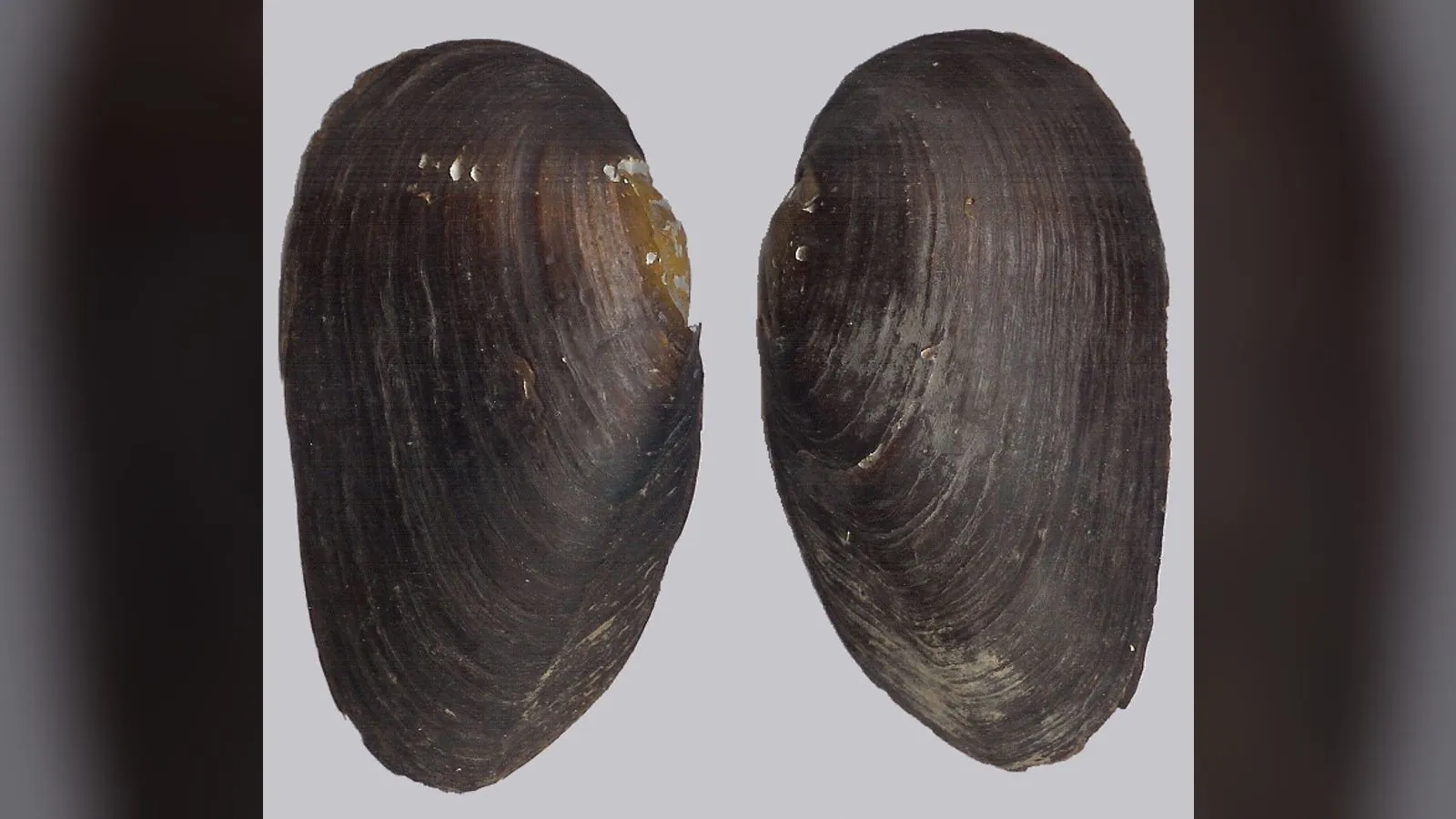

Freshwater Pearl Mussel (Margaritifera margaritifera)
Contents
TL;DR
- established Scotland holds many of the world's most important remaining populations of the freshwater pearl mussel, a species now critically endangered across Europe, making the country a genuinely global stronghold for its survival — a specific, documented international significance this article states directly rather than treating the species as a minor local curiosity.
- established The species has an extraordinary life cycle: juveniles spend their first several months to a year parasitically attached to the gills of young Atlantic salmon or brown trout, without harming the fish, before settling into riverbed gravels where they remain buried and hidden for at least five years, reaching sexual maturity only around age 15 — a specific, documented dependency this article names directly, since without the right host fish present, mussel reproduction cannot succeed at all.
- established Individual mussels can live to 120 years or more, making them among the longest-lived invertebrates on Earth — a real, verified longevity this article states plainly because it shapes how slowly, and how fragile, population recovery genuinely is: a population without recent successful breeding can appear healthy in a simple headcount while being, in reproductive terms, already doomed.
- established Illegal pearl fishing has been identified as the primary historic cause of the species' decline, with Scotland recording an average rate of extinction from two rivers per year between 1970 and 1998 — a specific, documented historic collapse this article states with its real severity, despite the species receiving full legal protection in 1998.
- established Modern threats have shifted but not disappeared: agricultural runoff, river engineering such as weir construction, and silt clogging the gravel beds mussels need for successful reproduction are now identified as significant ongoing pressures, compounding the continued risk of illegal poaching that NatureScot still works with Police Scotland and the UK National Wildlife Crime Unit to combat.
Key Facts
- Scientific name
- Margaritifera margaritifera
- Category
- Invertebrates
- Global significance
- Scotland holds many of the world's most important remaining populations
- Maximum recorded lifespan
- 120+ years
- Age at sexual maturity
- ~15 years
- Host fish dependency
- Young Atlantic salmon and/or brown trout (population-specific)
- Historic extinction rate (1970–1998)
- ~2 Scottish rivers per year
- Legal protection
- Full protection since 1998
Scottish Impact Index (SI Score)
- Scottish Significance
- 10/10
- Ecological Persistence
- 5/10
- Ecological Importance
- 10/10
- Biological Distinctiveness
- 10/10
- Conservation Significance
- 10/10
- Recognition
- 8/10
53/60
Ranked =10th of 42 in Wildlife
A Note on Claims and Evidence
Global significance, lifecycle details, and legal protection history are drawn from NatureScot's published assessment. Lifespan, maturity age, and host fish specificity details are drawn from published conservation and research sources, including peer-reviewed study on host salmonid utilisation. The 1970–1998 extinction rate is drawn directly from NatureScot's own published figure.
Timeline
Pearl fishing for the species' naturally occurring pearls becomes a significant historic Scottish trade and tradition, placing sustained harvesting pressure on wild populations over subsequent centuries.
Scotland loses freshwater pearl mussel populations from an average of two rivers per year, a documented rate of collapse driven primarily by illegal pearl fishing.
The species receives full legal protection, making it illegal to disturb, injure, capture, or kill freshwater pearl mussels, or to carry out unauthorised river work that damages them.
NatureScot works with Police Scotland and the UK National Wildlife Crime Unit to combat continued illegal poaching, while conservation and research programmes, including EU-funded "Pearls in Peril" work, study host fish relationships and support population recovery.
Many Scottish rivers retain populations of ageing mussels with minimal recent successful reproduction, placing several specific waterways close to local extinction despite Scotland's comparatively stronger position relative to England, where only the River Ehen in Cumbria retains successfully breeding mussels.
Details
A global stronghold, stated with its real international weight
This article states Scotland's significance to this species directly rather than treating it as a minor local population: the country holds many of the world's most important remaining freshwater pearl mussel populations, a critically endangered species across Europe as a whole. This article names this global weight because it clarifies that Scottish conservation decisions for this species carry consequences far beyond national borders.
A life cycle dependent entirely on the right host fish
This article names the species' reproductive mechanism with real mechanistic precision rather than a vague reference to "a complex life cycle": juveniles spend their early months to a year parasitically attached to the gills of young Atlantic salmon or brown trout, causing the fish no harm, before settling into riverbed gravels, where they remain buried and hidden for at least five years, reaching sexual maturity only around age 15. This article states this dependency directly because it means mussel reproduction is only possible where the right host fish species are themselves present and healthy — pearl mussel conservation and host fish conservation are not separable goals.
A longevity that reframes what "a healthy population" means
This article states the species' real documented lifespan — 120 years or more, among the longest of any invertebrate — directly because of what it implies for how population health must actually be assessed: a population of long-lived adult mussels can persist and look numerically stable for decades even after reproduction has effectively ceased, since no young mussels need to be produced for existing adults to simply continue living. This article names this dynamic because a simple headcount of adult mussels, without evidence of recent successful recruitment, can conceal a population that is already functionally doomed.
A historic collapse stated at its full, documented severity
This article presents the species' historic Scottish decline with its real figures rather than softening the scale of loss: an average extinction rate of two rivers per year between 1970 and 1998, driven primarily by illegal pearl fishing for the species' naturally occurring pearls. This article states this rate directly because it represents a genuinely severe, sustained historic collapse, not a slow background decline.
Protection granted, but threats that have not disappeared
This article states plainly that the species' full legal protection since 1998 has not ended the pressures it faces: illegal poaching continues, requiring NatureScot's ongoing collaboration with Police Scotland and the UK National Wildlife Crime Unit, while modern threats including agricultural runoff, river engineering such as weir construction, and silt clogging reproduction-critical gravel beds are now identified as significant ongoing pressures in their own right. This article names these specific modern threats directly because presenting 1998 legal protection as having resolved the species' decline would overstate what has actually followed.
Did You Know?
- Scotland holds many of the world's most important remaining populations of the freshwater pearl mussel.
- Juvenile mussels spend their first months to a year attached to the gills of young salmon or trout, without harming the fish, before burying themselves in riverbed gravel for at least five years.
- Individual mussels can live to 120 years or more, making them among the longest-lived invertebrates on Earth.
- Scotland lost freshwater pearl mussel populations from an average of two rivers per year between 1970 and 1998, driven primarily by illegal pearl fishing.
- The species has been fully legally protected since 1998, but illegal poaching continues to require active policing.
- Different mussel populations show distinct host fish preferences — some require trout, some salmon, and some accept either.
- A population can look numerically healthy while having effectively stopped reproducing, since adults can live for over a century without producing young.
FAQ
1Why is Scotland so important for this species?
Scotland holds many of the world's most important remaining populations of a species now critically endangered across Europe as a whole.
2How does the freshwater pearl mussel reproduce?
Juveniles spend their first months to a year parasitically attached to the gills of young Atlantic salmon or brown trout, without harming the fish, before settling into riverbed gravels for at least five years.
3How long do freshwater pearl mussels live?
They can live to 120 years or more, among the longest lifespans of any invertebrate.
4What caused the species' historic decline in Scotland?
Primarily illegal pearl fishing — Scotland lost populations from an average of two rivers per year between 1970 and 1998.
5Is the species still legally protected?
Yes — fully protected since 1998, making it illegal to disturb, injure, capture or kill the mussels, or to carry out unauthorised river work that damages them.
6Is illegal pearl fishing still a problem?
Yes — NatureScot still works with Police Scotland and the UK National Wildlife Crime Unit to combat ongoing poaching.
7What other threats does the species face today?
Agricultural runoff, river engineering such as weir construction, and silt clogging the gravel beds mussels need for successful reproduction.
8How does Scotland's population compare to England's?
Scotland's situation is comparatively stronger — in England, only the River Ehen in Cumbria retains successfully breeding mussels.
Sources and Further Reading
Primary/Institutional
- Freshwater pearl mussel — NatureScot
- Moves to protect freshwater pearl mussels and salmon — NatureScot
Scholarly/Critical
- The status of the freshwater pearl mussel Margaritifera margaritifera in Scotland: extent of change since 1990s, threats and management implications — Biodiversity and Conservation (Springer)
- An investigation of salmonid host utilization by the endangered freshwater pearl mussel in north-west Scotland — Aquatic Conservation (Wiley)
General
Caveats: Myths and Disputed Claims
- Clarification: This article does not present the species' 1998 legal protection as having resolved its decline; illegal poaching continues to require active policing, and significant modern threats such as agricultural runoff and river engineering are separately documented.
- Note: This article does not treat a numerically present adult population as evidence of species health; given lifespans of 120+ years, a population can persist for decades after reproduction has effectively ceased.
Card 038 · Wildlife