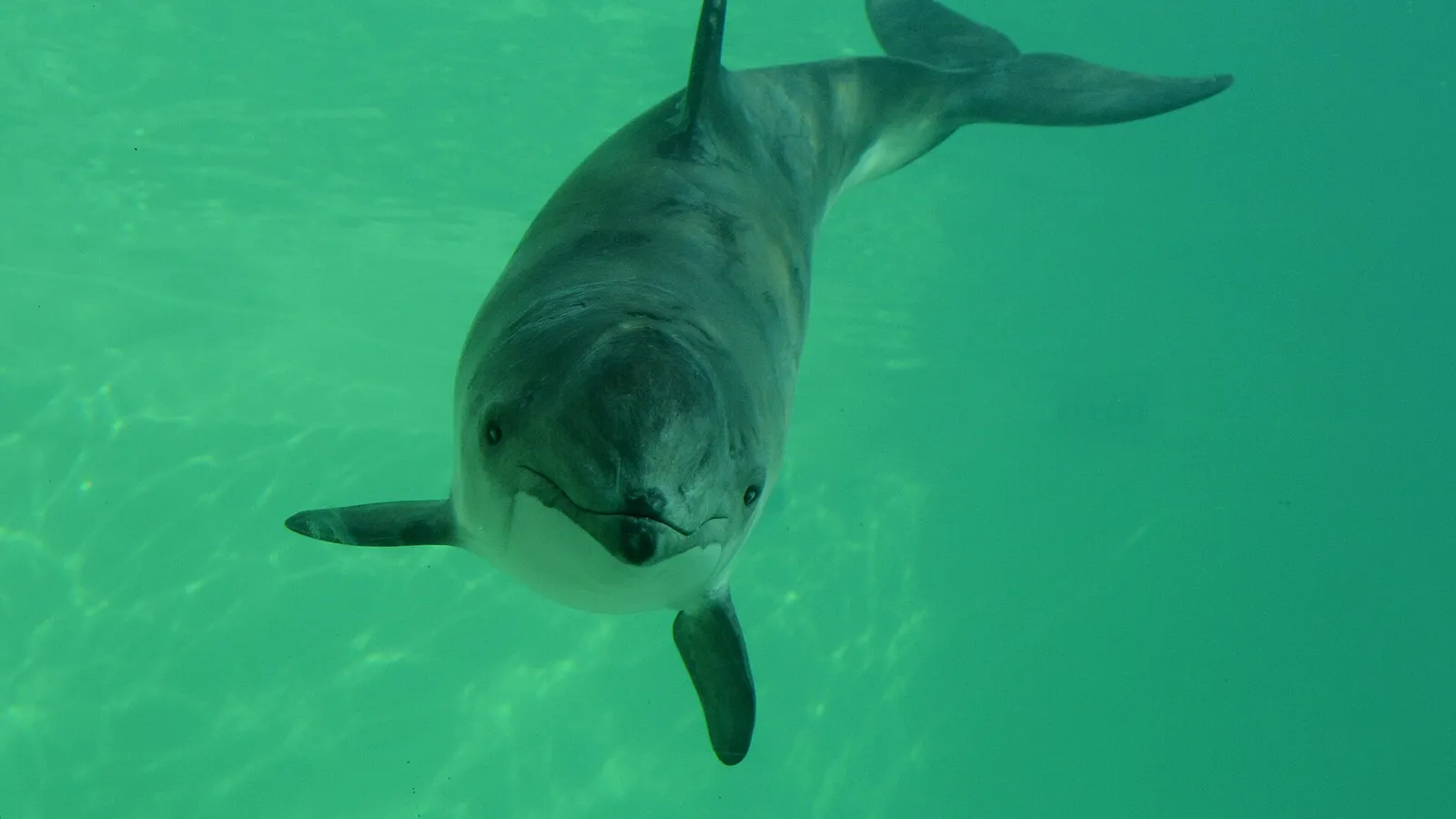

Harbour Porpoise (Phocoena phocoena)
Contents
TL;DR
- established The harbour porpoise is the smallest and most common cetacean recorded in British and Irish waters, with an estimated 386,000 individuals across continental shelf seas stretching from southwestern Norway to Atlantic Portugal, and UK concentrations including the Moray Firth in northeast Scotland and the Western Isles — a specific, documented scale and distribution this article states directly rather than a vague claim of abundance.
- established Accidental entanglement in fishing nets, particularly bottom-set nets, represents the species' most significant documented threat, reflecting the porpoise's habit of foraging close to the seabed — a specific, mechanistic explanation this article names directly rather than a general reference to "fishing impacts."
- established A nine-year acoustic survey study found that the most intense category of acoustic deterrent device (ADD) noise, used by Scottish aquaculture to deter seals from fish farms, coincided with significantly fewer harbour porpoise detections, with researchers estimating that approximately 34% of the otherwise-expected porpoise population may have been displaced from habitats exposed to the highest noise levels — a specific, documented and quantified impact this article states with its real figures.
- established This research identified a specific sound threshold: behavioural responses in harbour porpoises occurred at received sound levels exceeding 108 decibels (frequency-weighted for the species), with the most intense recorded ADD noise reaching 118–123 decibels — a real, measured mechanism this article names directly rather than a vague reference to "noise disturbance."
- established These findings supported a 2021 Scottish policy change requiring licences for acoustic deterrent device use, with researchers recommending that conservation managers more broadly consider limiting ADD deployment in favour of non-acoustic seal deterrence methods — a specific, documented policy response this article states directly, representing a genuine example of a device designed to protect one species (farmed fish, via seal deterrence) creating a measurable cost for a different, legally protected species.
Key Facts
- Scientific name
- Phocoena phocoena
- Category
- Marine Mammals
- Status
- Smallest and most common cetacean in British and Irish waters
- Regional population estimate
- ~386,000 (SW Norway to Atlantic Portugal, continental shelf seas)
- Key UK concentrations
- Moray Firth, Western Isles, Cardigan Bay
- Primary documented threat
- Entanglement in fishing nets (bottom-set nets especially)
- ADD noise displacement estimate
- ~34% of population in highest-noise habitats
- Policy response
- 2021 Scottish licensing requirement for ADD use
- Size (Handbook, 1991)
- Females c. 170 cm, males c. 145 cm; 54–65 kg
- Breeding
- Calves born mainly May–August; gestation c. 11 months; lactation c. 8 months
- 1991 status
- Most frequently seen and stranded cetacean in British and Irish waters; declined on southern North Sea and Channel coasts
Scottish Impact Index (SI Score)
- Scottish Significance
- 7/10
- Ecological Persistence
- 8/10
- Ecological Importance
- 8/10
- Biological Distinctiveness
- 6/10
- Conservation Significance
- 8/10
- Recognition
- 7/10
44/60
Ranked =40th of 42 in Wildlife
A Note on Claims and Evidence
Population estimate, distribution, and entanglement threat details are drawn from the People's Trust for Endangered Species' published assessment. Acoustic deterrent device impact findings, the displacement estimate, and the sound-level threshold are drawn directly from a peer-reviewed nine-year acoustic survey study, with the 2021 policy context reported as stated in that same research.
Biology, historical status and the older pollution and bycatch findings come from P. G. H. Evans's cetacean chapter in The Handbook of British Mammals (3rd edition, 1991). They describe knowledge in 1991 and are used here as dated history.
Timeline
The harbour porpoise establishes itself as the most common and widely distributed cetacean in British and Irish waters, including key Scottish concentrations in the Moray Firth and around the Western Isles.
Harbour porpoises decline along the southern North Sea and English Channel coasts, while remaining concentrated off west Scotland and in the northern North Sea around north-east Scotland.
The Handbook of British Mammals records the harbour porpoise as the most frequently observed and stranded cetacean in British and Irish waters, and notes that small numbers drown in nets along the coast of east Scotland.
Entanglement in fishing nets, particularly bottom-set nets used in waters where porpoises forage near the seabed, is identified as the species' most significant documented threat, alongside pollution, declining fish stocks, and historical hunting.
Researchers conduct a nine-year acoustic survey study examining harbour porpoise responses to acoustic deterrent device (ADD) noise used by Scottish aquaculture to deter seals from fish farms, finding significantly fewer porpoise detections in areas exposed to the most intense noise category, with an estimated 34% of the expected population displaced from the highest-noise habitats.
Scotland introduces a licensing requirement for acoustic deterrent device use, a policy response informed by this and related acoustic disturbance research.
Harbour porpoises remain the UK's most commonly recorded cetacean, with ongoing research into underwater noise impacts continuing to inform conservation and aquaculture licensing policy.
Details
Abundance and distribution, stated with their real scale
This article names the harbour porpoise's status with real figures rather than a vague claim of commonness: the smallest and most common cetacean recorded in British and Irish waters, with an estimated 386,000 individuals across continental shelf seas from southwestern Norway to Atlantic Portugal, and key UK concentrations including the Moray Firth and Western Isles. This article states these specific figures because they establish the species' genuine regional and Scottish significance.
A documented threat explained mechanistically
This article names the species' leading documented threat with real specificity rather than a general reference to "fishing impacts": accidental entanglement in fishing nets, particularly bottom-set nets, reflecting the porpoise's habit of foraging close to the seabed where such nets are deployed. This article states this mechanism directly because it clarifies precisely why this particular fishing method poses a disproportionate risk to the species.
A measured, quantified noise impact, not a vague disturbance claim
This article presents the acoustic deterrent device research with its real, specific findings: a nine-year study found significantly fewer porpoise detections in areas exposed to the most intense ADD noise category, with an estimated 34% of the expected population displaced from the highest-noise habitats, and behavioural responses occurring at sound levels exceeding 108 decibels, with the most intense recorded noise reaching 118–123 decibels. This article states these precise figures because they represent a genuinely measured, quantified impact rather than an assumed or speculative one.
An unresolved cost built into a protective device
This article states directly a real tension this research surfaces: acoustic deterrent devices are deployed specifically to protect farmed fish from seal predation, but the same devices have now been measured to displace a meaningful proportion of a different, legally protected species, the harbour porpoise, from affected habitats. This article names this tension because it represents a genuine example of a conservation or commercial tool for one purpose creating a documented, quantified cost for another protected species, prompting the 2021 licensing policy response and researchers' recommendation to consider non-acoustic alternatives.
A policy response grounded directly in the research
This article credits Scotland's 2021 introduction of a licensing requirement for acoustic deterrent device use as a direct, documented policy response informed by this kind of acoustic impact research. This article states this connection plainly because it reflects a genuine instance of quantified ecological research translating into a specific regulatory change, rather than research and policy remaining disconnected.
The harbour porpoise in 1991
Status and distribution. P. G. H. Evans, writing in The Handbook of British Mammals (1991), described the harbour porpoise as the most frequently observed and stranded cetacean in British and Irish waters. It had declined over the previous 30 years along the southern North Sea and Channel coasts, and its distribution was then concentrated along the Atlantic coasts of south and west Ireland and west Scotland, and in the northern North Sea around north-east Scotland. Most sightings were within 10 km of land. Porpoises were seen inshore in every month, with a clear peak from July to October, and at least part of the population moved offshore in winter.
Why it declined in the south. Evans noted that, unlike the great whales, porpoises had not been hunted in the region, so their decline could not be blamed on direct catches. He named three probable causes: coastal pollution, changes in fish stocks (particularly the collapse of North Sea herring by the 1950s) and, in some areas, drowning in fishing nets. The heaviest bycatch then came from Danish wreck fisheries in the North Sea and from the Kattegat and Skagerrak, but small numbers were also caught along the coast of east Scotland.
Pollution in Scottish porpoises. PCB and DDT levels were high in porpoises from the Swedish west coast and the Baltic but generally lower on the Scottish North Sea coast. Mercury levels in Scottish specimens were low, a maximum of 16 ppm in the liver, compared with a mean of 70 ppm in three Dutch animals.
Behaviour. Most sightings were of single animals or groups of up to ten, though rich feeding could draw temporary gatherings of 200 to 300. The basic social unit is probably a mother and calf. Porpoises rarely leap clear of the water, do not bow-ride and show little curiosity about boats. A typical pattern is four short dives of up to 30 seconds followed by one longer dive. One study cited in the Handbook found porpoises spent about three-quarters of their time feeding, on a wide range of fish including herring, sandeels, sprats, mackerel, whiting and cod, as well as squid.
Breeding. Calves are born mainly between May and August, probably mostly in coastal waters. Gestation lasts about 11 months, lactation about eight, and the interval between calves is one to two years. Older hunting. Porpoises were formerly hunted in the Baltic and off the Dutch coast, where they were herded by slapping the water with sticks. The Handbook does not record a directed porpoise hunt in Scotland.
Did You Know?
- The harbour porpoise is the smallest and most common cetacean in British and Irish waters, with an estimated 386,000 individuals across its wider regional range.
- Key UK concentrations include the Moray Firth in northeast Scotland and the Western Isles.
- Entanglement in bottom-set fishing nets is the species' most significant documented threat, reflecting its seabed-foraging habit.
- A nine-year study found acoustic deterrent devices used to repel seals from Scottish fish farms may have displaced around 34% of the expected harbour porpoise population from the noisiest habitats.
- Behavioural responses in porpoises were measured at sound levels above 108 decibels, with the most intense device noise reaching 118–123 decibels.
- This research helped inform a 2021 Scottish policy requiring licences for acoustic deterrent device use.
- Unlike dolphins, harbour porpoises have spade-shaped teeth and lack a pronounced beak.
- A harbour porpoise has 19 to 28 pairs of small spade-shaped teeth in each jaw.
- Porpoises spend about three-quarters of their time feeding, according to one study cited in 1991.
- Mercury levels in porpoises stranded in Scotland were found to be far lower than in Dutch specimens.
FAQ
1Is the harbour porpoise common around Scotland?
Yes — it's the smallest and most common cetacean in British and Irish waters, with key concentrations including the Moray Firth and Western Isles.
2What is the biggest threat to harbour porpoises?
Accidental entanglement in fishing nets, particularly bottom-set nets, reflecting their habit of foraging near the seabed.
3Do seal deterrent devices affect porpoises too?
Yes — a nine-year study found the most intense acoustic deterrent device noise, used to repel seals from fish farms, displaced an estimated 34% of the expected porpoise population from affected habitats.
4At what noise level do porpoises react?
Behavioural responses were measured above 108 decibels, with the most intense recorded device noise reaching 118–123 decibels.
5Has this led to any policy changes?
Yes — Scotland introduced a licensing requirement for acoustic deterrent device use in 2021, informed by this kind of research.
6How many harbour porpoises are there?
An estimated 386,000 across continental shelf seas from southwestern Norway to Atlantic Portugal.
7How are porpoises different from dolphins?
Porpoises have spade-shaped teeth and lack a pronounced beak, and tend to travel in smaller groups, usually under ten individuals.
8When is the best time to see porpoises off Scotland?
They are present inshore all year, but sightings peak between July and October, usually within 10 km of land.
9When are porpoise calves born?
Mainly between May and August, after a pregnancy of about 11 months.
10Have porpoise numbers changed around Britain?
Yes. By 1991 they had declined over 30 years on the southern North Sea and Channel coasts, while west and north-east Scotland remained strongholds.
11Are harbour porpoises protected?
Yes — they are a UK Biodiversity Action Plan priority species, though populations elsewhere, including the Baltic and Mediterranean, face far more severe declines.
Sources and Further Reading
Primary/Institutional
- Harbour porpoise — People's Trust for Endangered Species
- Dolphins, whales and porpoises — NatureScot
Scholarly/Critical
- G. B. Corbet and S. Harris (eds), The Handbook of British Mammals, 3rd edn (Blackwell Scientific, 1991), cetacean chapter by P. G. H. Evans.
- Harbour porpoises respond to chronic acoustic deterrent device noise from aquaculture — Biological Conservation (ScienceDirect)
- Review of harbour porpoise bycatch in UK waters — WWF
General
Caveats: Myths and Disputed Claims
- Clarification: This article does not describe acoustic deterrent devices as having a confirmed, precise population-level impact across all of Scotland; the 34% displacement figure is a researcher estimate specific to habitats exposed to the highest-intensity noise category studied.
- Note: This article does not treat bycatch and acoustic disturbance as a single combined threat; they are documented as separate, independently measured pressures on the species.
- Do not attribute the porpoise's historical decline in the southern North Sea to hunting; the Handbook points instead to pollution, changing fish stocks and bycatch.
Card 046 · Wildlife