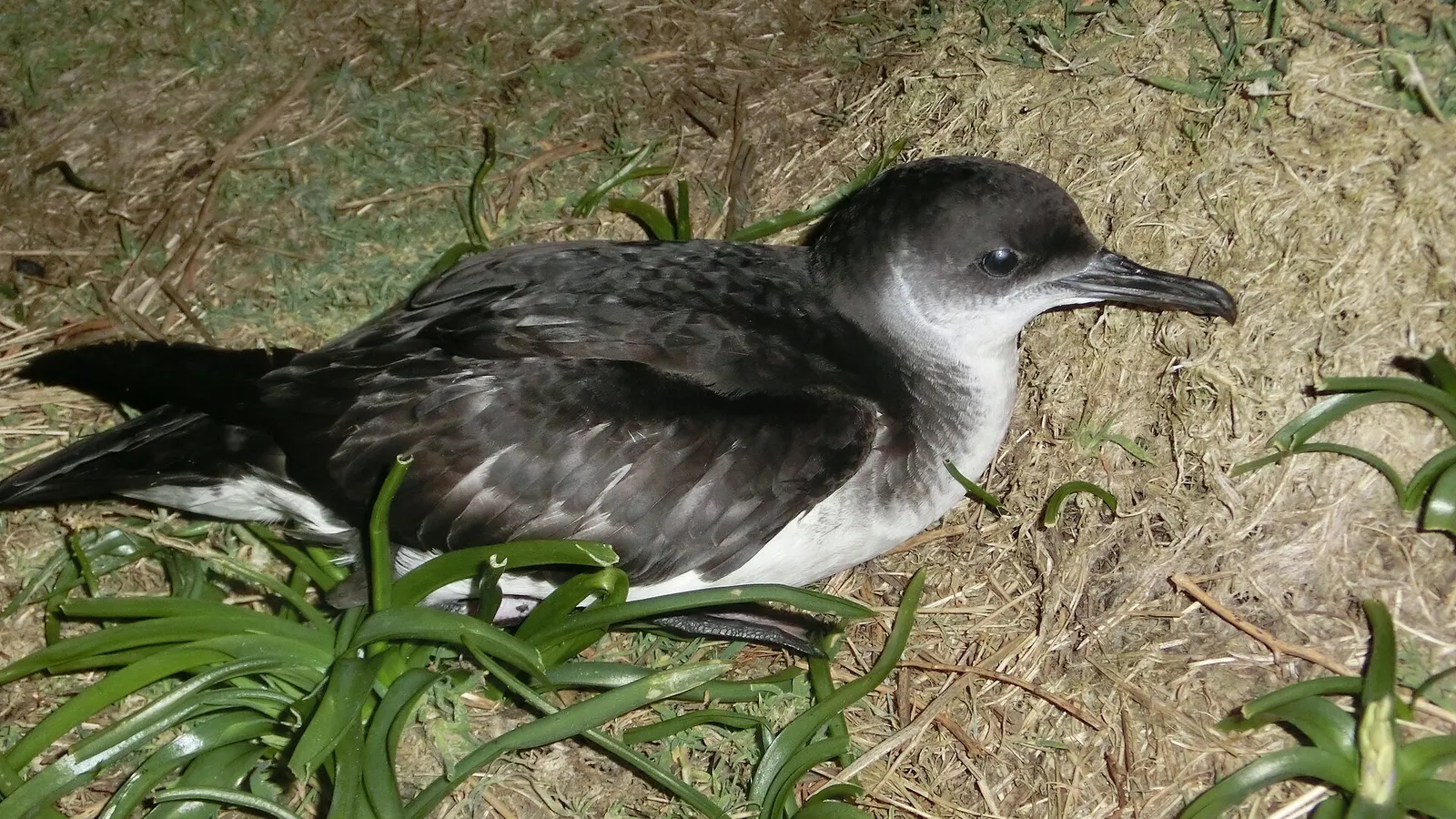

Manx Shearwater (Puffinus puffinus)
Contents
The Manx shearwater is a long-lived, black-and-white seabird that nests in burrows and visits its colonies only after dark. Scotland's population is concentrated almost entirely on the mountain tops of Rum, the largest colony in the world, while the old colonies of Orkney and Shetland have all but gone.
TL;DR
- established Between one-quarter and one-third of the entire world's Manx shearwater population breeds on the Scottish island of Rum, with research estimating approximately 100,000 breeding pairs there — a specific, documented global significance this article states directly rather than a vague claim of importance.
- established Manx shearwaters undertake a genuinely extraordinary migration, wintering off the coasts of Brazil and Uruguay, over 6,000 miles from Rum, with some individuals estimated to have covered around five million miles across their lifetimes — a specific, documented scale of travel this article states with its real figures.
- established The species' narrow, elegant wings make it an efficient low glider over waves, a technique known as "shearing," but the same wing shape makes takeoff from flat ground difficult, meaning the birds depend specifically on steep terrain, such as Rum's hillsides, to launch into flight — a concrete, mechanistic trade-off this article names directly rather than describing the wings as simply well-adapted.
- established Brown rats, an invasive species on parts of Rum, are documented predators of burrow-nesting seabirds including Manx shearwaters, and have been implicated in seabird population declines and extinctions worldwide — a real, documented threat this article states plainly.
- disputed Whether a full rat eradication campaign on Rum is justified remains a genuinely open question: eradication succeeded on the neighbouring island of Canna in 2005–06, but researchers have estimated the cost of removing rats from the larger island of Rum at approximately £4.6 million, and have suggested the island's remoteness and limited off-season resources supporting rat populations may provide natural protection for many shearwater colonies in most years — this article states both the Canna precedent and the Rum uncertainty directly without asserting which course of action is correct.
- established The Scottish Ornithologists' Club's The Birds of Scotland (2007) gives 126,545 apparently occupied sites in Scotland in 1999–2001, 34% of the world population, with 95% on Rum (about 120,000 in 2001). Bernie Zonfrillo's account there treats Rum as probably stable but records declines or losses at most other Scottish colonies.
- established Scots once ate shearwaters. Mingulay crofters paid rent in barrels of salted birds, and in Shetland the old name "lyrie", meaning "fat", survives in place names such as Lyra Skerry on Papa Stour and Leera Stack on Unst.
Key Facts
- Scientific name
- Puffinus puffinus
- Category
- Seabirds
- Rum's share of world population
- 25–33%
- Estimated Rum breeding pairs
- ~100,000
- Wintering grounds
- Off Brazil and Uruguay, 6,000+ miles from Rum
- Estimated lifetime distance (individual)
- ~5 million miles
- Key threat
- Brown rat predation (invasive, burrow-nesting vulnerability)
- Estimated cost of full Rum rat eradication
- ~£4.6 million
- Scottish names
- Cockersudie, Cockersootie (Shetland); Lyre, Lyrie or Liri (Orkney and Shetland)
- Britain and Ireland's share, 2005 estimate
- About 90% of the world population (250,000–300,000 pairs), per Birds Britannica
- Scottish population (1999–2001, historical)
- 126,545 apparently occupied sites, 95% on Rum (The Birds of Scotland)
- Rum colony history
- Known since at least 1716; 116,000 pairs late 1960s; 120,000 sites in 2001
- Nesting altitude on Rum
- Mostly on four mountain tops at 450–700 m
- Gaelic name
- Fachach-bàn
- Breeding
- One egg; incubation about 50 days; chick fledges at about 70 days
- Longevity
- Over 50 years recorded by ringing
Scottish Impact Index (SI Score)
- Scottish Significance
- 7/10
- Ecological Persistence
- 8/10
- Ecological Importance
- 8/10
- Biological Distinctiveness
- 7/10
- Conservation Significance
- 8/10
- Recognition
- 6/10
44/60
Ranked =40th of 42 in Wildlife
A Note on Claims and Evidence
Rum colony significance, migration, and flight adaptation details are drawn from published Scottish coastal heritage sources. Brown rat predation research, the rat removal experiment (2010–2013), eradication cost estimate, and the Canna precedent are drawn directly from research commissioned by Scottish Natural Heritage (now NatureScot). This article treats the question of whether full Rum rat eradication is justified as genuinely Disputed, reflecting researchers' own stated uncertainty and the documented cost-benefit tension involved. Vernacular names, the history of the harvest and the 2005 population figures come from Mark Cocker and Richard Mabey's Birds Britannica (2005); its figures are given as history, not as current counts.
The colony-by-colony history, the 1999–2001 survey, ringing results, breeding biology and the 2007 view of threats come from Bernie Zonfrillo's account in the Scottish Ornithologists' Club's The Birds of Scotland (2007). Its figures are history beside the later Rum estimate of about 100,000 pairs; because shearwaters are counted by tape playback at night in difficult terrain, the two totals should not be read as proof of a fall.
Timeline
Norse names for Rum's peaks, such as Trollaval, suggest the mountain-top colony was there at least a thousand years ago.
Breeding birds return from the South Atlantic in late March, lay in early May and leave in September after raising a single chick; outside the breeding season they live entirely at sea, wintering off eastern South America, more than 6,000 miles from Rum.
Francis Willughby describes the harvest of young shearwaters, then called "puffins", on the Calf of Man; the name survives in the scientific name Puffinus.
Martin Martin gives the earliest written Scottish record, from St Kilda; he also reports "puffins", presumably shearwaters, in the hills of Rum.
The great Rum colony is on record by this date.
The great Calf of Man colony dies out, probably because of rats; by 2005 fewer than 20 pairs nested on the Isle of Man.
Shearwaters last breed on Berneray, Barra, "when the lighthouse was built".
Mingulay's once abundant colony is described as "long since driven out".
The Papa Stour colony in Shetland is extinct.
Rum is estimated at 116,000 pairs.
Canna holds 1,000–1,500 pairs.
Brown rats are eradicated from Ailsa Craig; shearwaters are afterwards heard there in May and June.
Seabird 2000 counts 126,545 apparently occupied sites in Scotland, about 120,000 of them on Rum; Canna, hit by rats and feral cats, is down to 2.
Brown rats are successfully eradicated from the neighbouring island of Canna to restore seabird breeding habitat.
Scottish Natural Heritage commissions a rat removal experiment across three Rum study sites, treating some areas with rodenticide and leaving others as untreated controls, to assess rat activity and shearwater breeding success.
Researchers find variable rat populations across sites and years, note the documented global pattern of invasive rodents contributing to seabird declines and extinctions, and estimate a full Rum eradication campaign would cost approximately £4.6 million, while suggesting the island's remoteness and limited off-season resources may offer many shearwater colonies natural protection in most years.
Rum remains one of the world's most important Manx shearwater colonies, with the question of whether to pursue full rat eradication there still unresolved.
Details
A global stronghold, stated with its real scale
This article names Rum's significance to this species with real figures rather than a vague claim of importance: between one-quarter and one-third of the entire world's Manx shearwater population breeds there, with research estimating approximately 100,000 breeding pairs. This article states these figures directly because they establish Rum's genuine, measurable global conservation weight.
A migration described with its actual, extraordinary scale
This article presents the species' migratory journey with its real documented figures: wintering off the coasts of Brazil and Uruguay, over 6,000 miles from Rum, with some individuals estimated to have covered around five million miles across their lifetimes. This article states these specific figures because they convey the genuine, almost unimaginable scale of a seabird that spends nearly its entire life at sea, returning to land only briefly to breed.
A flight adaptation explained as a real trade-off, not a simple strength
This article names the mechanical trade-off behind the Manx shearwater's distinctive flight directly: its narrow wings allow it to glide with remarkable efficiency low across wave surfaces, a technique known as "shearing," but the same wing shape makes takeoff from flat ground genuinely difficult, so the species depends specifically on steep terrain such as Rum's hillsides to launch into the air. This article states this trade-off because it clarifies why the species' choice of breeding site is not incidental but mechanically necessary.
A documented predation threat, named specifically
This article states plainly that brown rats, present as an invasive species on parts of Rum, are documented predators of burrow-nesting seabirds including Manx shearwaters, and that invasive rodents have been implicated in seabird population declines and extinctions worldwide. This article names this threat directly because it represents a real, researched conservation concern rather than a speculative risk.
A genuinely unresolved question about what to do next
This article treats directly, rather than resolving in either direction, a real policy tension documented by the researchers themselves. Rat eradication succeeded on the neighbouring island of Canna in 2005–06, demonstrating the approach can work; but a full Rum eradication campaign has been estimated to cost approximately £4.6 million, and researchers have suggested the island's remoteness and limited resources supporting rat populations outside the breeding season may already provide many shearwater colonies with natural protection in most years. This article states both the successful precedent and the cost-benefit uncertainty because whether the expense and disruption of a Rum-wide campaign is justified, given this partial natural protection, remains an open question the research itself has not settled.
Lyrie, cockersudie and "puffin": the names
established Mark Cocker and Richard Mabey, in Birds Britannica (2005), give the Shetland names cockersudie and cockersootie, and a parallel Orkney and Shetland name spelt lyre, lyrie or liri, which, like the old English "puffin", meant "fat". The book suggests lyrie fell out of use because the bird almost vanished from the northern isles, but it survives in Shetland place names marking old colonies, such as Lyra Skerry on Papa Stour and Leera Stack on Unst. "Puffin" or "puffing" was originally the name for the fat young shearwater; it later passed to the auk we now call the puffin, while the Latin form Puffinus stayed with the shearwater.
Harvest, rent and a near-extinction on St Kilda
established The fat chicks were a valued food. Birds Britannica records that on Mingulay, in the Outer Hebrides, crofters paid their rent in barrels of salted shearwaters, and that on St Kilda demand from dealers for the eggs was so great that the birds there almost died out. Birds were also taken and eaten in Orkney and Shetland.
Rum's mountain colony
established Rum's colony is unusual for its height. The Birds of Scotland (2007) records most birds nesting on four mountain tops at 450–700 metres, with some lower down. Sand swallowed while the birds dig sandeels out of the seabed is excreted at the colony and, with the droppings, is thought to produce the bright high-altitude "greens" around the burrows. The birds come and go only after dark, filling the night with calls that Ronald Lockley, writing of the Welsh colonies, likened to "the crying of insane spirits". Rats are not the only danger on Rum. Birds Britannica notes that red deer there eat young Manx shearwaters, a parallel to the sheep on Foula that bite the heads and wings off young terns. The Birds of Scotland explains why: the deer kill fledglings exercising outside their burrows and eat the wing and leg bones, apparently for minerals lacking in their diet.
established In 2005 the book estimated that 90 per cent of the world's Manx shearwaters, some 250,000 to 300,000 pairs, nested in Britain and Ireland, mostly at three sites: Skokholm and Skomer in Pembrokeshire, and Rum. More recent counts, used elsewhere in this article, have changed the totals, but not Rum's place among the three great colonies.
established The "five million miles" figure often quoted comes from a Welsh bird. First caught on Bardsey in 1957, when it was thought to be five years old, it was retrapped as late as April 2003, and its half-century of migrations was estimated at about 5,000,000 miles.
The Scottish record to 2007
established One island. Bernie Zonfrillo's account in the Scottish Ornithologists' Club's The Birds of Scotland (2007) describes a species confined to no more than ten Scottish colonies, with 95% of the birds on Rum. Fieldwork in 1999–2001 found 126,545 apparently occupied sites, with 95% confidence limits of about 112,000 to 142,000. Rum had about 120,000, St Kilda about 4,800 (mostly on Hirta), the Treshnish Isles 1,283, Eigg 250 and Sanda 200. The account notes that the accuracy of the Rum survey decides the reliability of the whole total. The account adds that the Norse peak names suggest at least a thousand years of occupation, and that the "blood-curdling screams" from the colony were probably behind the trolls of the sagas.
established Lost colonies. The account's table of Scottish colonies is mostly a list of losses. Papa Stour was extinct before 1890, Burrafirth on Unst had probably gone by the mid-twentieth century, the Horse of Burravoe on Yell last bred in 1991, and Foula, Hoy and the Orkney sites were possibly extinct. Mingulay's colony, "abundant ... at one time", had long been driven out by 1888, and Canna fell from 1,000–1,500 pairs in the 1970s and 1980s to two sites in 2001, destroyed by rats and feral cats. Feral cats are also blamed for the end of the Foula and Fetlar colonies. Thomas Pennant's claim of breeding on the Caithness cliffs in the 1770s, if true, would be the only mainland record.
established Breeding. Birds return in late March and gather in large rafts offshore before coming ashore together after dark. Females leave for about two weeks before laying, which begins in early May. The single egg is not replaced if lost. Incubation takes about 50 days and the chick fledges at about 70, usually in September, then heads straight for South America. Monitoring on Rum found breeding success of up to 75% in good years and as low as 44% in poor weather. Most birds first breed at five to seven years old.
established Ringing. Scottish chicks have been recovered as far away as Santa Catarina in Brazil and southern Argentina. Some birds breeding on Rum and Canna were ringed as chicks in west Wales and Northern Ireland, so colonies exchange birds. Ringing shows this is one of the longest-lived birds, some exceeding 50 years. Huge feeding flocks gather off the west coast in late summer, including 20,000 off Frenchman's Rocks, Islay, on 2 September 2001.
established Rats and Rum in 2007. The account says Rum's shearwaters were not badly affected by rats in the 1980s, possibly because hard winters and a lack of winter food kept the rats down, and warns that milder winters may since have boosted rat survival. Zonfrillo wrote that "urgent action should be taken to eliminate them". The SNH-commissioned work described above, which found Rum's rats held in check in most years, came later, so the question remains open.
Did You Know?
- On Mingulay, crofters paid their rent in barrels of salted shearwaters.
- Red deer on Rum have been recorded eating young shearwaters.
- The word "puffin" first meant a young Manx shearwater, which is why the shearwater's scientific name is Puffinus.
- Between one-quarter and one-third of the entire world's Manx shearwater population breeds on the Scottish island of Rum.
- The species winters off Brazil and Uruguay, over 6,000 miles from Rum, and some individuals are estimated to travel around five million miles in a lifetime.
- Manx shearwaters' narrow wings make them superb low gliders over waves but make takeoff from flat ground difficult, so they depend on steep terrain to launch.
- Adults feed chicks at night, producing a distinctive "breathless bubbling" call during burrow visits.
- A single foraging trip for food can cover nearly 200 miles.
- Brown rats, present on parts of Rum, are documented predators of burrow-nesting seabirds like Manx shearwaters.
- A full rat eradication campaign on Rum has been estimated to cost around £4.6 million, and whether it is justified remains genuinely unresolved.
- The night-time screams of Rum's colony may lie behind the trolls of Norse legend, and one of the island's peaks is called Trollaval.
- Red deer on Rum eat the wing and leg bones of shearwater fledglings, apparently for minerals.
- Canna's colony of 1,000–1,500 pairs had shrunk to two burrows by 2001.
FAQ
1How important is Rum to this species globally?
Extremely — between one-quarter and one-third of the entire world's Manx shearwater population breeds there, an estimated 100,000 breeding pairs.
2How far do Manx shearwaters migrate?
Over 6,000 miles, wintering off Brazil and Uruguay, with some individuals estimated to cover around five million miles across their lifetimes.
3Why do they need steep terrain to breed?
Their narrow wings, while excellent for gliding low over waves, make takeoff from flat ground difficult, so they depend on steep hillsides like Rum's to launch into flight.
4Are rats a threat to this species?
Yes — brown rats, present on parts of Rum, are documented predators of burrow-nesting seabirds, and invasive rodents have been linked to seabird declines and extinctions worldwide.
5Has rat eradication worked elsewhere nearby?
Yes — brown rats were successfully eradicated from the neighbouring island of Canna in 2005–06.
6Should rats be eradicated from Rum too?
This remains genuinely unresolved — a full campaign has been estimated to cost around £4.6 million, and researchers suggest the island's remoteness may already protect many colonies naturally in most years.
7When do Manx shearwaters visit land?
Only to breed, and only after dark. Breeding birds are at the colonies from late March until the chicks fledge in September; the rest of the year is spent at sea.
8How many Manx shearwaters breed in Scotland?
The Birds of Scotland (2007) gives 126,545 apparently occupied sites in 1999–2001, 95% of them on Rum. More recent estimates for Rum are around 100,000 pairs, but counts of nocturnal burrow-nesters are imprecise.
9Did shearwaters once breed in Orkney and Shetland?
Yes. There were colonies on Papa Stour, Unst, Yell, Fetlar, Foula, Hoy and elsewhere. Nearly all have died out, some because of feral cats.
10How long can a Manx shearwater live?
Over 50 years, according to ringing records.
11What do they eat?
Fish and squid, which adults bring back to feed chicks at night, sometimes after foraging trips of nearly 200 miles.
12What did Shetlanders call the Manx shearwater?
Cockersudie or cockersootie, and also lyrie, meaning "fat", a name kept in places such as Lyra Skerry on Papa Stour and Leera Stack on Unst.
13Were shearwaters eaten in Scotland?
Yes. Mingulay crofters paid rent in barrels of salted birds, and on St Kilda the trade in eggs nearly wiped the colony out.
14Why is it called "Manx" if Rum has more?
The name comes from the huge colony on the Calf of Man, worked for its fat chicks in the seventeenth century, which died out in the early nineteenth century, probably because of rats.
Sources and Further Reading
Primary/Institutional
- Forrester, R. W., Andrews, I. J. et al. (eds), The Birds of Scotland (Scottish Ornithologists' Club, 2007), account by Bernie Zonfrillo
- Role of brown rats in seabird predation — NatureScot
- Manx Shearwater: the million mile seabird — Coast that Shaped the World
Scholarly/Critical
- Mark Cocker and Richard Mabey, Birds Britannica (Chatto & Windus, 2005)
- Reconstructing and forecasting the dynamics of an internationally important population of Manx shearwaters — ResearchGate
- Developing a population model for Rum Manx Shearwaters for assessing offshore wind farm impacts and conservation measures — Tethys
General
Caveats: Myths and Disputed Claims
- Clarification: This article does not assert that full rat eradication on Rum is necessarily justified or unnecessary; researchers' own findings leave the cost-benefit question genuinely open, distinct from the proven success of eradication on the neighbouring island of Canna.
- Do not attribute the famous "five million miles" lifetime estimate to a Rum bird; it was calculated for a shearwater ringed on Bardsey, Wales.
- Do not say shearwaters spend only a few weeks ashore; breeding birds attend the colonies from late March to September, though only at night.
- Do not read the gap between the 2001 Rum count (about 120,000 sites) and later estimates (about 100,000 pairs) as a measured decline; survey methods and precision differ.
- Note: This article does not describe the species' narrow wings as an unqualified adaptive strength; they involve a genuine flight trade-off requiring specific steep-terrain breeding sites.
Card 043 · Wildlife