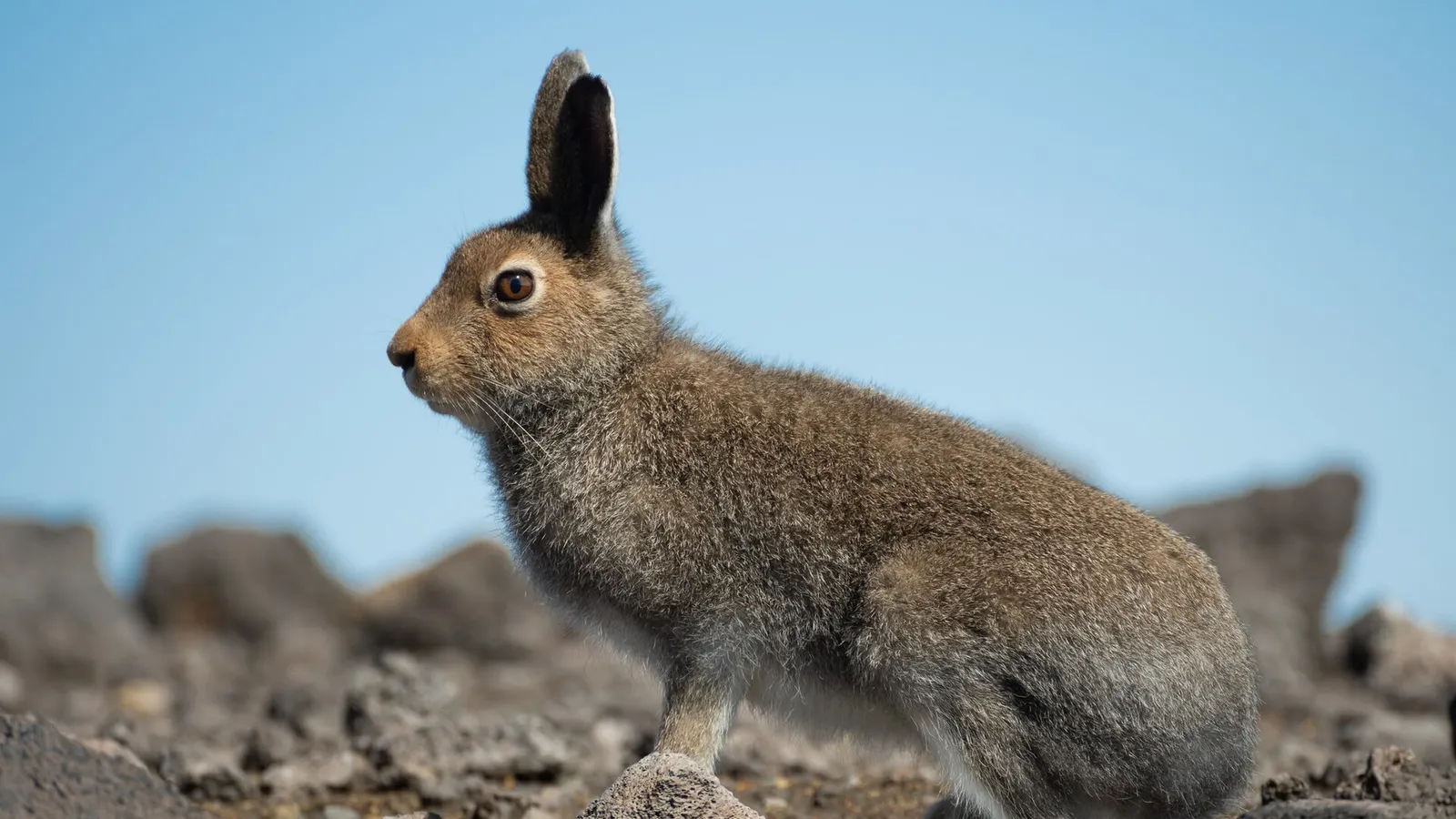

Mountain Hare (Lepus timidus)
Contents
TL;DR
- established A long-term scientific study documented mountain hare populations on Scottish grouse moors declining by nearly 5% annually between 1954 and 1999, before that decline accelerated to over 30% annually between 1999 and 2017 — reducing populations to less than 1% of their original levels by 2017, a catastrophic, precisely documented collapse this article states with its full specific scale.
- established Before 2020, up to 26,000 of Scotland's estimated 135,000 mountain hares were killed annually, largely on grouse moors and sporting estates, primarily justified by estate managers as disease control intended to benefit red grouse populations — a stated rationale this article names directly rather than leaving unspecified.
- disputed Scientists have stated there is no clear evidence that large-scale mountain hare culling produces any beneficial impact on the number of grouse subsequently shot, a conclusion the shooting industry disputes, maintaining that culling remains necessary for disease and overpopulation control — a genuine, unresolved scientific and policy disagreement this article presents from both documented positions.
- established On 17 June 2020, the Scottish Parliament voted to give mountain hares year-round legal protection under the Wildlife and Countryside Act, making it illegal to kill or injure them without a specific licence — a substantial, documented legislative response directly following the population decline evidence and years of conservation campaigning.
- established This legal change fundamentally altered the economic incentives facing grouse moor management, converting mountain hares from a valuable quarry species into a protected one, removing financial motivations that had previously existed for some estates to manage land in ways unfavourable to hare populations.
Key Facts
- Scientific name
- Lepus timidus
- Category
- Mammals
- Status
- Britain's only native hare species
- Documented decline (1999–2017)
- Over 30% annually on moorland sites
- Pre-2020 Scottish population estimate
- Approximately 135,000
- Pre-2020 annual cull (approx.)
- Up to 26,000
- Legal protection since
- 17 June 2020 (Wildlife and Countryside Act)
Scottish Impact Index (SI Score)
- Scottish Significance
- 9/10
- Ecological Persistence
- 9/10
- Ecological Importance
- 8/10
- Biological Distinctiveness
- 9/10
- Conservation Significance
- 8/10
- Recognition
- 8/10
51/60
Ranked =19th of 42 in Wildlife
A Note on Claims and Evidence
Population decline figures are drawn from long-term, peer-reviewed scientific monitoring, including research associated with the late scientist Adam Watson. The 2020 legal protection change and the preceding cull estimates are drawn from Scottish Parliament records and conservation organisation reporting. The question of whether culling produces any net benefit for grouse numbers is treated as genuinely Disputed, reflecting an active, unresolved disagreement between scientific researchers and shooting-industry representatives that this article presents from both documented positions rather than adjudicating.
Timeline
Mountain hares are present in Britain at least from the start of the last (Devensian) glaciation, over 100,000 years ago.
Mountain hares are introduced to Shetland, Hoy in Orkney, the Outer Hebrides, Skye, Raasay, Scalpay, Eigg, Mull, Islay and Jura; the Eigg and Islay populations later die out.
Introductions into Ayrshire and elsewhere establish mountain hares in southern Scotland.
Irish hares are introduced into south-west Scotland.
The Handbook of British Mammals records that gamekeepers shoot mountain hares in large numbers in late winter, sometimes several hundred in a day, with most carcasses exported to Germany.
Long-term monitoring documents mountain hare populations declining by nearly 5% annually on Scottish moorland sites.
This decline accelerates sharply to over 30% annually, reducing moorland populations to less than 1% of their original levels by 2017.
Up to 26,000 of Scotland's estimated 135,000 mountain hares are killed annually, predominantly on grouse moors and sporting estates, stated by estate managers to be for disease control benefiting red grouse.
Conservation organisations, including OneKind and the League Against Cruel Sports Scotland, campaign for increased legal protection, citing the documented population collapse.
The Scottish Parliament votes to extend year-round legal protection to mountain hares under the Wildlife and Countryside Act, making it illegal to kill or injure them without a specific licence.
Mountain hares shift from a legally huntable quarry species to a protected one, altering the economic calculus of grouse moor management; the species remains listed as Near Threatened by the Mammal Society.
Details
A decline measured precisely, not estimated vaguely
This article states the scale of mountain hare decline with the specific figures long-term scientific monitoring has actually documented: a near-5% annual decline on Scottish moorland sites between 1954 and 1999, accelerating sharply to over 30% annually between 1999 and 2017, leaving populations at less than 1% of their original levels by 2017. This article presents these precise figures directly, since "catastrophic decline" without quantification would understate the genuinely severe, documented scale of what occurred, particularly the marked acceleration in the final two decades of the study period.
A named, specific rationale for culling
This article states the stated justification for large-scale mountain hare culling directly rather than leaving it vague: estate managers have maintained that culling serves disease control purposes intended to benefit red grouse populations, particularly in relation to tick-borne disease management on managed grouse moors. This specific, named rationale is presented because evaluating the subsequent scientific dispute requires understanding precisely what claim is being contested.
A genuine, unresolved scientific and policy dispute
This article treats directly, rather than resolving in either direction, a real and ongoing disagreement over whether mountain hare culling actually achieves its stated purpose. Scientists have stated there is no clear scientific justification for large-scale culls and no evidence of any beneficial impact on the total number of grouse subsequently shot, with conservation bodies including the RSPB characterising some large-scale culls as unwarranted. The shooting industry disputes this, maintaining that culling remains necessary for disease and overpopulation control. This article presents both documented positions without declaring a winner, consistent with handling a genuinely contested technical and policy question with precise, evidence-based language rather than adjudicating beyond what has actually been scientifically settled.
Legislation that followed evidence, stated with its real scale
This article presents the Scottish Parliament's 17 June 2020 decision to grant mountain hares year-round legal protection as a substantial, documented legislative response directly connected to the preceding population decline evidence, rather than a routine administrative update. The specific scale of the change this legislation addressed — up to 26,000 animals killed annually from an estimated population of 135,000, a cull rate this article states plainly — helps explain why conservation organisations regarded the protection as urgently needed, and why its passage followed sustained, specifically documented campaigning.
What the 1991 Handbook recorded
Who wrote it. The mountain hare account in G. B. Corbet and S. Harris (eds), The Handbook of British Mammals (3rd edn, 1991) was written by Raymond Hewson of the University of Aberdeen, whose decades of work on north-east Scottish moors underpin much of what is known about the species. It describes the hare a decade before the steep decline set out above.
Names and races. The Handbook lists "blue hare" and "varying hare" as English names and maigheach gheal, "white hare", in Scottish Gaelic. The Scottish race, Lepus timidus scoticus, is smaller than the Scandinavian form and turns white in winter; the Irish hare stays brown or goes only partly white. Black mountain hares occur, principally in a population in Caithness.
Native core, introduced fringe. The species is indigenous only to the Highlands. Its presence on Shetland, Hoy, the Outer Hebrides, Skye, Mull, Jura and several smaller islands results from 19th-century introductions, as does the population in southern Scotland, which began with releases in Ayrshire and elsewhere around 1850. Irish hares were released in south-west Scotland around 1923.
Grouse moors as stronghold. In 1991 the hare was most numerous on grouse moors in north-east Scotland, because the rotational burning that provides young heather for grouse also suits hares. Hewson notes that bags of both species were higher on well-managed moors. Densities averaged about 46 hares per km² on heather over base-rich rocks, 6 over intermediate rocks and 3 over poor acidic rocks, and could reach 300 per km². The species was uncommon in the west and north-west. This explains why the later decline on grouse moors mattered so much: the moors held the bulk of the population.
Boom and bust. Numbers rose and fell sharply, with peaks roughly every ten years in Scotland, though Hewson found no firm evidence of a true cycle. He judged food shortage the likeliest trigger for crashes, and found that neither predation nor disease played an important part in regulating numbers. Recovery after a crash was slow, because each female produces only about six young a year.
Heather and snow. Heather is the main food, especially in winter, with cotton-grass and grasses at other times. Hares rest by day in forms bitten out of tall heather, which cut the wind by about 90%, or in short burrows dug into peat, and feed lower down at night. In deep snow they tunnel through drifts to reach their burrows. The winter moult is triggered by shortening days; its progress then depends on temperature and, from December, on snow-lie.
Breeding. Females probably have three litters of one to four leverets between March and July, after a gestation of about 50 days. Hares do not breed in the year of their birth, and the oldest recorded in the north-east study was at least nine years old.
How hares were treated in 1991. The Handbook states that the mountain hare was "not managed as a game species", but was shot in large numbers by gamekeepers in late winter. It notes that in exceptional cases hares might compete indirectly with grouse for heather. Disease and louping ill do not feature as reasons for culling in the account.
A changed economic landscape for grouse moor management
This article notes directly that the 2020 protection did more than prohibit individual killing: it fundamentally altered the financial incentives shaping grouse moor management by converting mountain hares from a quarry species with commercial sporting value into a protected one. This removed financial motivations that had previously existed for some estates to manage land in ways specifically unfavourable to mountain hare populations, a structural economic shift this article presents as a genuine, substantive consequence of the legislation beyond its direct prohibition on killing.
Did You Know?
- Mountain hares are Britain's only native hare species.
- Their population decline accelerated from roughly 5% annually (1954–1999) to over 30% annually (1999–2017) on Scottish moorland.
- By 2017, moorland mountain hare populations stood at less than 1% of their original documented levels.
- Up to 26,000 mountain hares were killed annually in Scotland before 2020 legal protection, from an estimated population of 135,000.
- Scientists have stated there is no clear evidence that culling benefits grouse shooting numbers.
- Mountain hares gained year-round legal protection in Scotland on 17 June 2020.
- They remain listed as Near Threatened by the Mammal Society.
- Mountain hares turn white in winter, a distinctive upland adaptation among British mammals.
- Mountain hares on Shetland, Orkney, Skye, Mull and the Outer Hebrides descend from 19th-century introductions; the species is native only to the Highlands.
- A heather form made by a resting hare cuts the wind by about 90%.
- In 1991 most mountain hares shot in Scotland were exported to Germany for food.
- Black mountain hares are found principally in Caithness.
FAQ
1How severe has the mountain hare decline been?
Extremely severe on grouse moors — populations fell to less than 1% of their original levels by 2017, with annual decline accelerating sharply after 1999.
2Why were mountain hares culled?
Primarily for stated disease control purposes intended to benefit red grouse populations on managed sporting estates.
3Does the evidence support culling for disease control?
This is genuinely disputed — scientists state there is no clear evidence culling benefits grouse numbers, while the shooting industry maintains it remains necessary.
4Are mountain hares protected now?
Yes — since 17 June 2020, they have had year-round legal protection under the Wildlife and Countryside Act.
5How many mountain hares were killed before protection?
Up to 26,000 annually, from an estimated Scottish population of 135,000.
6Did legal protection change grouse moor economics?
Yes — it removed the financial incentive for some estates to manage land unfavourably for hare populations, since hares are no longer a huntable quarry species.
7Is the mountain hare still considered threatened?
Yes — it remains listed as Near Threatened by the Mammal Society despite the 2020 protection.
8What makes mountain hares distinctive?
They are Britain's only native hare, adapted to upland environments and known for turning white in winter.
9Are mountain hares native to the Scottish islands?
Mostly not. The 1991 Handbook of British Mammals records them as indigenous only in the Highlands, with island populations on Shetland, Hoy, the Outer Hebrides, Skye, Mull and Jura introduced in the 19th century.
10Why were mountain hares so common on grouse moors?
Rotational heather burning for grouse produces the young heather hares prefer. In 1991 densities on good moors averaged about 46 per km² and could reach 300.
11How many young does a mountain hare have?
Probably three litters of one to four leverets a year in Scotland, between March and July, or about six young a year on average. That low output makes recovery after a crash slow.
Sources and Further Reading
Primary/Institutional
- Mountain hares gain special protection in Scotland — Countryfile
- Safeguarding mountain hare populations in Scotland — Mammal Society
- SNH-GWCT-SL&E position on large-scale culls of mountain hares to reduce louping ill — NatureScot
Scholarly/Critical
- G. B. Corbet and S. Harris (eds), The Handbook of British Mammals, 3rd edn (Blackwell Scientific, 1991), account by R. Hewson
- Severe declines in mountain hares on Scottish grouse moors — British Ecological Society
- Mountain hare numbers fall by a "catastrophic" 90% — TFN
General
Caveats: Myths and Disputed Claims
- Clarification: This article does not claim culling has definitively been proven to provide zero benefit to grouse populations; rather, it reports the scientific consensus that no clear evidence supports the claimed benefit, a position the shooting industry disputes.
- Do not describe every Scottish mountain hare population as native; those on the islands and in southern Scotland come from 19th- and early 20th-century introductions.
- Do not treat the 1991 density figures as current; they describe north-east grouse moors before the post-1999 collapse.
- Note: This article does not adjudicate the appropriate licensing threshold for mountain hare management under the post-2020 legal framework; it reports the legislative change and its documented effects on grouse moor economics.
Card 008 · Wildlife