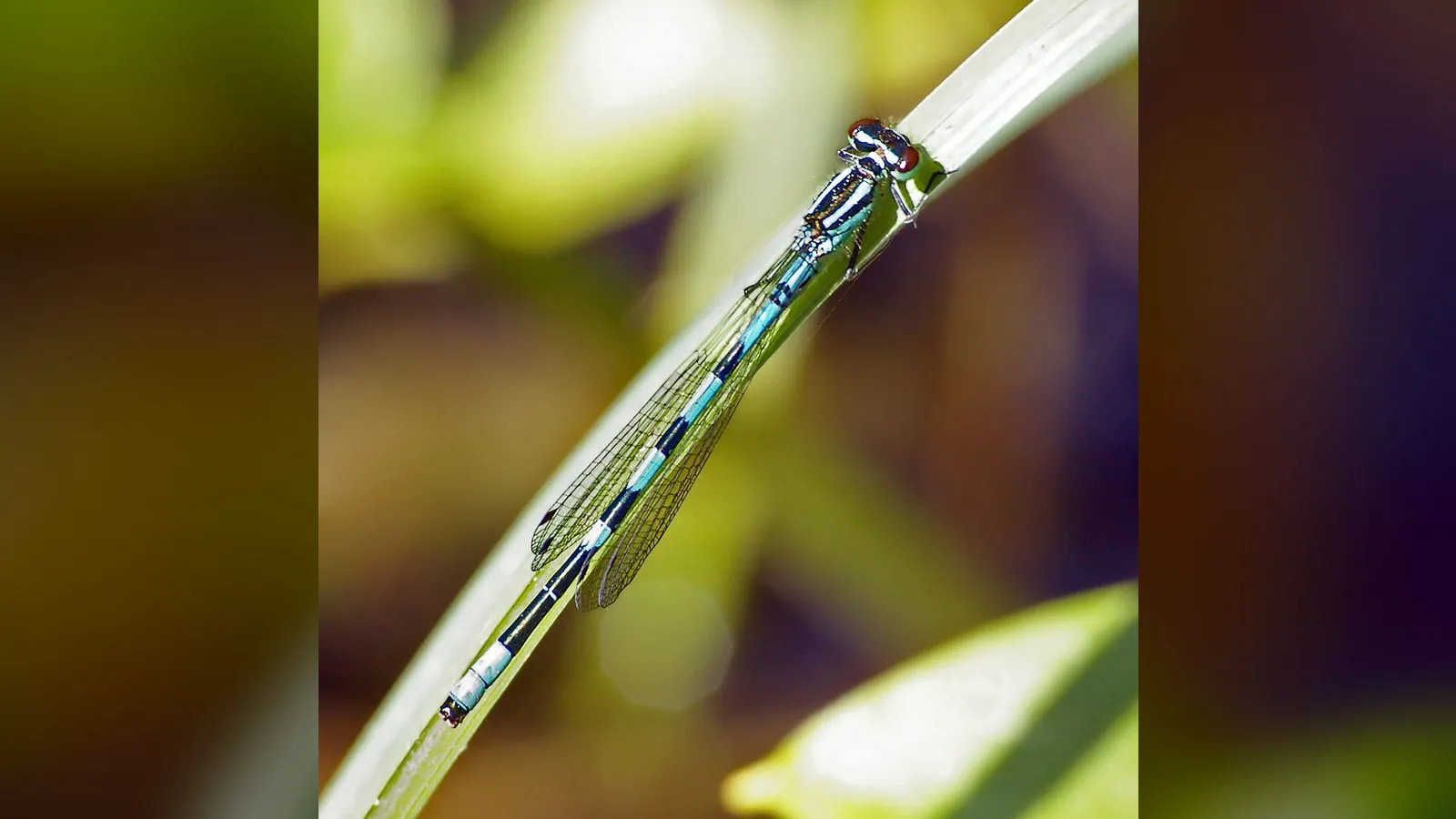

Northern Damselfly (Coenagrion hastulatum)
Contents
TL;DR
- established The northern damselfly is restricted in the UK entirely to the Scottish Highlands, found at only around 30 known sites across the Cairngorms National Park, making it one of Britain's most geographically confined insect species — a specific, documented restriction this article states directly rather than a vague claim of rarity.
- established The species depends on a particular habitat: sedge-fringed, boggy lochans and small, shallow waterbodies in upland areas, with larvae developing underwater for two years before emerging as adults in May — a specific, documented two-year developmental dependency on stable bog-pool conditions this article names directly.
- established The British Dragonfly Society's 2026 Red List review classifies the species as Endangered, citing climate change — rising temperatures and increasingly erratic rainfall threatening the bog-pool habitat it depends on — alongside habitat loss from ditch installation, drainage, peat extraction, and upland afforestation.
- disputed Separately, recent Cairngorms National Park reporting describes the species' population as now increasing, suggesting this may in part reflect warming temperatures extending its favourable conditions and new ponds created by reintroduced beavers — a genuinely tension-holding pair of findings this article states directly rather than resolving in either direction, since an Endangered Red List classification citing climate change as a threat and a reported local population increase potentially linked to that same warming are not straightforwardly reconciled by current public reporting.
- established The species is a weak flier, easily confused with the much more common Common Blue Damselfly, and is reliably distinguished only by close examination of specific features including its "Coenagrion spur" and thin, rather than thick, thoracic stripes — a specific, documented identification difficulty this article names directly.
Key Facts
- Scientific name
- Coenagrion hastulatum
- Category
- Invertebrates
- UK distribution
- Scottish Highlands only, ~30 known sites in Cairngorms National Park
- Conservation status (2026 Red List review)
- Endangered
- Larval development period
- ~2 years, underwater
- Adult flight period
- Brief, beginning in May
- Body length
- 31mm
A Note on Claims and Evidence
Distribution, habitat, identification, and Red List status details are drawn from the British Dragonfly Society's published assessment. Site-count and behavioural detail are drawn from Cairngorms National Park's published species information. The population-trend question is treated as genuinely Disputed: the Red List assessment cites climate change as a threat to the species' bog-pool habitat, while separate Cairngorms National Park reporting describes a recent population increase potentially linked to warming and beaver-created habitat, and these two findings are not reconciled in the publicly available sources used for this article.
Timeline
The northern damselfly establishes itself as a highly habitat-specific species confined, within the UK, entirely to sedge-fringed boggy lochans in the Scottish Highlands.
The species' larvae develop underwater for approximately two years before emerging as adults during a brief flight period beginning in May, a developmental cycle dependent on stable bog-pool conditions throughout.
The British Dragonfly Society's Red List review classifies the species as Endangered, citing climate change — rising temperatures and increasingly erratic rainfall affecting bog-pool habitat — alongside habitat loss from drainage, peat extraction, and afforestation.
Cairngorms National Park reporting separately describes the species' population as now increasing, citing warming temperatures and new ponds created by reintroduced beavers as potential contributing factors.
The northern damselfly remains confined to around 30 known Cairngorms sites, with its Endangered status and separately reported local population increase both part of the current, not fully reconciled, picture of its Scottish status.
Details
A restriction stated with its real geographic scale
This article names the northern damselfly's UK range with its actual documented confinement rather than a vague description of rarity: restricted entirely to the Scottish Highlands, found at only around 30 known sites across the Cairngorms National Park. This article states this specific figure directly because it conveys just how narrow the species' entire UK foothold genuinely is.
A habitat dependency explained with real developmental detail
This article names the species' reliance on its boggy lochan habitat mechanistically rather than vaguely: larvae develop underwater for approximately two years before emerging as adults during a brief flight period beginning in May, a prolonged developmental window dependent on stable bog-pool water conditions throughout. This article states this timeline directly because it clarifies why disruption to bog-pool stability — through drainage, peat extraction, or changing rainfall patterns — threatens not just adult habitat but the entire multi-year developmental process on which the species depends.
An Endangered classification, stated with its documented basis
This article presents the species' 2026 Red List Endangered classification with its real cited basis: climate change, through rising temperatures and increasingly erratic rainfall affecting bog-pool habitat, alongside habitat loss from ditch installation, drainage, peat extraction, and upland afforestation. This article names these specific threats directly because they represent the documented reasoning behind a formal conservation status, not a general assumption of rarity-equals-risk.
A genuinely unresolved tension in the current picture
This article treats directly, rather than smoothing into a single simple narrative, a real tension in current reporting on the species: the same British Dragonfly Society Red List process that classifies the species Endangered specifically cites climate change as a threat to its habitat, while separate Cairngorms National Park reporting describes the species' population as now increasing, suggesting warming temperatures and beaver-created ponds may be contributing factors. This article states both findings plainly because conflating them into either "the species is simply declining" or "the species is now recovering thanks to climate change" would overstate what the publicly available sources, read together, actually establish; the underlying mechanisms — habitat drying versus habitat creation, and over what timescale each effect dominates — are not resolved here.
An identification challenge, named specifically
This article states the species' resemblance to the far more common Common Blue Damselfly directly, because it is a documented, specific source of recording difficulty: the northern damselfly is reliably distinguished only through close examination of features including its "Coenagrion spur" and thin, rather than thick, thoracic stripes, rather than through more casual field observation. This article names this difficulty because it is relevant to how confidently any reported sighting or distribution figure for this species should be read.
Did You Know?
- The northern damselfly is found in the UK only in the Scottish Highlands, at around 30 known sites in the Cairngorms National Park.
- Its larvae spend about two years developing underwater before a brief adult flight period beginning in May.
- The species was classified Endangered in the British Dragonfly Society's 2026 Red List review, citing climate change among its threats.
- Separately, recent Cairngorms reporting describes the species' population as now increasing, possibly aided by warming and beaver-created ponds.
- It is a weak flier, easily mistaken for the much more common Common Blue Damselfly.
- Reliable identification depends on close examination of its "Coenagrion spur" and thin thoracic stripes.
- Males have a distinctive spearhead-shaped marking near their wings; females appear black from above but green from the side.
FAQ
1Where is the northern damselfly found in the UK?
Only in the Scottish Highlands, at around 30 known sites within the Cairngorms National Park.
2What habitat does it need?
Sedge-fringed, boggy lochans and small, shallow upland waterbodies, with larvae developing underwater there for about two years.
3Is the northern damselfly endangered?
Yes — it was classified Endangered in the British Dragonfly Society's 2026 Red List review, citing climate change and habitat loss as threats.
4Is its population increasing or declining?
This is genuinely unclear from current public reporting — an Endangered classification citing climate change sits alongside separate reporting describing a recent local population increase potentially linked to that same warming.
5Why might climate change help the species in some reporting but threaten it in others?
Reporting on this is not fully reconciled; rising temperatures and erratic rainfall are cited as threatening bog-pool habitat stability, while warming has also been suggested as potentially extending favourable conditions elsewhere.
6How is it distinguished from the Common Blue Damselfly?
Through close examination of specific features, including its "Coenagrion spur" and thin, rather than thick, thoracic stripes — casual observation is not reliable.
7Do beavers help this species?
Recent Cairngorms reporting suggests new ponds created by reintroduced beavers may be contributing to a reported local population increase.
8When can the northern damselfly be seen?
During its brief adult flight period, which begins in May.
Sources and Further Reading
Caveats: Myths and Disputed Claims
- Clarification: This article does not resolve whether the northern damselfly's Scottish population is net declining or net increasing; an Endangered Red List classification citing climate change as a threat and separately reported recent population increases are both stated, without this article adjudicating between them.
- Note: This article does not present casual sightings of this species as reliable; confusion with the much more common Common Blue Damselfly is a documented, specific identification difficulty.
Card 039 · Wildlife