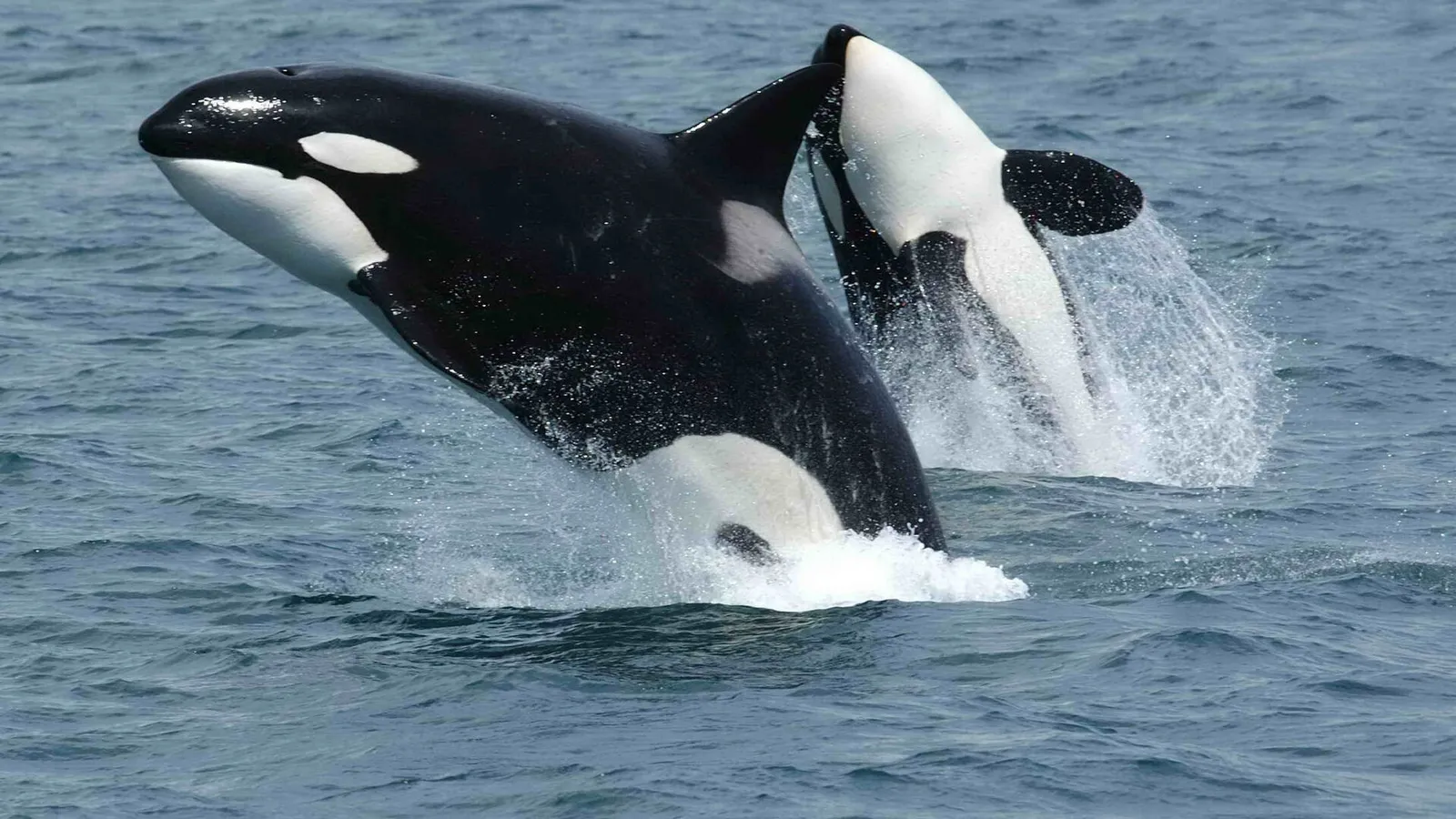

Orca (Orcinus orca)
Contents
TL;DR
- established Scotland's West Coast Community of orcas — a distinct, long-studied family group — has collapsed from roughly ten individuals catalogued in the 1980s to just two confirmed survivors today, John Coe and Aquarius, both males now over 50 years old — this article states this collapse with its full, bleak scale rather than describing the pod as merely "declining."
- established This population has never been recorded producing a single calf in over three decades of study since the early 1990s, and with both surviving members male and beyond typical reproductive age, marine researchers describe the pod's extinction as effectively certain — this article states this directly rather than offering false hope about recovery.
- established Post-mortem analysis of Lulu, a West Coast Community female who died entangled in rope, probably from fishing gear or creel lines, in 2016 at around 20 years old, found she had never been pregnant and that her blubber contained about 950 mg of PCBs per kg of lipid — more than 100 times the 9 mg/kg threshold known to cause harm to marine species, and well above the roughly 150 mg/kg average contamination level found in other North Atlantic orcas — a specific, documented toxicological finding this article states with its real severity.
- established PCBs (polychlorinated biphenyls), industrial chemicals banned in the UK decades ago but persistent in the marine food chain, are named directly as a primary documented driver of the population's reproductive failure, compounding other threats including fishing-gear entanglement, underwater noise from fish farms and military sonar testing, and reduced prey availability linked to overfishing.
- established The West Coast Community's situation is presented by researchers as a stark, specific warning rather than an isolated local tragedy, since banned industrial pollutants persisting at damaging concentrations in apex marine predators decades after prohibition illustrates a longer-term, ongoing legacy contamination problem this article does not minimise.
Key Facts
- Scientific name
- Orcinus orca
- Category
- Marine Mammals
- Scottish population (West Coast Community)
- 2 confirmed individuals (down from ~10 in the 1980s)
- Calves recorded (since early 1990s study began)
- None
- Documented PCB level in Lulu (died 2016)
- About 950 mg/kg (lipid weight) — over 100x the harm threshold
- Survival outlook
- Described by researchers as effectively certain extinction
- Key threats
- PCB contamination, entanglement, noise pollution, reduced prey
- Other names
- Killer whale; grampus (older usage)
- Distribution in 1991 (Handbook)
- Small numbers along the Atlantic seaboard and northern North Sea; rare in the southern North Sea and Channel
- Norwegian catch, 1938–1981
- 2,455 killer whales, in coastal and offshore waters including around the Northern Isles
Scottish Impact Index (SI Score)
- Scottish Significance
- 8/10
- Ecological Persistence
- 7/10
- Ecological Importance
- 9/10
- Biological Distinctiveness
- 9/10
- Conservation Significance
- 9/10
- Recognition
- 10/10
52/60
Ranked =15th of 42 in Wildlife
A Note on Claims and Evidence
Population figures, the absence of recorded calves, and Lulu's post-mortem PCB findings are drawn from Whale and Dolphin Conservation reporting and published toxicological analysis. The characterisation of the West Coast Community's extinction as effectively certain reflects the explicit assessment of marine researchers studying the pod, given the remaining individuals' sex and age, and is treated as Established rather than speculative given the clarity of that scientific consensus.
The wider history of killer whales in British waters, including hunting and the picture of their distribution and behaviour in 1991, comes from P. G. H. Evans's cetacean chapter in The Handbook of British Mammals (3rd edition, 1991). That account predates the photo-identification work on the West Coast Community and is used here as dated background.
Timeline
Norwegian whalers take 2,455 killer whales in coastal and offshore waters of the north-east Atlantic; Norwegian small-whale vessels also operate around the Northern Isles.
A live-capture fishery for killer whales begins off Iceland, supplying dolphinaria.
The West Coast Community, a distinct orca family group around Scotland and Ireland, is catalogued with approximately ten individuals.
The International Whaling Commission's ban on commercial whaling comes into effect, ending legal commercial catches of killer whales in the north-east Atlantic.
The Handbook of British Mammals describes killer whales as widely but thinly distributed in British and Irish waters, mainly along the Atlantic seaboard and in the northern North Sea.
Sustained scientific study of the population begins; no calf is recorded at any point from this date forward.
Lulu, a West Coast Community female around 20 years old, dies after becoming entangled in rope, probably from fishing gear or creel lines; post-mortem analysis finds she had never been pregnant and records a PCB blubber concentration of about 950 mg/kg of lipid, over 100 times the known harm threshold.
Sightings confirm only two surviving members of the pod, John Coe and Aquarius, both males over 50 years old; the fate of the other original individuals is unknown, with researchers presuming most have died.
Marine researchers assess the West Coast Community's extinction as effectively certain, given the absence of any female or reproductively viable member, while PCB contamination, entanglement, noise pollution, and reduced prey availability continue to be documented as compounding pressures on orcas in Scottish waters generally.
Details
A collapse stated with its real, bleak scale
This article does not soften the trajectory of Scotland's West Coast Community: from roughly ten individuals catalogued in the 1980s, the population has fallen to just two confirmed survivors, John Coe and Aquarius, both males now over 50 years old. The fate of the pod's other members is not definitively known, but researchers presume most have died, since no sightings confirm otherwise. This article states this collapse plainly because describing the situation as a vague "decline" would understate a population now at the edge of extinction.
Three decades without a single calf
This article states directly, rather than treating it as one statistic among many, that the West Coast Community has never been recorded producing a calf throughout more than three decades of sustained scientific study beginning in the early 1990s. Combined with the two surviving members both being male and beyond typical reproductive age, this reproductive failure is central to why researchers now regard the population's extinction as effectively certain rather than merely at risk.
A specific, documented toxicological finding
This article presents the post-mortem findings from Lulu, who died entangled in rope, probably from fishing gear or creel lines, in 2016 at around 20 years old, with their real scientific weight: despite reaching reproductive age, she had never been pregnant, and her blubber contained about 950 mg of PCBs per kg of lipid — more than 100 times the 9 mg/kg threshold known to cause harm to marine species, and substantially above the roughly 150 mg/kg average contamination level documented in other North Atlantic orcas. This article states these figures directly because they represent concrete, measured evidence connecting industrial chemical pollution to the population's specific reproductive failure, rather than a general assumption about pollution's harm.
A banned chemical's persistent, documented legacy
This article names PCBs directly as a primary documented contributor to the population's collapse: these industrial chemicals, though banned in the UK decades ago, persist and bioaccumulate up the marine food chain, reaching extreme concentrations in long-lived apex predators such as orcas. This article treats this as a specific, substantive finding rather than a vague reference to "pollution," since the measured contamination levels found in Lulu and other North Atlantic orcas demonstrate a continuing legacy impact from chemicals prohibited long before her death.
A warning the article does not minimise
This article presents the West Coast Community's situation as researchers themselves frame it: not an isolated local tragedy, but a stark illustration of how legacy industrial pollution can persist at population-ending concentrations in top marine predators for decades after the responsible chemicals were banned. Compounding pressures — entanglement in fishing gear, underwater noise pollution from fish farms and military sonar testing, and reduced prey availability linked to overfishing — are named directly alongside PCB contamination as documented contributing threats, rather than treated as secondary or incidental factors.
Killer whales in Scottish waters: the 1991 picture
Distribution. Before the West Coast Community became well known, P. G. H. Evans summarised what was known in The Handbook of British Mammals (1991). Killer whales were widely distributed in small numbers in British and Irish waters, mainly along the Atlantic seaboard and in the northern North Sea, and were rare or absent in the southern North Sea and English Channel. They were seen in every month, but in coastal waters mainly between April and September, with some evidence of an offshore movement in late autumn and winter, possibly linked to mating and calving.
Group size. Most British sightings were of single animals or groups of fewer than eight. One group in the northern North Sea numbered 80 to 100. Elsewhere, groups commonly reached 40 and sometimes exceeded 100, probably as temporary gatherings.
Prey. The Handbook lists a very varied diet: fish such as salmon, herring, cod and mackerel; squid; and marine mammals including minke whales, pilot whales, harbour porpoises and grey seals. It records a group seen off northern Scotland feeding cooperatively on a grey seal, with an adult male making the kill and then moving aside for the rest of the group to feed. This fits the modern picture of the Northern Isles groups that hunt seals around Shetland and Orkney.
Hunting and capture. Killer whales were hunted opportunistically in the eastern Canadian Arctic, west Greenland and the Faroes, but commercial catches were mainly Norwegian: 2,455 animals between 1938 and 1981, in coastal and offshore waters. The Handbook's introduction to the cetaceans notes that Norwegian vessels took killer whales, among other small whales, around the Northern Isles in the decades before the 1986 moratorium. From 1975 a live-capture fishery off Iceland supplied killer whales to dolphinaria. Killer whales were sometimes seen as a threat to fisheries for herring, halibut and salmon, but the Handbook found no evidence of any serious effect.
A slow life history. The figures in the Handbook help explain why the West Coast Community could not recover. Females were thought to mature at eight to ten years and males at 15 to 16. Gestation lasts about 12 months, possibly longer, and the gap between calves is at least three years and sometimes eight or nine. Males were thought to live over 50 years and females over 80. A population that breeds this slowly cannot make up losses quickly, and one that stops breeding altogether cannot survive.
Did You Know?
- Scotland's West Coast Community of orcas has fallen from roughly ten individuals in the 1980s to just two confirmed survivors today.
- The population has never been recorded producing a single calf since sustained study began in the early 1990s.
- Both surviving orcas, John Coe and Aquarius, are male and over 50 years old, making recovery effectively impossible.
- Lulu, a West Coast Community female who died in 2016, was found to have PCB contamination over 100 times the threshold known to cause harm to marine species.
- PCBs, banned in the UK decades ago, persist in the marine food chain and remain measurably present in orcas today.
- Marine researchers have described the West Coast Community's extinction as effectively certain.
- Orcas face compounding threats in Scottish waters, including entanglement, noise pollution from fish farms and military sonar, and reduced prey from overfishing.
- Norwegian whalers caught 2,455 killer whales between 1938 and 1981, and their vessels hunted small whales around the Northern Isles.
- A group of 80 to 100 killer whales was once recorded in the northern North Sea.
- An adult male killer whale's dorsal fin can stand up to 1.8 m tall.
FAQ
1How many orcas remain in Scotland's West Coast Community?
Just two confirmed individuals, John Coe and Aquarius, both males over 50 years old, down from roughly ten in the 1980s.
2Has this population ever produced a calf?
No — none has been recorded throughout more than three decades of sustained study since the early 1990s.
3Is the population expected to recover?
No — researchers describe its extinction as effectively certain, since both surviving members are male and beyond reproductive age.
4What killed Lulu, and what did her post-mortem find?
She died entangled in rope, probably from fishing gear or creel lines, in 2016; her post-mortem found she had never been pregnant and carried PCB contamination more than 100 times the known harm threshold.
5What are PCBs, and why do they still matter?
Polychlorinated biphenyls are industrial chemicals banned in the UK decades ago but which persist in the marine food chain, reaching extreme, measurable concentrations in long-lived predators like orcas.
6Is PCB contamination the only threat orcas face in Scottish waters?
No — entanglement in fishing gear, underwater noise pollution from fish farms and military sonar, and reduced prey from overfishing are also documented, compounding pressures.
7Is this situation unique to Scotland?
No — researchers present it as a specific illustration of a broader legacy pollution problem affecting orca populations more widely in the North Atlantic.
8Are there other orca populations in Scottish waters?
Yes — other orcas, including a separate community associated with the Northern Isles, are documented in Scottish waters, distinct from the West Coast Community.
9Were killer whales ever hunted in Scottish waters?
Yes, by Norwegian vessels, which took killer whales among other small whales around the Northern Isles before the 1986 moratorium. Norway's total catch between 1938 and 1981 was 2,455.
10Do killer whales eat seals in Scotland?
Yes. The Handbook recorded a group off northern Scotland feeding cooperatively on a grey seal, and its prey list includes minke whales and harbour porpoises.
11When are killer whales most often seen off the Scottish coast?
They can be seen in any month, but coastal sightings are concentrated between April and September.
Sources and Further Reading
Primary/Institutional
- Tragic tale of the UK orcas facing extinction — Whale and Dolphin Conservation
- It's not all black and white... Scottish Killer Whales — Hebridean Whale & Dolphin Trust
Scholarly/Critical
- G. B. Corbet and S. Harris (eds), The Handbook of British Mammals, 3rd edn (Blackwell Scientific, 1991), cetacean chapter by P. G. H. Evans.
- And then there were two: Fears for Scotland's at-risk orca pod destined for extinction — The Sunday Post
- UK killer whales may go extinct after pollutants left them infertile — Earth.com
General
-
Countryfile, "Scotland's orca killed by rope entanglement, finds post mortem" (January 2016): https://www.countryfile.com/wildlife/scotlands-orca-killed-by-rope-entanglement-finds-post-mortem
Caveats: Myths and Disputed Claims
- Clarification: This article does not suggest any realistic prospect of recovery for the West Coast Community; researchers' assessment of effectively certain extinction reflects the pod's documented age, sex composition, and three-decade reproductive record.
- Note: This article focuses specifically on the West Coast Community; other orcas recorded in Scottish waters, including groups associated with the Northern Isles, follow a separate population history not comprehensively covered here.
- Do not give Lulu's PCB level as a bare "950mg"; it is a concentration of about 950 mg per kg of blubber lipid.
- Do not assume killer whales in Scottish waters were never hunted; Norwegian vessels took them around the Northern Isles in the 20th century.
Card 013 · Wildlife