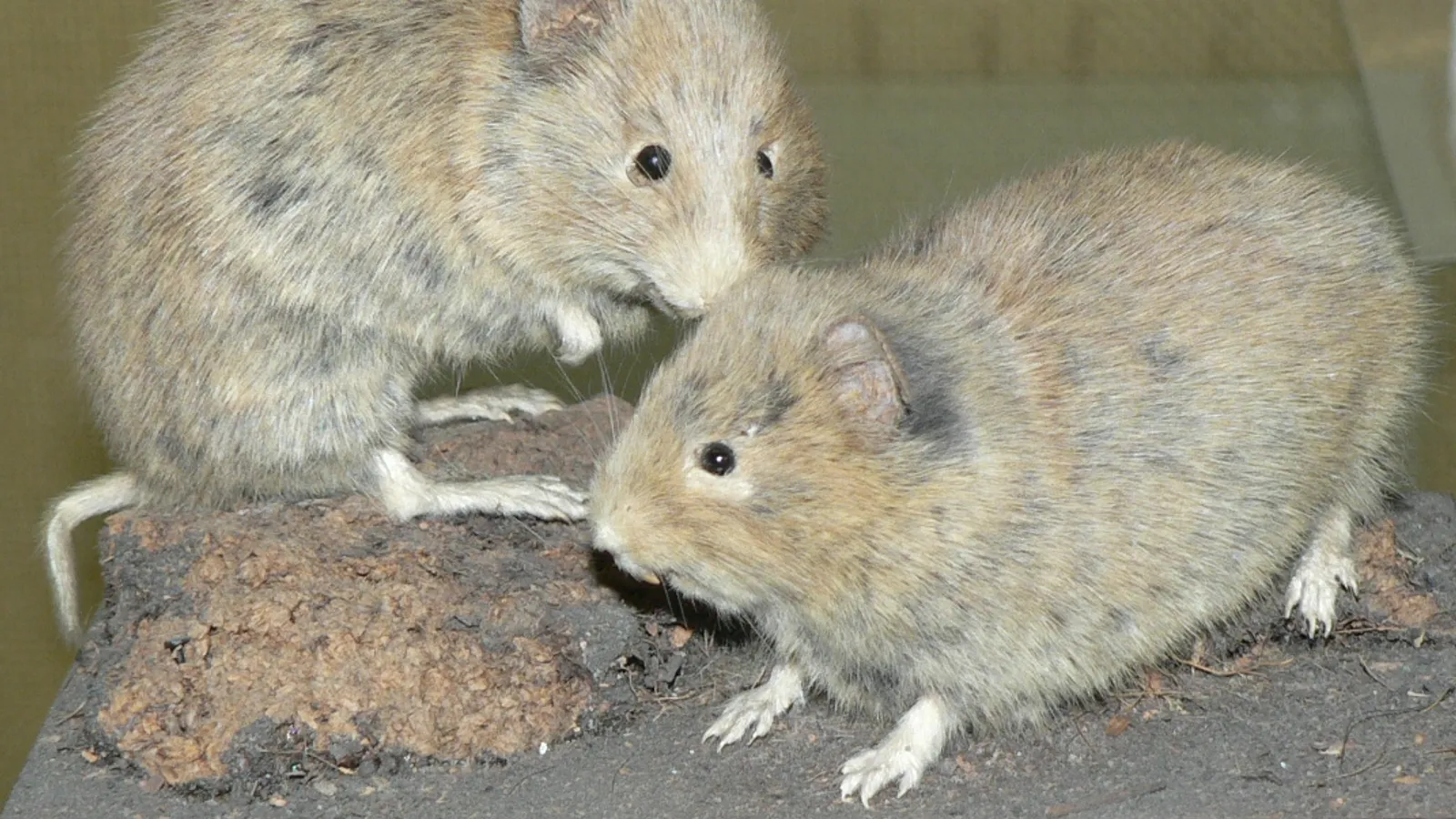

Orkney Vole (Microtus arvalis orcadensis)
Contents
TL;DR
- established Genetic and archaeological research has established that Orkney voles are not native in the sense of arriving unaided: they most likely arrived from the Belgian coast around 5,100 years ago during the Neolithic period, transported by early farmers, either deliberately or accidentally, through maritime trade and exchange networks — a specific, documented origin this article states directly rather than treating the species as simply "always having been there."
- established This research produced a genuinely striking finding: modern Orkney voles retain greater genetic diversity than their continental European relatives, the reverse of what standard island-colonisation theory would predict, suggesting the isolated island population preserves a snapshot of prehistoric genetic variation that has since been lost on the European mainland — a specific, counterintuitive result this article states with its real evidential basis.
- established Invasive, non-native stoats, first recorded on Orkney in 2010, posed a severe documented threat to the vole, prompting the Orkney Native Wildlife Project, a partnership between RSPB Scotland, NatureScot, and Orkney Islands Council, which has removed over 8,500 stoats from the islands since 2019 — a specific, quantified conservation response this article states directly.
- established Spring 2025 surveys recorded Orkney vole activity at the highest level since regular surveys began, with signs found in roughly one-third of surveyed squares (358 of 1,082) — a specific, measured recovery this article states with its real figures rather than a vague claim of improvement.
- established This vole recovery has been directly linked to measured breeding gains in two predator species that depend heavily on voles for food: hen harrier breeding attempts reached their highest level in over a decade (74 confirmed locations in 2025, compared with the previous high in 2012), and short-eared owls were confirmed at 55 breeding locations with proven breeding at 16 sites — a specific, documented predator-prey recovery chain this article names directly rather than treating these species' fortunes as separate stories.
Key Facts
- Scientific name
- Microtus arvalis orcadensis
- Category
- Mammals
- Likely origin
- Belgian coast, ~5,100 years ago (Neolithic, via early farmers)
- Genetic distinction
- Greater genetic diversity than continental relatives
- Key invasive threat
- Non-native stoats (first recorded 2010)
- Stoats removed since 2019
- 8,500+
- 2025 vole survey result
- Highest level since regular surveys began
- Linked recovery species
- Hen harrier, short-eared owl
Scottish Impact Index (SI Score)
- Scottish Significance
- 10/10
- Ecological Persistence
- 10/10
- Ecological Importance
- 6/10
- Biological Distinctiveness
- 10/10
- Conservation Significance
- 8/10
- Recognition
- 6/10
50/60
Ranked =23rd of 42 in Wildlife
A Note on Claims and Evidence
The vole's Belgian origin, Neolithic arrival date, and genetic diversity findings are drawn from peer-reviewed genetic and archaeological research reported by the University of Aberdeen. Stoat removal figures, vole survey results, and hen harrier/short-eared owl breeding figures are drawn from the Orkney Native Wildlife Project's published reporting.
Timeline
Voles most likely arrive in Orkney from the Belgian coast, transported by early Neolithic farmers through maritime trade and exchange networks, either deliberately or accidentally.
The earliest Orkney strata containing vole remains; radiocarbon dates from vole bones on Westray later give ages of about 4,800 and 3,600 radiocarbon years before present.
Voles also reach the tiny Holm of Papa Westray, either as a population that later died out or as prey carried there by birds of prey.
The isolated Orkney population develops and preserves a distinct genetic character, retaining prehistoric genetic diversity subsequently lost among continental European vole populations.
J. G. Millais describes the Orkney vole as a new species, Microtus orcadensis, from Mainland Orkney.
Millais names the Sanday vole, M. sandayensis, as a separate form; Westray voles were later grouped with it.
Voles are recorded on Shapinsay, but are found to be absent from the island by 1943.
The Handbook of British Mammals records the vole on six islands (Mainland, Westray, Sanday, Stronsay, South Ronaldsay and Rousay) and states that no particular continental population can yet be identified as its source.
Invasive, non-native stoats are first recorded on Orkney, posing a severe documented threat to the native vole population.
The Orkney Native Wildlife Project, a partnership between RSPB Scotland, NatureScot, and Orkney Islands Council, begins a sustained stoat removal programme.
Over 8,500 stoats have been removed from Orkney since the project began.
Vole surveys record the highest activity level since regular surveys began, with signs found in roughly one-third of surveyed squares.
Hen harriers record 74 confirmed breeding locations, their highest total in over a decade, with approximately 60 chicks fledged; short-eared owls are confirmed at 55 breeding locations, with proven breeding at 16 sites, continuing a trend of increasing breeding site occupancy since the project began.
Details
An origin story confirmed through dedicated genetic and archaeological research
This article states the Orkney vole's real documented origin directly rather than treating its presence as simply ancient and unexplained: genetic and archaeological research, combining modern and ancient DNA analysis with direct dating of archaeological vole remains, established that the species most likely arrived from the Belgian coast around 5,100 years ago, transported by early Neolithic farmers through maritime trade and exchange networks. This article names this specific origin because it represents a genuine, dedicated scientific finding, not a folk assumption about the vole having simply always been present.
A counterintuitive genetic finding, stated with its real significance
This article presents a specific, striking result from this research directly: modern Orkney voles retain greater genetic diversity than their continental European relatives, the reverse of what standard island-colonisation theory predicts, since isolated island populations are normally expected to show reduced genetic diversity relative to their mainland source population. This article states this finding because it suggests the Orkney population has preserved a snapshot of prehistoric genetic variation now lost on the European mainland, a genuinely unusual and scientifically significant outcome.
What the 1991 Handbook recorded
Who wrote it. The account of the Orkney and Guernsey voles in G. B. Corbet and S. Harris (eds), The Handbook of British Mammals (3rd edn, 1991) was written by Martyn Gorman of the University of Aberdeen, whose radio-tracking work on Orkney supplied much of its detail. It is a useful baseline from before the stoats arrived.
Orkney names. The Handbook records several local names: cuttick, cutoo in East Mainland, volo in Evie, voloo in Harray, and "vole-mouse".
One species, two island outposts. The Orkney vole is a form of the common vole of continental Europe, Microtus arvalis, and is the only vole on Orkney. In the British Isles the species otherwise lives only on Guernsey. Gorman recognised two Orkney races: M. a. orcadensis on Mainland, Rousay and South Ronaldsay, with dark, orange-buff fur, and M. a. sandayensis on Sanday and Westray, with lighter fur. Orkney voles are much larger than most continental common voles, though their teeth show they have shrunk somewhat since the Neolithic. Totally black voles turn up from time to time.
An open question in 1991. The Handbook dated the vole's arrival to between about 3700 BC, the earliest known human settlement of Orkney, and 3400 BC, the earliest layers containing voles, and judged it probably brought by Neolithic settlers. Some researchers had argued for a southern European origin, but Gorman wrote that there was no real basis for picking any continental population as the ancestor. The later genetic work pointing to the Belgian coast answered that question.
Where voles live. Voles used most Orkney habitats, including plantations, marsh, heather moorland, hay meadows, ditches and gardens, but were largely absent from arable land and short pasture. Summer densities on Mainland ranged from about 273 per hectare on damp heath and 102 on heather moorland to none on pasture. This explains why the loss of rough grassland and moorland to improved farmland matters so much for the vole.
Pairs in summer, crowds in winter. Radio-tracking showed that in July and August voles lived in monogamous pairs, each pair holding an exclusive range; in winter, at higher densities, ranges overlapped and pairs broke up. Males spend much time in the nest with the young. Orkney voles are active by night and day in a rhythm of about three hours, longer than the two to two and a half hours of continental voles. Most voles born one summer breed the next and then die.
The prey base. Gorman named hen harriers, short-eared owls and domestic cats as the main predators. At Kingsdale on Mainland, every one of 1,264 cat droppings examined contained vole remains. This dependence is the link between the vole's fortunes and those of Orkney's harriers and owls described below.
A documented threat met with a quantified response
This article names the invasive stoat threat to Orkney voles with real specificity: non-native stoats, first recorded on Orkney in 2010, posed a severe documented risk to the vole population, prompting the Orkney Native Wildlife Project's sustained removal programme, which has removed over 8,500 stoats from the islands since 2019. This article states this figure directly because it represents a genuine, large-scale, quantified conservation intervention rather than a general reference to "predator control."
A measured recovery, not a vague claim of improvement
This article presents the vole population's recent recovery with its real survey figures: spring 2025 surveys recorded the highest level of vole activity since regular surveys began, with signs found in roughly one-third of surveyed squares (358 of 1,082). This article states these specific numbers because they represent a genuinely measured recovery, not an impressionistic claim.
A recovery chain extending beyond a single species
This article states directly that the vole's recovery has measurable knock-on effects for species that depend on it as prey: hen harrier breeding attempts reached their highest level in over a decade in 2025, with approximately 60 chicks fledged, and short-eared owls were confirmed at 55 breeding locations, with proven breeding at 16 sites. This article names these specific figures because they demonstrate a documented predator-prey recovery chain, situating the vole's own recovery within its genuine ecological significance to Orkney's wider wildlife, rather than presenting it as an isolated conservation story.
Did You Know?
- Orkney voles most likely arrived from the Belgian coast around 5,100 years ago, transported by early Neolithic farmers.
- Despite their isolation, Orkney voles have greater genetic diversity than their continental European relatives — the reverse of what island-colonisation theory would predict.
- Non-native stoats, first recorded on Orkney in 2010, posed a severe threat to the species.
- Over 8,500 invasive stoats have been removed from Orkney since 2019 through a dedicated conservation project.
- Spring 2025 vole surveys recorded the highest activity level since regular surveys began.
- Hen harrier breeding attempts in 2025 reached their highest level in over a decade, closely linked to the vole's recovery.
- Short-eared owls, which also depend heavily on voles, were confirmed at 55 breeding locations in 2025.
- Orkney voles are much larger than most continental common voles.
- In summer Orkney voles live in faithful pairs, and the male helps look after the young.
- Every one of 1,264 cat droppings collected at Kingsdale on Mainland Orkney contained vole remains.
- Voles once lived on Shapinsay but had disappeared from the island by 1943.
FAQ
1Are Orkney voles native to the islands?
They are long-established but not naturally occurring — genetic and archaeological research shows they most likely arrived from the Belgian coast around 5,100 years ago with early Neolithic farmers.
2Why do Orkney voles have such high genetic diversity?
Research suggests the isolated population has preserved prehistoric genetic variation now lost among continental European vole populations — the reverse of what would normally be expected from an island population.
3What threat do stoats pose to the species?
Non-native stoats, first recorded on Orkney in 2010, posed a severe documented threat to the vole population.
4What has been done about the stoats?
The Orkney Native Wildlife Project has removed over 8,500 stoats from the islands since 2019.
5Has this helped the vole population recover?
Yes — spring 2025 surveys recorded the highest vole activity level since regular surveys began.
6Does the vole's recovery affect other species?
Yes — hen harrier and short-eared owl breeding figures in 2025 both reached notable highs, closely linked to increased vole availability as prey.
7Who runs the stoat removal project?
RSPB Scotland, NatureScot, and Orkney Islands Council, in partnership as the Orkney Native Wildlife Project.
8Is the Orkney vole found anywhere else?
The Orkney races are found nowhere else, but they belong to the common vole, Microtus arvalis, a widespread species in continental Europe that in the British Isles otherwise occurs only on Guernsey. It is not found on mainland Britain.
9Which Orkney islands have voles?
In 1991 the Handbook listed six: Mainland, Westray, Sanday, Stronsay, South Ronaldsay and Rousay. Voles were recorded on Shapinsay in 1906 but had gone by 1943.
10What do Orkney people call the vole?
Local names recorded in the Handbook include cuttick, cutoo, volo, voloo and vole-mouse, varying between parishes.
11How many young does an Orkney vole have?
Captive litters average about three, with gestation and lactation each lasting around 20 days. In the wild, most breeding happens from spring to late summer.
Sources and Further Reading
Primary/Institutional
- Revealed: Unique Orkney Vole most likely came from Belgium over 5,000 years ago — University of Aberdeen
- Rare Orkney Vole on the rise thanks to ambitious native wildlife project — RSPB
Scholarly/Critical
- G. B. Corbet and S. Harris (eds), The Handbook of British Mammals, 3rd edn (Blackwell Scientific, 1991), account by M. L. Gorman
- Demographic history and genomic consequences of 10,000 generations of isolation in a wild mammal — Current Biology (ScienceDirect)
- Rare vole thriving as invasive stoat numbers reduced — Inside Ecology
General
Caveats: Myths and Disputed Claims
- Clarification: This article does not treat the Orkney vole as a naturally occurring native species that arrived unaided; genetic and archaeological evidence points specifically to human-mediated arrival around 5,100 years ago.
- Do not call the Orkney vole a separate species endemic to Orkney; it is a distinctive island form of the continental common vole, which also lives on Guernsey.
- Do not treat the arrival date as precise; the 1991 Handbook placed the earliest vole-bearing layers at about 3400 BC, slightly earlier than the "around 5,100 years ago" figure from the later genetic study, and both rest on dating with error margins.
- Do not say the vole lives on every Orkney island; in 1991 it was known from six, and it had died out on Shapinsay in the first half of the 20th century.
- Note: This article does not treat the vole's recent population recovery and the recovery of hen harriers and short-eared owls as separate, unconnected stories; the documented predator-prey relationship links them directly.
Card 047 · Wildlife