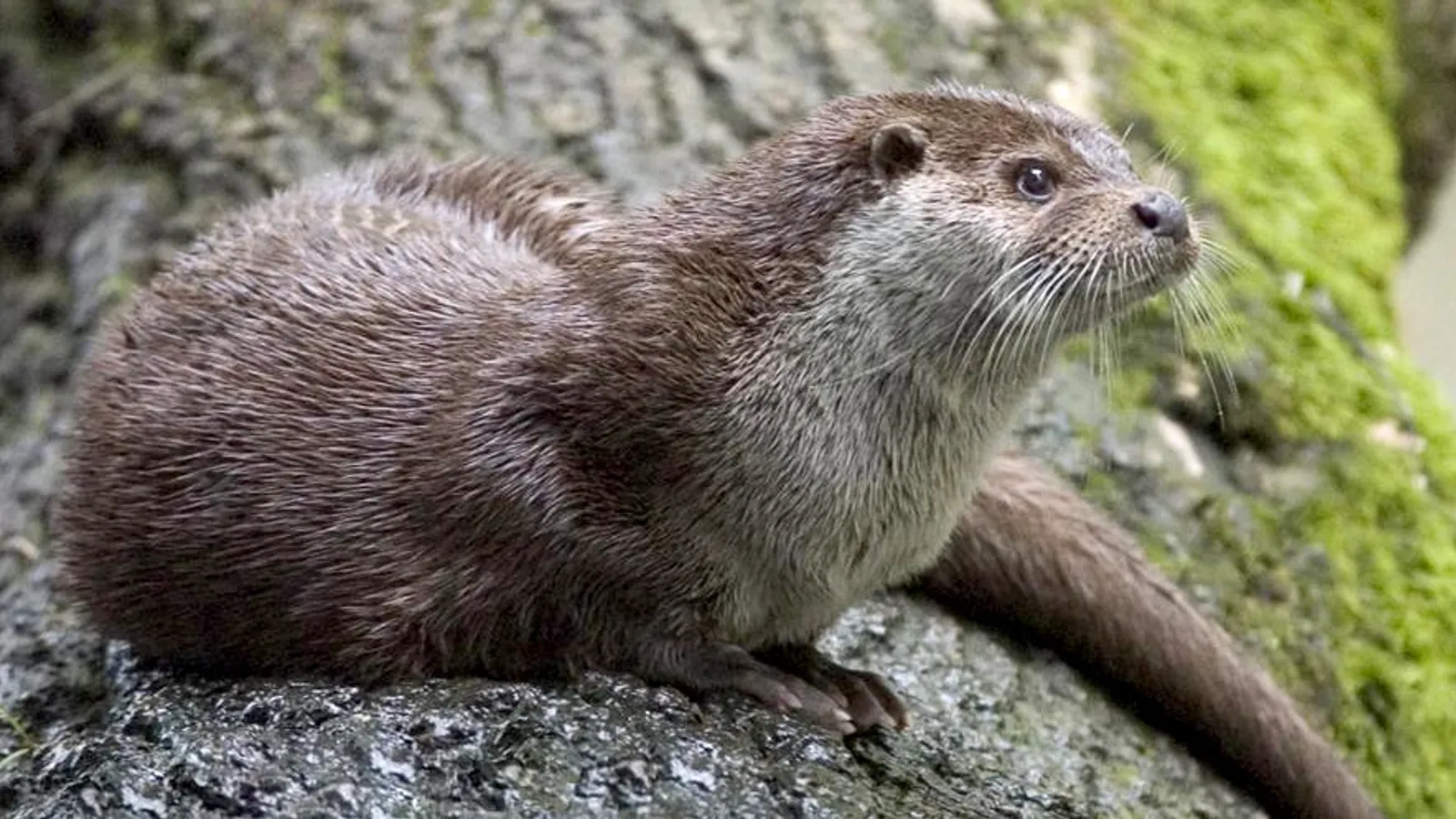

Otter (Lutra lutra)
Contents
TL;DR
- established Pesticide pollution of waterways drove otters to extinction in central England and parts of Wales, and close to it across most of England, between the 1950s and 1970s, a direct, documented chemical cause this article states plainly rather than treating as a vague "historical decline."
- established Scotland's otters survived this crisis specifically because the nation's northern and western waters were comparatively uncontaminated, making Scotland a genuine refuge for the species during the period of its worst British collapse — a documented reason, not coincidence, for Scotland's current importance to the species.
- established Scotland is now recognised as a European stronghold for the otter, with an estimated population of around 8,000 and the unusual distinction that roughly half or more of Scottish otters live along the coast rather than exclusively on rivers — a genuinely unusual ecological pattern this article states with its specific scale.
- established Road traffic collisions are the single biggest documented source of otter mortality in Scotland today — a specific, named modern threat distinct from and following the species' earlier pesticide-driven crisis.
- disputed Genetic research has found an unusual mitochondrial DNA signature in east English otters, matching Asian lineages and potentially traceable to two Thai otters documented as introduced to Britain in the 1960s — a genuinely speculative finding the researchers themselves describe as unproven, requiring further work this article states directly rather than reporting as settled fact.
Key Facts
- Scientific name
- Lutra lutra
- Category
- Mammals
- Status
- European stronghold species in Scotland
- Estimated Scottish population
- Approximately 8,000
- Coastal-dwelling proportion
- Roughly 50% or more
- Historical cause of UK decline
- Pesticide pollution (1950s–1970s)
- Leading current threat
- Road traffic collisions
- Legal status
- Protected under European law, including holts
Scottish Impact Index (SI Score)
- Scottish Significance
- 9/10
- Ecological Persistence
- 9/10
- Ecological Importance
- 9/10
- Biological Distinctiveness
- 7/10
- Conservation Significance
- 8/10
- Recognition
- 9/10
51/60
Ranked =19th of 42 in Wildlife
A Note on Claims and Evidence
Population figures, the pesticide-driven historical decline, Scotland's status as a comparative refuge, and the leading cause of current mortality are drawn from NatureScot's own published data. The Thai otter genetic hypothesis is treated as genuinely Disputed, reflecting the researchers' own explicit statement that the finding is preliminary and unproven, requiring further genetic sampling that is now extremely difficult to obtain.
Timeline
Otters are hunted with dogs in Britain, as much for sport as for control.
Otter skins disappear from the Dumfries fur market, from 226 offered in 1831 to none in 1869.
Otters are still widespread but believed scarce because of persecution; numbers probably recover as gamekeeping pressure eases.
Otter hunts in Britain kill about 400 otters a year with no visible effect on the population.
Otters are considered "very numerous" throughout Scotland.
A severe decline begins in England and south Wales, linked to dieldrin and related organochlorine pesticides.
Pesticide pollution of waterways drives otters to extinction in central England and parts of Wales, and to very low numbers across most of the rest of England.
Two Eurasian otters from Thailand are documented as having been introduced to Britain, a detail later connected to a genetic puzzle in east English otter populations.
Scottish otter populations survive, concentrated in the nation's comparatively uncontaminated northern and western waters.
88 otters are known to have drowned in fish or crustacean traps in Britain, most in the Outer Hebrides, including 23 in fyke nets and 22 in lobster creels on South Uist.
Otter hunting ceases in Britain.
The first national survey of Scotland finds otter signs at 73% of 4,636 sites, against 6% in England; otters are present and abundant everywhere except the Central Belt.
Otters are given legal protection in England and Wales.
Protection is extended throughout Britain, including Scotland, under the Wildlife and Countryside Act 1981.
A repeat survey south of the Highland Region finds otters spreading in the east, especially Fife, in the Clyde valley and around the edges of the Central Belt.
Pesticide controls and waterway clean-up efforts allow otter populations to begin recovering across the UK, with Scotland's surviving population providing an important base.
Scotland holds an estimated 8,000 otters and is recognised as a European stronghold for the species, with road traffic collisions identified as the leading cause of mortality.
Genetic studies identify an unusual Asian-matching mitochondrial DNA signature in east English otters, prompting the still-unproven hypothesis of a historical genetic contribution from the 1960s Thai otter introductions.
Details
A collapse with a direct, documented chemical cause
This article states the cause of the mid-20th-century British otter collapse plainly: pesticide pollution of waterways, not habitat loss or hunting, drove otters to extinction in central England and parts of Wales, and to very low numbers across most of England, between the 1950s and 1970s. By the 1977–79 survey, otter signs were found at only 6% of English sites, and as late as 1991 the Handbook recorded reasonable numbers in England only in the south-west and in counties bordering mid-Wales. This direct causal attribution matters because it explains precisely why Scotland's otters survived when populations elsewhere collapsed — not through better luck, but because Scotland's northern and western waters were comparatively uncontaminated during the period when the relevant pesticides were in widespread agricultural use elsewhere.
Scotland's stronghold status, with its real numbers
This article presents Scotland's current importance to the otter not as vague national pride but with specific figures: an estimated population of around 8,000 otters, and the genuinely unusual ecological pattern that roughly half or more live along the coast rather than being confined to rivers, reflecting the species' documented adaptability across "land, river and sea" habitats. This coastal proportion is presented as a specific, notable feature of the Scottish population rather than assumed to be typical otter behaviour generally.
A changed threat, clearly named
This article states directly that the species' primary threat today is categorically different from the pesticide crisis that nearly eliminated it from Britain: road traffic collisions are now the single biggest documented source of otter mortality in Scotland, a specific, named modern hazard reflecting increased road infrastructure intersecting with otter territory and movement patterns, compounded by pressures from commercial eel fishing and crustacean harvesting operations.
A fascinating, honestly unresolved genetic question
This article treats a genuinely intriguing scientific puzzle with appropriate caution rather than reporting it as settled fact. Researchers have identified an unusual mitochondrial DNA sequence in east English otters that closely matches Asian otter lineages, and have connected this to historical records of two Thai otters documented as introduced to Britain in the 1960s. The east English population also shows unusually high genetic diversity despite having passed through a severe population bottleneck — diversity that typically decreases, not increases, after such a crash, making the anomaly scientifically interesting. However, this article states the researchers' own explicit caveat directly: they do not know for certain whether this is what happened, describing the finding as requiring further work, and note that confirming it would require genetic samples from Thai otters that are now extremely difficult to obtain given the species' rarity across Asia today. This article presents the hypothesis as a genuinely open scientific question, not a confirmed historical event.
What the 1991 Handbook recorded
Who wrote it. The otter account in G. B. Corbet and S. Harris (eds), The Handbook of British Mammals (3rd edn, 1991) was written by Paul Chanin of the University of Exeter, co-author of one of the key studies linking the otter's collapse to pesticides. It shows how Scotland looked from the other side of that crisis.
Names. The usual Gaelic name is dòbhran, with cù-donn ("brown dog") and biast-dhubh ("black beast") among the older ones; the Handbook's printed Gaelic forms are garbled and are not repeated here. In Shetland the Handbook records tek, dratsi and dafi. The male is a dog, the female a bitch and the young are kits or cubs.
Scotland largely spared. In the early 1950s otters were considered very numerous throughout Scotland. When the English and south Welsh populations crashed from about 1957, Scottish and Irish otters were apparently unaffected. The national survey of 1977–79 found otter signs at 73% of 4,636 Scottish sites, compared with 6% in England and 20% in Wales. The one weak area was the Central Belt, where intensive agriculture and industry had reduced numbers; by the mid-1980s otters were moving back into Fife, the Clyde valley and the belt's margins. Organochlorine pesticides, PCBs and heavy metals were still being found in otter tissues and spraints in the 1980s.
Coastal otters. The Handbook brings out how different Scotland's coastal otters are. On the coast they are mainly active by day, unlike river otters, which are mostly nocturnal. Spraint sites along Scottish coasts were spaced every 40 to 70 metres. Shetland held about one otter per 1.1 km of coast, and radio-tracked Shetland otters used between 2 and 13 km of shore, against 16 to 39 km of river for otters tracked in Perthshire. On South Uist, otters fished for eels in freshwater lochs in summer but kept to the coast in winter.
Diet. Fish dominate everywhere, with slow fish such as eels favoured. In Shetland, eelpout, rocklings and butterfish made up more than three-quarters of prey, and crabs could make up a fifth of items in coastal spraints. Single dives of up to 70 seconds were recorded.
Breeding. On the mainland otters can breed in any month, but coastal otters in north-west Scotland and Shetland mostly give birth in summer, with 29 of 34 Shetland litters born between May and August, when food is most plentiful. Coastal litters were smaller, averaging 1.8 in Shetland against about 2.4 to 2.8 inland. Cubs stay with their mother for seven to 12 months.
Deaths and fur. Of 65 dead otters recorded in Shetland, 35 died violently, mainly on roads; most of the rest starved, mostly between March and June when prey was scarcest. Shetland was unusual in Britain for trapping otters for fur: several hundred a year were probably taken in large, specially built "otter houses", and the Handbook notes that illegal trapping for fur still went on there. It also flagged that the growth of Scottish fish farming in the 1980s might bring more complaints about otters.
The fur market record: otters in the nineteenth century
Smout draws on the work of Richard Lovegrove to argue that most of the damage to Scotland's predators was done before about 1840, with Victorian gamekeepers after about 1870 mainly engaged in "mopping-up operations". The Dumfries fur market, held every February, shows the scale in the south-west: in 1831, 600 polecat and 226 otter skins were offered for sale; by 1869 there were none of either. In the Highlands the evidence comes from estate vermin returns. Smout accepts that bounty records can be inflated, but notes that owners usually demanded heads or wings as proof, so a figure such as 143 pine martens and 295 eagles killed at Langwell and Sandside in Sutherland between 1819 and 1826 should not be dismissed. As a result some predators became extinct in Scotland (polecat, red kite, osprey, sea eagle) and others were greatly reduced (wild cat, pine marten, otter, hen harrier, golden eagle). Only well into the second half of the twentieth century was there even limited recovery.
Did You Know?
- At the Dumfries fur market in 1831, 226 otter skins were offered for sale; by 1869 there were none.
- Pesticide pollution eliminated otters from central England and parts of Wales, and left them scarce across most of England, between the 1950s and 1970s, while Scotland's less-contaminated waters allowed the species to survive.
- In the 1977–79 national survey, otter signs were found at 73% of Scottish sites but only 6% of English ones.
- Shetland once had large, purpose-built "otter houses" where several hundred otters a year were probably trapped for fur.
- Coastal Scottish otters are mainly active by day, while river otters are mostly nocturnal.
- In Shetland, 29 of 34 recorded otter litters were born between May and August.
- Roughly half or more of Scotland's estimated 8,000 otters live along the coast rather than exclusively on rivers.
- Road traffic collisions are now the single biggest documented cause of otter deaths in Scotland.
- Researchers have found an unusual Asian-matching genetic signature in east English otters, possibly traceable to two Thai otters introduced to Britain in the 1960s — though this remains unproven.
- The east English otter population shows unusually high genetic diversity despite having passed through a severe population crash, an anomaly that prompted the Thai otter hypothesis.
- Both otters and their breeding holts receive formal legal protection under European law.
- Scotland is officially recognised as a European stronghold for the species.
FAQ
1Why did otters nearly disappear from Britain?
Pesticide pollution of waterways, beginning around 1957, wiped them out of central England and parts of Wales and left them scarce across most of England by the late 1970s.
2Why did Scotland's otters survive when others didn't?
Scotland's northern and western waters were comparatively uncontaminated during the period when the relevant pesticides were in widespread use elsewhere.
3How many otters live in Scotland today?
An estimated 8,000, with Scotland recognised as a European stronghold for the species.
4Do Scottish otters live mainly on rivers?
No — unusually, roughly half or more live along the coast, reflecting the species' adaptability across land, river, and sea habitats.
5What is the biggest threat to otters now?
Road traffic collisions, the single largest documented source of otter mortality in Scotland today.
6Is it true some UK otters have Thai ancestry?
This remains an unproven, genuinely open scientific hypothesis based on an unusual genetic signature found in east English otters, not a confirmed fact.
7Are otters legally protected?
Yes — both the animals and their breeding holts are protected under European law.
8When did otters become legally protected in Scotland?
In 1982, under the Wildlife and Countryside Act 1981. England and Wales had protected them from 1978, and otter hunting had ended in 1977.
9What do Scottish coastal otters eat?
Mainly slow, bottom-living fish. In Shetland, eelpout, rocklings and butterfish made up more than three-quarters of prey, with crabs a secondary food.
10Were otters ever trapped for fur in Scotland?
Yes. Skins were traded at markets such as Dumfries in the 19th century, and Shetland had purpose-built "otter houses" for trapping. The 1991 Handbook noted that illegal trapping for fur still continued in Shetland.
11Is the otter population still recovering?
Yes — the species continues recovering across the UK as waterways have been cleaned up, with Scotland's surviving population having provided an important recovery base.
Sources and Further Reading
Primary/Institutional
- Otter — NatureScot
- Ecology of the European Otter Lutra lutra: Conserving Natura 2000 Rivers — NatureScot
- Pesticide controls save UK otters from extinction — ENDS Report
Scholarly/Critical
- T. C. Smout, "Land and Sea: The Environment", in T. M. Devine and Jenny Wormald (eds), The Oxford Handbook of Modern Scottish History (Oxford University Press, 2012)
- G. B. Corbet and S. Harris (eds), The Handbook of British Mammals, 3rd edn (Blackwell Scientific, 1991), account by P. Chanin
- Could a couple of Thai otters have helped the UK's otter population recover? — The Conversation
- Chemical contamination of freshwaters — Otter Project, Cardiff University
General
Caveats: Myths and Disputed Claims
- Clarification: The Thai otter genetic hypothesis is explicitly described by the researchers themselves as unproven and preliminary; this article does not present it as a confirmed historical event, and further confirming genetic sampling is now extremely difficult to obtain.
- Do not say otters died out across all of England and Wales; they vanished from central England and parts of Wales, but survived in reduced numbers elsewhere, notably the south-west and the Welsh borders.
- Do not claim Scotland was untouched; the 1970s surveys found otters scarce in the Central Belt, where pollution and development were heaviest.
- Do not assume otter hunting caused the 20th-century crash; hunts killed about 400 a year in the 1930s with no visible effect, and their kills fell as otters became scarce.
- Note: This article focuses on Scotland's otter population specifically; broader UK recovery trends in England and Wales, while related, are not comprehensively covered here.
Card 009 · Wildlife