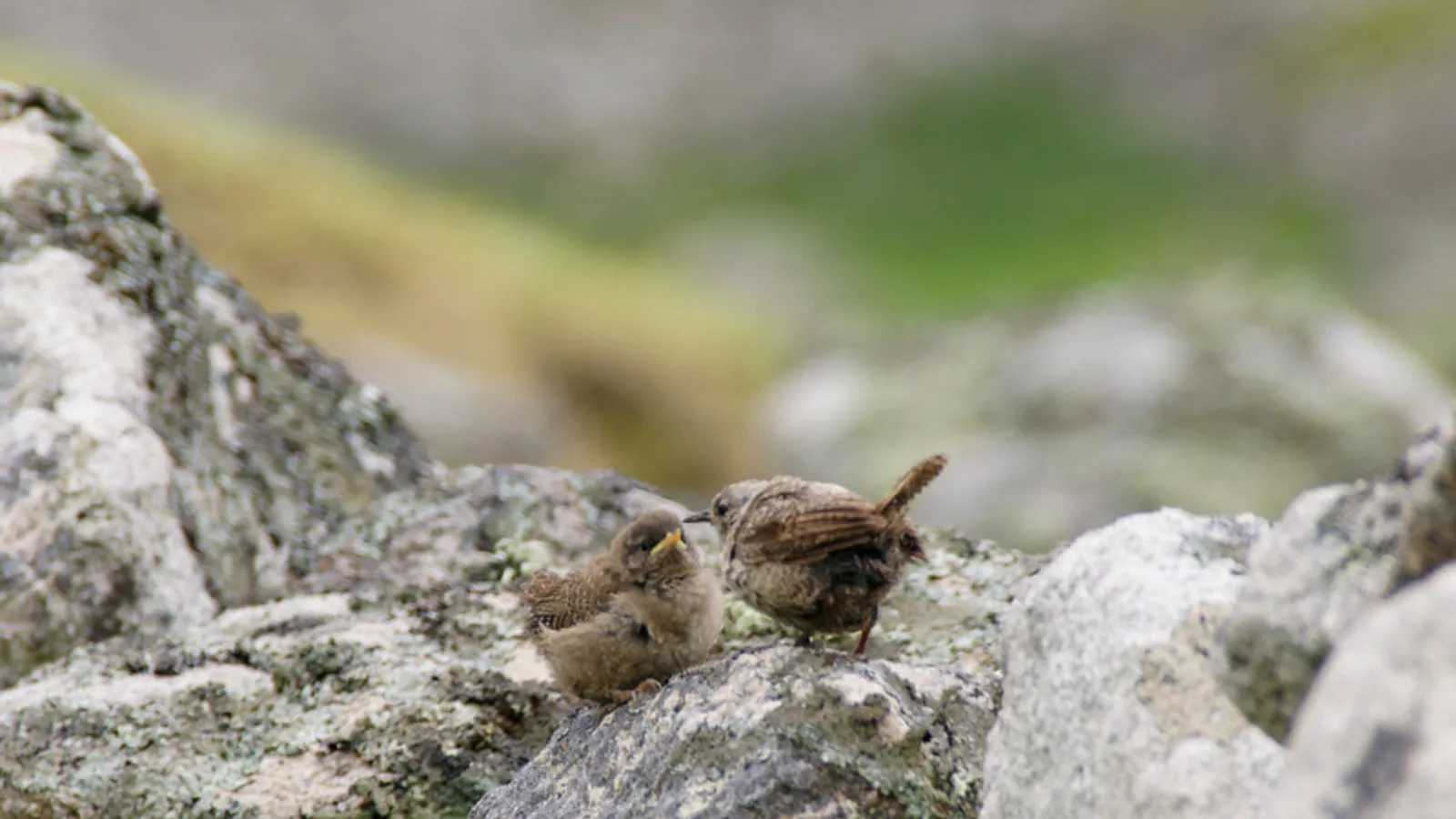

St Kilda Wren (Troglodytes troglodytes hirtensis)
Contents
TL;DR
- established The St Kilda wren is a distinctive subspecies of the Eurasian wren found nowhere else on Earth except the isolated St Kilda archipelago, roughly 64km west of Scotland's Outer Hebrides, distinguished from mainland wrens by its larger size, heavier barring, generally greyer and less rufous colouration, a longer and stronger bill, and a somewhat louder voice — a specific, documented set of physical distinctions this article states directly rather than a vague claim of uniqueness.
- established Henry Seebohm described the St Kilda wren as a new species in 1884, from specimens Charles Dixon collected on the islands that year. Collectors then sought its skins and eggs, and St Kildans sold them.
- shared How close the wren came to extinction is disputed. One archive account says collecting nearly wiped it out by 1888, and Birds Britannica (2005) speaks of "apparent extinction" around 1904. The Birds of Scotland (2007) records that Dixon feared in 1888 that naming the bird would lead to its rapid destruction, but judges that its largely inaccessible cliffs kept it reasonably safe.
- shared Legal protection followed in 1904, under an Act usually cited as the Wild Birds Protection (St Kilda) Act. Some accounts present it as aimed at the wren; The Birds of Scotland describes the 1904 measure as protection for the seabirds of St Kilda, so the wren was probably one of several species covered rather than the only one.
- established The population is usually given as about 230 pairs. This figure comes from Kenneth Williamson's 1957 count and estimate (233 pairs), which Murray judged in 2002 was probably still valid; it was not a new survey. The Birds of Scotland gives 230–250 breeding pairs and 750–1,000 birds in winter.
- established St Kilda's human population was evacuated entirely in 1930, after which at least one other St Kilda-endemic species, the St Kilda house mouse, vanished, having been strictly associated with human settlements — this article states this connected historical fact directly because it illustrates how closely some St Kilda wildlife was entangled with the human community, a contrast against which the wren's continued independent survival on the islands stands out.
- established The St Kilda wren is one of four island races of wren described in Britain, alongside those of Shetland, Fair Isle and the Outer Hebrides, and it was St Kilda's own crofters who supplied Victorian collectors with its skins and eggs, for good money.
Key Facts
- Scientific name
- Troglodytes troglodytes hirtensis
- Category
- Birds
- Range
- Endemic to the St Kilda archipelago
- Distance from Outer Hebrides
- ~64km
- Gaelic name (wren)
- Dreathann-donn
- First mentioned
- Martin Martin, 1698
- Identified as distinct form
- 1884 (Henry Seebohm, from Charles Dixon's specimens)
- Danger from collecting
- Disputed: "near-extinction by 1888" in one account; judged "reasonably safe" by the SOC
- Protective legislation
- 1904, usually cited as the Wild Birds Protection (St Kilda) Act
- Breeding population
- 230–250 pairs (based on the 1957 estimate, judged still valid in 2002)
- Islands where it nests
- Hirta, Soay, Boreray, Dun and Stac an Armin
- Other Scottish island races
- Shetland (zetlandicus), Fair Isle (fridariensis), Outer Hebrides (hebridensis)
Scottish Impact Index (SI Score)
- Scottish Significance
- 10/10
- Ecological Persistence
- 9/10
- Ecological Importance
- 6/10
- Biological Distinctiveness
- 10/10
- Conservation Significance
- 8/10
- Recognition
- 6/10
49/60
Ranked =26th of 42 in Wildlife
A Note on Claims and Evidence
Physical distinction details and the 2002 population estimate are drawn from published ornithological sources. The history of Victorian collecting pressure, the 1884 identification, the near-extinction by 1888, and the 1904 protective legislation are drawn from historical archival research published by the Mount Stuart collections archive. Ron Forrester's account in The Birds of Scotland (2007) supplies the population history, breeding biology and distribution, and disputes the scale of the collecting threat; where the two differ, the claim is marked Shared. The 1930 evacuation and its effect on the St Kilda house mouse are drawn from published historical sources on St Kilda.
Timeline
The St Kilda wren establishes itself as a distinct, isolated subspecies confined entirely to the remote St Kilda archipelago, developing physical traits distinguishing it from mainland Eurasian wrens.
Martin Martin records wrens on St Kilda, the first written mention.
Charles Dixon collects specimens on St Kilda, and Henry Seebohm describes them as a new species; the type specimen is now in the Natural History Museum.
Collectors pay St Kildan crofters well for wren skins and eggs.
Dixon warns that naming the bird may lead to its rapid destruction by collectors. One later account dates a near-extinction to this year; The Birds of Scotland judges the cliff-dwelling population was reasonably safe.
Legal protection is secured for St Kilda's birds, under an Act usually cited as the Wild Birds Protection (St Kilda) Act.
William Eagle Clarke finds wrens nesting on Hirta, Soay, Boreray, Dun and Stac an Armin, the same islands they use today.
The first population estimate, by Harrison and Buchan, suggests 68 pairs.
Kenneth Williamson counts 116 pairs on Hirta and estimates 233 pairs across the archipelago.
A census of Hirta finds 92 pairs.
St Kilda's human population is evacuated entirely; the St Kilda house mouse, a species strictly associated with human settlements, subsequently vanishes from the islands, while the wren, not dependent on human settlement in the same way, continues to survive independently.
Murray concludes there is no evidence of large changes in numbers and that the 1957 estimate of at least 230 pairs is probably still valid.
The St Kilda wren remains confined entirely to the St Kilda archipelago, a legally protected and scientifically distinct subspecies found nowhere else on Earth.
Details
A distinctiveness stated with its real physical specifics
This article names the St Kilda wren's distinguishing features directly rather than a vague claim of uniqueness: larger size, heavier barring, generally greyer and less rufous colouration than mainland wrens, a longer and stronger bill, and a somewhat louder voice. This article states these specific traits because they represent the genuine, documented physical basis for the subspecies' scientific distinction, not an assumed or purely geographic difference.
Scientific recognition and the collectors
established The irony. Formal recognition as a distinct form in 1884 made the St Kilda wren a prize for Victorian collectors, who wanted skins and eggs of every named race. Charles Dixon, who had collected the type specimens for Henry Seebohm, warned in 1888 that naming the bird might lead to its rapid destruction.
shared How great the danger was. The Mount Stuart archive account dates a near-extinction to 1888, and Birds Britannica places the low point around 1904. The Scottish Ornithologists' Club's The Birds of Scotland (2007), in an account by Ron Forrester, takes a cooler view: the wren's largely inaccessible range meant it was reasonably safe. Most of the population lives on cliffs and steep slopes that collectors could not easily reach. No count was made until 1931, so there is no figure for the Victorian population against which any fall can be measured.
A legal response, and what it covered
shared Protection came in 1904, under an Act usually cited as the Wild Birds Protection (St Kilda) Act. Birds Britannica links the legislation to the wren. The Birds of Scotland's chapter on bird conservation, by Paul Walton and Stuart Housden, records that in 1904 legal protection was secured for the seabirds of St Kilda, the same year the RSPB received its Royal Charter and began working in Scotland. The wren was covered, but the claim that the Act protected a single named population alone is not supported by that source.
A population figure and where it comes from
established The figure of about 230 pairs is often given as the result of a 2002 survey. It is in fact much older. Harrison and Buchan made the first estimate, 68 pairs, in 1931, and a figure of 50–100 pairs was given in 1948. In 1957 Kenneth Williamson counted 116 pairs on Hirta alone and estimated 25 on Dun, 45 on Soay, 45 on Boreray and two on Stac an Armin, a total of 233. A census of Hirta in 1961–62 found 92 pairs. In 2002 Murray wrote that there was no evidence of large changes and that the 1957 figure of at least 230 pairs was probably still valid. The Birds of Scotland gives 230–250 breeding pairs, about 27 pairs per square kilometre, and 750–1,000 birds in winter. Forrester notes that a full census is still needed.
The St Kilda wren in The Birds of Scotland
established Where it lives. Martin Martin first recorded wrens on St Kilda in 1698. In 1910 and 1911 William Eagle Clarke found them nesting on Hirta, Soay, Boreray, Dun and Stac an Armin, and they still nest on those islands. They have never been recorded on Stac Lee or Levenish. The type specimen is in the Natural History Museum. In the 1930s about 82% of the population was estimated to live on cliffs, mainly where vegetation was thick, with others around buildings.
established The puffin connection. Shelter and the presence of Atlantic puffins are the two most important factors in the wren's distribution. There are about twice as many wrens on the puffin slopes as on the steep cliffs, because puffin guano fertilises the soil, which feeds plant growth and a variety of insects. Dun, with its large puffin colony, probably holds the densest population.
established Breeding. Territories cover about 1.5 hectares where the birds are numerous, and the song can be heard a kilometre away. Nests are mostly in crevices on cliffs and slopes, but also in cleits, deserted houses and other stone buildings, and are slightly larger and more roughly built than mainland nests. Laying usually takes place in the second half of May. The eggs are much larger than those of mainland wrens, the average clutch is six, incubation lasts 19–20 days and the young leave after 16–17 days, towards the end of June or in early July. Second clutches are unusual. Unlike many mainland males, which leave the females to feed the young, St Kilda males take a full share. Prey brought to one nest in the Village included caterpillars, crane-flies, earwigs, spiders and centipedes.
established A stable population. The population appears to have been fairly stable since 1957. Winters on St Kilda are a few degrees milder than on Benbecula, and severe cold is uncommon, so Forrester judges the subspecies less prone to large swings in numbers than mainland wrens. The book's overview notes that almost no research had been done on the Fair Isle and St Kilda wrens in the previous 30 years, and that the Fair Isle race was close to extinction in 1981, with only ten singing males.
A survival distinct from the fate of the islands' other endemic species
This article states directly a specific contrast between the wren and another St Kilda-endemic species: following the 1930 evacuation of St Kilda's human population, the St Kilda house mouse, which was strictly associated with human settlements, subsequently vanished from the islands. This article names this connected history because it clarifies that, unlike the mouse, the wren's survival was not dependent on the human community, a specific ecological distinction worth stating rather than assuming all St Kilda's endemic wildlife shared the same relationship with the island's former human residents.
established The mouse was not the only casualty. Mark Cocker and Richard Mabey, in Birds Britannica (2005), record that St Kilda's rock doves also died out once the islanders left in 1930, another species that had leaned on the human settlement where the wren did not.
Crofters, collectors and the island races
established Birds Britannica places the St Kilda wren among at least five races of wren in Britain and Ireland, with separate island forms on Shetland (zetlandicus), Fair Isle (fridariensis), the Outer Hebrides (hebridensis) and St Kilda (hirtensis). Of these, the St Kilda bird is by far the best known, largely because of what followed its recognition in 1884.
established The book records that Victorian collectors paid the St Kildan crofters "handsomely" for the tiny skins and "bonbon-sized" eggs. The trade was part of the islanders' cash economy, which already turned seabird feathers into rent, and it brought the wren close to the brink.
shared The Mount Stuart archive account used above dates the near-extinction to 1888. Cocker and Mabey instead tie the low point to 1904, writing that the wren then faced "apparent extinction" and became the subject of special legislation in the same year. Both accounts agree on the cause and on the 1904 Act; they differ on when the danger was greatest.
established The wren lives across the archipelago, from boulder fields and cleits to the great cliff of Conachair, the highest sea cliff in Britain. Visitors often hear its loud song from the boat before landing, carrying over the waves and the seabird colonies. One visitor quoted in the book called the bird "surely the wild spirit of the place".
Did You Know?
- The St Kilda wren is found nowhere else on Earth except the remote St Kilda archipelago, roughly 64km west of the Outer Hebrides.
- It is larger, greyer, and louder-voiced than mainland Eurasian wrens, with a longer, stronger bill.
- Formal scientific identification of the subspecies in 1884 made its skins and eggs prized by Victorian collectors.
- Legal protection for St Kilda's birds, including the wren, was secured in 1904.
- The usual figure of about 230 pairs dates back to a count and estimate made in 1957.
- There are about twice as many wrens on St Kilda's puffin slopes as on its bare cliffs.
- A St Kilda wren's song can be heard a kilometre away.
- St Kilda wrens lay larger eggs than mainland wrens, usually six to a clutch.
- St Kilda's human population was evacuated entirely in 1930.
- Unlike the St Kilda house mouse, which vanished after the human evacuation, the wren's survival did not depend on the human community.
- St Kilda's rock doves also died out after the islanders left in 1930.
- Shetland, Fair Isle and the Outer Hebrides each have their own race of wren as well.
- Wrens nest on Conachair, the highest sea cliff in Britain.
FAQ
1Is the St Kilda wren found anywhere else?
No — it is endemic entirely to the St Kilda archipelago, roughly 64km west of the Outer Hebrides.
2How is it different from mainland wrens?
It is larger, with heavier barring, greyer and less rufous colouration, a longer and stronger bill, and a somewhat louder voice.
3Did Victorian collecting nearly wipe it out?
Sources disagree. Some accounts say it came close to extinction, by 1888 or around 1904. The Birds of Scotland (2007) judges that its inaccessible cliffs kept it reasonably safe, and no count exists from before 1931 to settle the question.
4What protected it?
Legal protection for St Kilda's birds was secured in 1904, under an Act usually cited as the Wild Birds Protection (St Kilda) Act.
5How many St Kilda wrens are there?
About 230–250 breeding pairs. The figure rests on a 1957 count and estimate, which ornithologists judged in 2002 was probably still valid; a full census is still needed.
6Why do puffins matter to the wren?
Puffin guano enriches the soil, which supports plants and insects. Wrens are about twice as dense on the puffin slopes as on bare cliffs.
7Where does it nest?
Mostly in crevices on cliffs and steep slopes, but also in cleits and the walls of old houses.
8Did the 1930 evacuation of St Kilda affect the wren?
Unlike the St Kilda house mouse, which vanished after people left (it depended on human settlements), the wren's survival did not depend on the human community.
9Is the St Kilda wren legally protected today?
Yes — it remains protected, building on the precedent set by the 1904 Act.
10Why was its formal identification dangerous for the species?
Being recognised as scientifically distinct made its eggs and specimens especially desirable to Victorian collectors, directly intensifying the threat to its survival.
11Who supplied the collectors?
Largely the St Kildans themselves. Birds Britannica (2005) records that collectors paid the island's crofters handsomely for wren skins and eggs.
12Are there other island wrens in Scotland?
Yes. Shetland, Fair Isle and the Outer Hebrides each have their own described race of wren.
13When was the St Kilda wren in most danger?
Sources differ. Some place the near-extinction by 1888; Birds Britannica says it faced apparent extinction around 1904, the year of the protective Act.
Sources and Further Reading
Primary/Institutional
- Forrester, R. W., Andrews, I. J. et al. (eds), The Birds of Scotland (Scottish Ornithologists' Club, 2007), account by Ron Forrester; chapter "Bird conservation in Scotland" by Paul Walton and Stuart Housden
- The 5th Marquess of Bute, St Kilda, and the Curious Cabinet of Bird Eggs — Mount Stuart
- St Kilda wren — Wikipedia
Scholarly/Critical
- Mark Cocker and Richard Mabey, Birds Britannica (Chatto & Windus, 2005)
- A genetic screen of the island races of Wren Troglodytes troglodytes in the North-east Atlantic — Bird Study (Taylor & Francis)
- Varia: St Kilda Wren — ResearchGate
General
Caveats: Myths and Disputed Claims
- Clarification: This article does not describe Victorian egg collecting as a harmless historical pastime, but nor does it present the 1888 near-extinction as proven. Dixon's 1888 warning is documented; a measured collapse is not, and The Birds of Scotland (2007) judges the population was reasonably safe.
- Do not describe the figure of 230 pairs as the result of a 2002 survey; it derives from Williamson's 1957 estimate.
- Do not call the 1904 Act a law protecting the wren alone; it secured protection for St Kilda's birds more widely.
- Note: This article does not assume all St Kilda-endemic species shared the same dependence on the island's former human community; the wren's continued survival after the 1930 evacuation, unlike the St Kilda house mouse, is stated as a specific documented contrast.
- Do not give 1888 as the undisputed low point of the population; Birds Britannica places the danger of extinction around 1904.
Card 048 · Wildlife