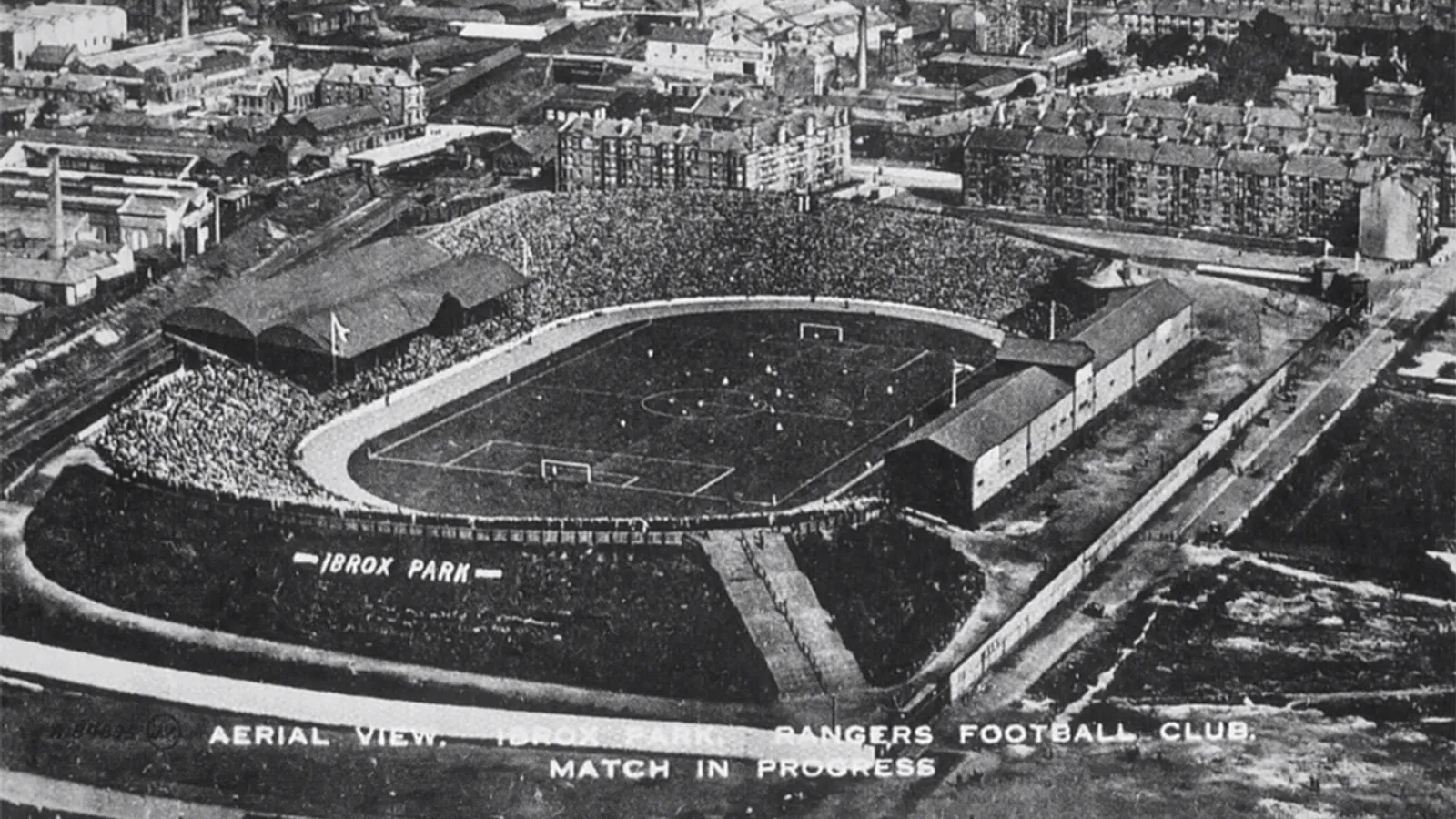

The Ibrox Disasters, 1902 & 1971
Contents
- TL;DR
- Key Findings
- Quick Facts
- Claim Status
- The 1902 West Tribune Collapse
- The Trial and the Lessons Not Learned
- Stairway 13: The Warnings
- 2 January 1971
- The Victims
- The Myth of the Equaliser
- Inquiries and the Courts
- The Wheatley Report and the Safety of Sports Grounds Act 1975
- Rebuilding Ibrox
- Remembering the 66
- Legacy
- Timeline
- Did You Know?
- Honest Caveats
- FAQ
- Related
- Sources
TL;DR
Ibrox Park in Glasgow was the scene of two of the deadliest crowd disasters in British football.
- 5 April 1902: 25 people died when part of a timber-on-steel terrace gave way during a Scotland v England international.
- 2 January 1971: 66 people died in a crush on Stairway 13 at the end of a Rangers v Celtic match.
The 1971 disaster led directly to Lord Wheatley's 1972 inquiry and to the Safety of Sports Grounds Act 1975, which is still the legal basis of stadium safety certification in Great Britain.
A popular story says that fans who had left early turned back after Colin Stein's late equaliser. It is a myth. The Fatal Accident Inquiry found that everyone on the stairway was moving in the same direction.
Key Findings
- The 1902 collapse. A section of the newly built West Tribune collapsed in front of a crowd estimated at more than 68,000. The terrace was wooden decking on a steel frame designed by Archibald Leitch. Twenty-five people died, and estimates of the injured range from 517 to 587.
- No one was convicted for 1902. The timber contractor Alexander McDougall was tried for culpable homicide in July 1902 and acquitted. Rangers, the SFA and Leitch were never charged.
- Stairway 13 had a history. Two men died there on 16 September 1961, and spectators were injured on the same stairway in 1967 and 1969.
- The 1971 dead. Sixty-six people died, all but one of them male. Thirty-one were teenagers, including five schoolboys from Markinch in Fife.
- Rangers were found negligent. In Dougan v Rangers Football Club (Glasgow Sheriff Court, 1974), Sheriff J. Irvine Smith held that the accident "was due to the fault and negligence of the defenders". Rangers did not contest liability in the related claims.
- The law changed. The Wheatley Report (Cmnd 4952, 1972) led to the Safety of Sports Grounds Act 1975, which brought in designation and safety certificates. The Act was extended after Bradford in 1985 and built on after Hillsborough in 1989.
- Ibrox was rebuilt. Under Willie Waddell, three sides of the ground became all-seated stands between 1978 and 1981. It was among the earliest major British grounds to remove its terracing, but it was not the first all-seater stadium in the UK.
Quick Facts
- Venue
- Ibrox Park, Govan, Glasgow (renamed Ibrox Stadium in 1997)
- First disaster
- 5 April 1902, Scotland v England, British Home Championship
- 1902 cause
- Failure of timber decking on the steel-framed West Tribune
- 1902 attendance
- No official count; estimated at more than 68,000
- 1902 deaths
- 25
- 1902 injured
- 517 (The Scotsman's list) to 587 (Rangers FC)
- 1902 match
- Resumed after about 20 minutes; result voided; replayed at Villa Park on 3 May 1902 (2–2)
- 1902 prosecution
- Alexander McDougall, timber merchant: acquitted, July 1902
- Second disaster
- 2 January 1971, Rangers v Celtic, Scottish League
- 1971 location
- Stairway 13, north-east corner near Copland Road
- 1971 attendance
- 80,107
- 1971 score
- 1–1 (Jimmy Johnstone around 89–90 minutes; Colin Stein in stoppage time)
- 1971 deaths
- 66 (60 from asphyxia and 6 from suffocation, according to the pathologist's evidence)
- 1971 injured
- 145 to "over 200", depending on the source
- Inquiries
- Fatal Accident Inquiry (February 1971); Wheatley Inquiry (report 1972, Cmnd 4952)
- Civil case
- Dougan v Rangers FC; evidence heard April–May 1974; judgment 23 October 1974
- Legislation
- Safety of Sports Grounds Act 1975 (Royal Assent 1 August 1975)
- Memorial
- John Greig statue by Andy Scott, unveiled 2 January 2001
Claim Status
established
- the dates, and the death tolls of 25 and 66;
- the timber-on-steel failure in 1902, and McDougall's acquittal;
- the fatal crush on Stairway 13 in 1961;
- the Fatal Accident Inquiry, and the negligence finding against Rangers in Dougan;
- the Wheatley Report and the 1975 Act.
shared (well attested, but the numbers vary between sources):
- injury totals for both disasters;
- attendance figures;
- the timing of the 1902 collapse;
- injury counts for the earlier Stairway 13 incidents.
disputed
- the main cause of the 1902 failure: poor timber, too light a design, rain, or the crowd swaying;
- whether Ibrox can be called a "first" all-seater stadium.
Traditional or myth:
- the story that departing fans turned back up Stairway 13 after Stein's equaliser, which the 1971 inquiry rejected;
- the tale that Bobby Templeton's dribbling caused the 1902 crowd surge.
The 1902 West Tribune Collapse
Rangers opened their new Ibrox Park on 30 December 1899. It cost about £20,000 and was built partly to win lucrative Scotland v England internationals away from Celtic Park. The engineer was Archibald Leitch, a Rangers supporter. Rangers won the right to stage the 1902 international by a single vote of the SFA committee.
The West Tribune was a tall terrace of wooden steps laid on a steel framework, with open space beneath. Before the match, Leitch asked the Govan burgh surveyor, Frederick Holmes, to inspect it, and Holmes passed it as fit.
On 5 April 1902 a crowd estimated at more than 68,000 attended. The Rangers match secretary William Wilton later described them "stamping and swaying according to their interest in the different parts of the field". Part of the rear of the West Tribune then gave way. A joiner standing on the spot, Ernest Tait, told the High Court: "There was a sudden crack below us. I had time to look down and see the joists split up and then we fell among them through the gap." Somewhere between 200 and 300 people fell 40–50 feet.
Accounts of when this happened vary widely, from about 6 to 51 minutes after kick-off, so any single precise time should be treated with caution.
The dressing rooms became a casualty station. The Scotland defender Alex Raisbeck later recalled: "Dead bodies and groaning men were lying on the seats where only a short time ago the Scottish players had stripped." Twenty-five people died.
Why the match continued. After a delay of about 20 minutes, officials resumed play. Most of the crowd did not know what had happened, and officials feared that ending the game would send a huge crowd through the exits during the rescue. Wilton said that "looking to the danger of riot or disturbance, it was decided that it better just to continue the game". The 1–1 result was later voided, and the replay at Villa Park on 3 May raised about £1,000 for the relief fund.
The Trial and the Lessons Not Learned
There was no public inquiry in 1902. The Crown prosecuted Alexander McDougall, the timber merchant who had supplied and erected the woodwork. The charge was that he used yellow pine instead of the specified red pine, and laid the joists "all short".
The trial before Lord Kyllachy opened on 7 July 1902. The defence called Sir Benjamin Baker, engineer of the Forth Bridge, who told the court the structure was "very much below the usual standard of strength". He likened it to "an omnibus fitted with the wheels off a cab". The jury acquitted McDougall in about half an hour. No charges were brought against Rangers, the SFA or Leitch.
Afterwards, Rangers replaced the timber terraces with earth banking from 1905, and later British terraces were generally built on earth or concrete. That was a change of building practice, not law. Britain would wait another 73 years for a general stadium-safety statute.
Stairway 13: The Warnings
Stairway 13 was a long, steep exit from the north-east corner of the terracing. It was the route nearest the Copland Road subway station and the supporters' buses.
- 16 September 1961 (Rangers v Celtic): a crush killed two men. Injury estimates range from 44 to about 70.
- September 1967: spectators were injured leaving by the stairway (8 to 11, depending on the source).
- January 1969: another accident on the stairway (26 to 29 injured).
Rangers spent heavily on improvements after 1961, but no professional study of crowd flow on Stairway 13 was commissioned.
2 January 1971
The New Year Old Firm match drew 80,107 spectators. Jimmy Johnstone scored for Celtic in about the 89th minute. Colin Stein equalised for Rangers in stoppage time.
As the final whistle went, thousands of Rangers supporters headed for Stairway 13. National Records of Scotland summarises the inquiry evidence: "As fans began to try to exit the stadium at the blow of the final whistle, one or two people accidentally slipped... as waves of people gained momentum they could not see that others had fallen." Steel barriers buckled, and bodies were piled up to about six feet deep.
Police, St Andrew's Ambulance volunteers, players and fans tried to free the trapped. The dead were laid out on the pitch and in the stadium buildings. The match itself had been played in a good atmosphere: this was a crowd-safety failure, not violence.
The Victims
Sixty-six people died, all of them Rangers supporters. Everyone who died was under 50, and 31 were teenagers. The only woman who died was Margaret Ferguson, 18, from Maddiston. The youngest victim, Nigel Pickup from Liverpool, is usually given as nine years old.
The village of Markinch in Fife lost five boys aged 13 to 15: Peter Easton, Bryan Todd, Mason Phillips, Douglas Morrison and a fifth boy surnamed Paton, whose first name varies between published lists. Eight boys set out from Markinch that morning, and three came home. The Fatal Accident Inquiry was formally into "the deaths of Bryan George Todd and 65 others".
The Myth of the Equaliser
The most persistent story about 1971 runs like this: fans who had left after Johnstone's goal heard the roar for Stein's equaliser, turned back up the stairway, and collided with the crowd coming down. Stein himself believed for years that his goal had caused the disaster.
The Fatal Accident Inquiry sat at Pollokshaws Burgh Hall from 15 February 1971 and heard 102 witnesses. It found that the disaster began when one or two people fell and others behind them fell in turn. The inquiry discounted the turning-back theory because everyone on the stairway was moving downwards. The crush also happened after the final whistle, as the main crowd left, not in the minute between the two goals.
The real explanation is harder to accept than the myth. A steep stairway carried a huge, fast-moving crowd with nothing to break up the flow, so a single fall could kill dozens of people.
Inquiries and the Courts
The Fatal Accident Inquiry was held before Sheriff Allan Walker and a jury. The jury was told not to make wider safety recommendations because a national inquiry had been set up. It did not blame Rangers for the fatal sequence of events.
The civil courts took a different view. Margaret Dougan, widow of the Clydebank boilermaker Charles Dougan, sued Rangers in a test case for about 60 claims. Sheriff J. Irvine Smith found the club negligent. On the earlier incidents, he said the board had "proceeded on the view that if the problem was ignored long enough it would eventually go away". He added that some of its actions could "only be interpreted as a deliberate and apparently successful attempt to deceive others that they were doing something, when in fact they were doing nothing." Rangers did not dispute fault and challenged only the amount of damages.
The Wheatley Report and the Safety of Sports Grounds Act 1975
Lord Wheatley, a Scottish judge, was appointed in February 1971 to review crowd safety at sports grounds across Great Britain. His report (Cmnd 4952, May 1972) found the voluntary system of inspection inadequate. He recommended licensing by local authorities, starting with the largest grounds. His technical appendix became the basis of the Guide to Safety at Sports Grounds (the "Green Guide", 1973).
Introducing the bill in the Commons in 1975, the Home Office minister Alex Lyon said its purpose was "to implement the main recommendations contained in the Report... following the tragedy at Ibrox Park". The Safety of Sports Grounds Act 1975 received Royal Assent on 1 August 1975. It provided for:
- designation of grounds holding more than 10,000 spectators;
- local-authority safety certificates setting capacity, exits and crush-barrier standards;
- powers to restrict or prohibit the use of dangerous grounds.
Its narrow coverage was exposed at Bradford in 1985, where 56 people died at a ground that had not been designated. The Act was widened in 1987. After Hillsborough in 1989, Lord Justice Taylor called the 1975 Act and the Green Guide "the principal instruments" of ground safety.
Rebuilding Ibrox
The Rangers manager Willie Waddell led the club's response. He insisted that players attend the victims' funerals and visit the injured. He then backed a rebuilding plan modelled on Borussia Dortmund's Westfalenstadion:
- Copland Road Stand, at the Stairway 13 end, completed in 1979;
- Broomloan Road Stand, completed in 1980;
- Govan Stand, completed in 1981.
The rebuilt ground held 44,000 and reopened on 19 September 1981, at a cost of about £10 million.
Ibrox was one of the earliest major British grounds to replace its terracing with seats. It was not the first all-seater stadium in the UK: Aberdeen's Pittodrie became all-seated in 1978.
Remembering the 66
A disaster fund launched by Glasgow's Lord Provost received contributions from Rangers, Celtic and clubs worldwide. On 27 January 1971, a benefit match at Hampden drew 81,405 spectators, and George Best and Bobby Charlton guested for a combined Rangers–Celtic select.
On 2 January 2001, the 30th anniversary, Rangers unveiled Andy Scott's bronze statue of John Greig, the club's captain in 1971. It stands on a plinth naming the 66 dead of 1971, with memorials to the 25 of 1902 and the two of 1961. At the 50th anniversary in 2021, held under Covid restrictions, the Rangers and Celtic captains laid wreaths together.
Legacy
The two disasters show two kinds of failure.
- 1902: a structure failed. The response was a criminal trial of one contractor and a change in building practice.
- 1971: crowd management and exit routes failed. The response was a national inquiry and, eventually, a licensing regime that still governs British grounds.
Is it fair to say Ibrox led directly to the 1975 Act? Yes, with qualifications. The Act took four and a half years, it covered all of Great Britain, and its first version was narrow. "Scotland's tragedy, Britain's law" is a fair summary; "Scotland invented stadium safety law" is not.
Timeline
New Ibrox Park opens — Engineer: Archibald Leitch
West Tribune collapse — 25 dead
Replay at Villa Park — Proceeds to the relief fund
McDougall acquitted — Culpable homicide trial
Stairway 13 crush — 2 dead
Further Stairway 13 incidents — Injuries
Second Ibrox disaster — 66 dead
Benefit match at Hampden — Crowd of 81,405
Fatal Accident Inquiry; Lord Wheatley appointed —
Wheatley Report published — Cmnd 4952
Dougan v Rangers: club negligent — Sheriff Irvine Smith
Safety of Sports Grounds Act — Designation and certificates
Ibrox rebuilt — Reopened 19 Sep 1981
Bradford fire; Hillsborough — Law extended
Memorial and Greig statue unveiled — 30th anniversary
50th anniversary —
Did You Know?
- Ibrox has seen three fatal crowd incidents, in 1902, 1961 and 1971. The 2001 memorial names the victims of all three.
- The engineer of the Forth Bridge, Sir Benjamin Baker, gave evidence in the 1902 trial that the stand was too lightly built for a football crowd.
- The 1902 Scotland v England result does not stand in the record books. The official fixture is the 2–2 replay at Villa Park.
- George Best and Bobby Charlton played for a combined Rangers–Celtic side in the 1971 benefit match.
Honest Caveats
- Injury figures for both disasters vary widely between sources.
- The timing of the 1902 collapse ranges from about 6 to 51 minutes after kick-off, depending on the account.
- The cause of the 1902 failure was never settled in court.
- Quotations from the 1974 judgment and the jury's findings are as reported by the press and archives, not taken from the original documents.
- Spellings of victims' names differ between published lists, and families' own usage should take precedence.
FAQ
1How many people died in the Ibrox disasters?
Twenty-five in 1902 and 66 in 1971. Two more died on Stairway 13 in 1961.
2Did fans turning back after Colin Stein's goal cause the 1971 crush?
No. The inquiry found that everyone on the stairway was moving downwards. The crush began when one or two people fell and the crowd behind kept moving.
3Was anyone convicted over the 1902 collapse?
No. The timber merchant Alexander McDougall was acquitted.
4Were Rangers found responsible for 1971?
In the civil courts, yes. In Dougan v Rangers FC, the club was found negligent.
5What did the Safety of Sports Grounds Act 1975 do?
It let the government designate large grounds, which then needed a local-authority safety certificate setting capacity, exits and crush-barrier standards.
6Was Ibrox the UK's first all-seater stadium?
No. Pittodrie became all-seated in 1978. Ibrox was among the first major grounds to replace its terracing with seats.
7Where is the memorial?
Outside Ibrox Stadium on Edmiston Drive, where John Greig's statue stands on a plinth naming the victims.
Related
- Archibald Leitch
- Hampden Park
- The Scottish Football Association
- Piper Alpha, 1988
Sources
Primary/Institutional
- National Records of Scotland / ScotlandsPeople, "Our records: the Ibrox Disaster 1971". https://www.scotlandspeople.gov.uk/article/our-records-ibrox-disaster-1971
- Glasgow City Archives, Ibrox Disaster Collection listing (Mitchell Library). https://libcat.csglasgow.org/web/arena/ibrox
- Hansard, House of Commons, 13 January 1971, "Ibrox Football Ground (Accident)". https://api.parliament.uk/historic-hansard/commons/1971/jan/13/ibrox-football-ground-accident
- Hansard, House of Lords, 20 November 1973, "Safety of Sports Grounds Bill". https://api.parliament.uk/historic-hansard/lords/1973/nov/20/safety-of-sports-grounds-bill-hl
- Hansard, House of Commons, 19 June 1975, Safety of Sports Grounds Bill (via TheyWorkForYou). https://www.theyworkforyou.com/debates/?id=1975-06-19a.1743.0
- Safety of Sports Grounds Act 1975 (as enacted). https://www.legislation.gov.uk/ukpga/1975/52/enacted
- Sports Grounds Safety Authority, "Safety of Sports Grounds Act 1975". https://sgsa.org.uk/regulatory-support/legislation/safety-of-sports-grounds-act-1975/
- Lord Justice Taylor, The Hillsborough Stadium Disaster: Final Report (1990). https://www.jesip.org.uk/wp-content/uploads/2022/03/Hillsborough-Stadium-Disaster-final-report.pdf
- Gersnet, "Ibrox Stadium then and now". http://www.gersnet.co.uk/index.php/about-archive/club-history/395-ibrox-stadium-then-and-now
Scholarly/Critical
- Iain Duff, "The Ibrox Disaster 1902: a national tragedy". https://iainduff.wordpress.com/2012/04/05/the-ibrox-disaster-1902-a-national-tragedy/
- Iain Duff, "The Ibrox Disaster 1971: Scottish football's darkest hour". https://iainduff.wordpress.com/2010/12/28/the-ibrox-disaster-1971-scottish-footballs-darkest-hour/
General
- Working With Crowds, "Ibrox disaster 1971" and "Stairway 13 barrier collapse". https://www.workingwithcrowds.com/ibrox-disaster-1971/
- The Courier, "Markinch stops to remember Ibrox disaster victims". https://www.thecourier.co.uk/news/fife/104628/markinch-stops-to-remember-ibrox-disaster-victims/
- The Scotsman, "40 years on, Ibrox disaster still haunts referee". https://www.scotsman.com/sport/football/celtic/40-years-on-ibrox-disaster-still-haunts-referee-2002873
- Art UK, "Ibrox Disaster Memorial". https://artuk.org/discover/artworks/ibrox-disaster-memorial-257844
Further reading
- P. Collier and D. S. Taylor, Stairway 13: The Story of the 1971 Ibrox Disaster.
- J. Irvine Smith, Law, Life and Laughter (2011).
Card 007 · Sport