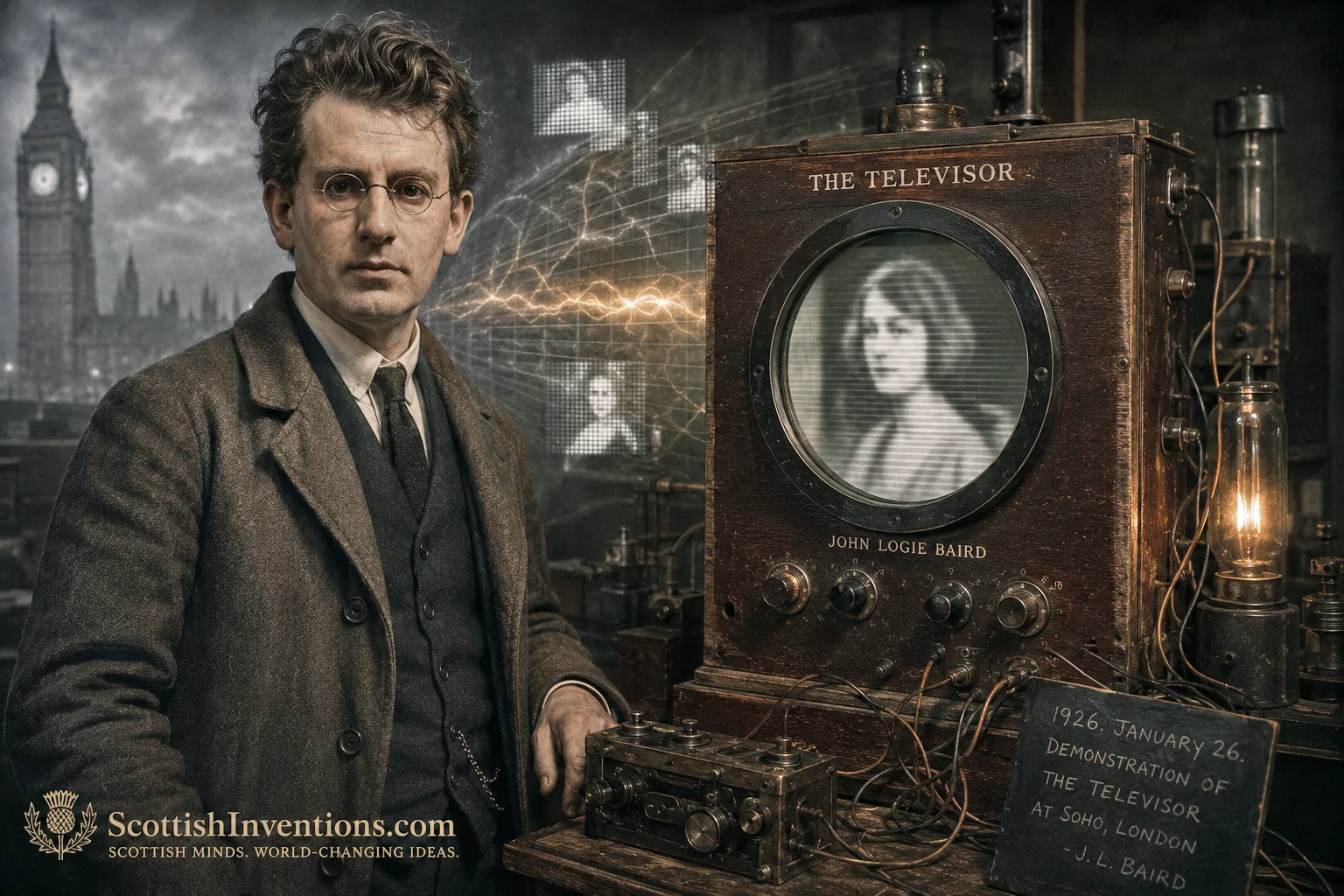
Television
by John Logie Baird
A minister's son from Helensburgh
John Logie Baird was born on 13 August 1888 in Helensburgh on the Firth of Clyde, the youngest of four children of the Reverend John Baird, Church of Scotland minister of St Bride's Church, and Jessie Morrison Inglis, niece of a wealthy family of Glasgow shipbuilders. From boyhood he showed the spark of an inventor: as a teenager he wired the family home, 'The Lodge,' for electric light — the first house in the district to have it — and rigged up a private telephone exchange connecting his bedroom to the homes of friends across the street.
He was educated at Larchfield Academy in Helensburgh (now part of Lomond School), then enrolled at the Glasgow and West of Scotland Technical College — now the University of Strathclyde — to study electrical engineering. The First World War interrupted his degree and he never graduated. He volunteered for the army in 1915 but was rejected as unfit — the beginning of a lifetime of fragile health that would shadow his entire career. Instead he worked for the Clyde Valley Electrical Power Company on munitions work.
Baird was also an irrepressible, if frequently unsuccessful, entrepreneur. Suffering from chronically cold feet, he invented a water-absorbent 'undersock' and founded the Baird Undersock Company. A succession of money-losing schemes followed: a jam factory in Trinidad, an Australian honey-import business, boot polish, fertiliser, and a low-grade cleaning product called Baird's Speedy Cleanser. The ventures flopped, but the engineering training and the relentless problem-solving they exercised would prove the making of him.
Stooky Bill and the first televised face
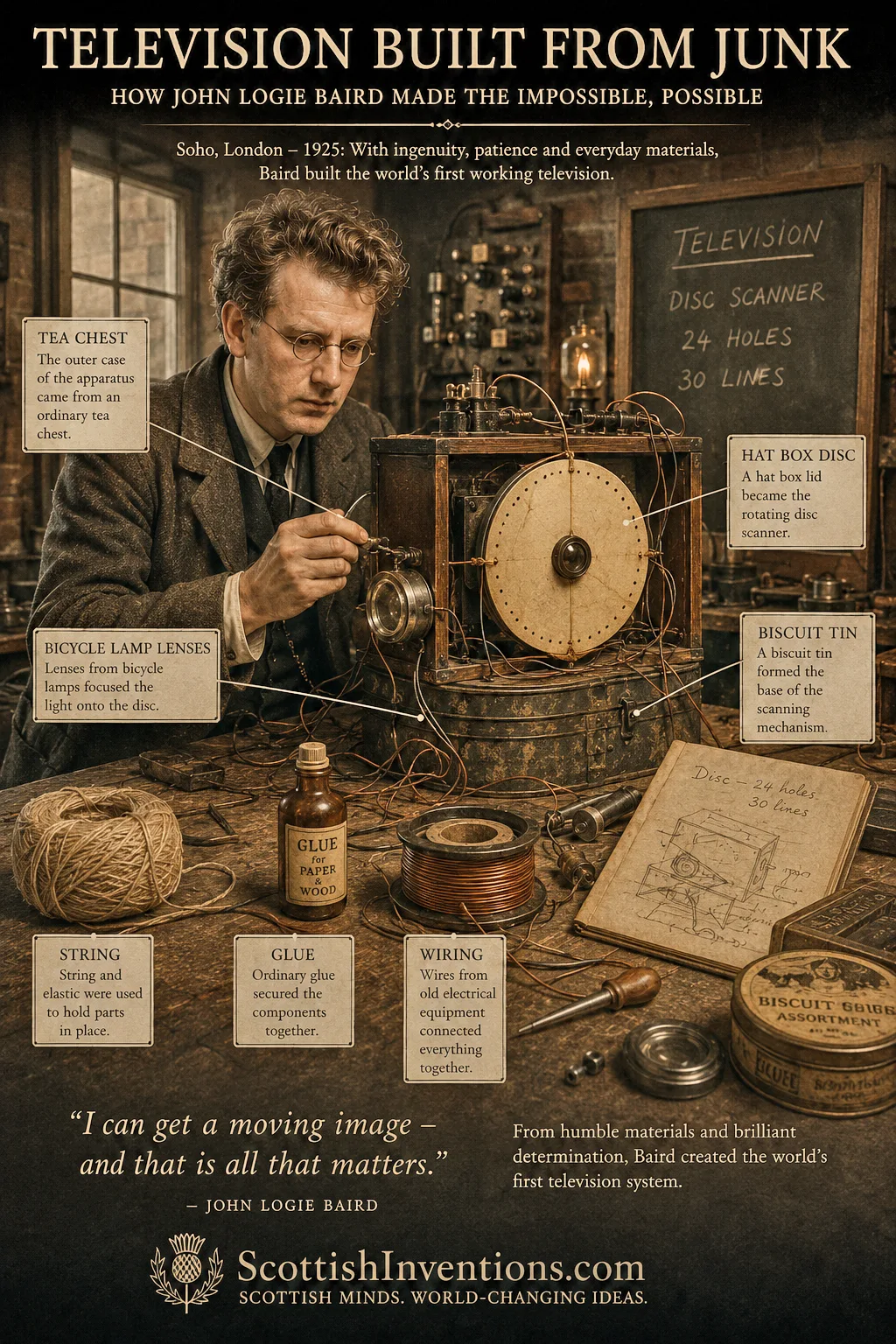
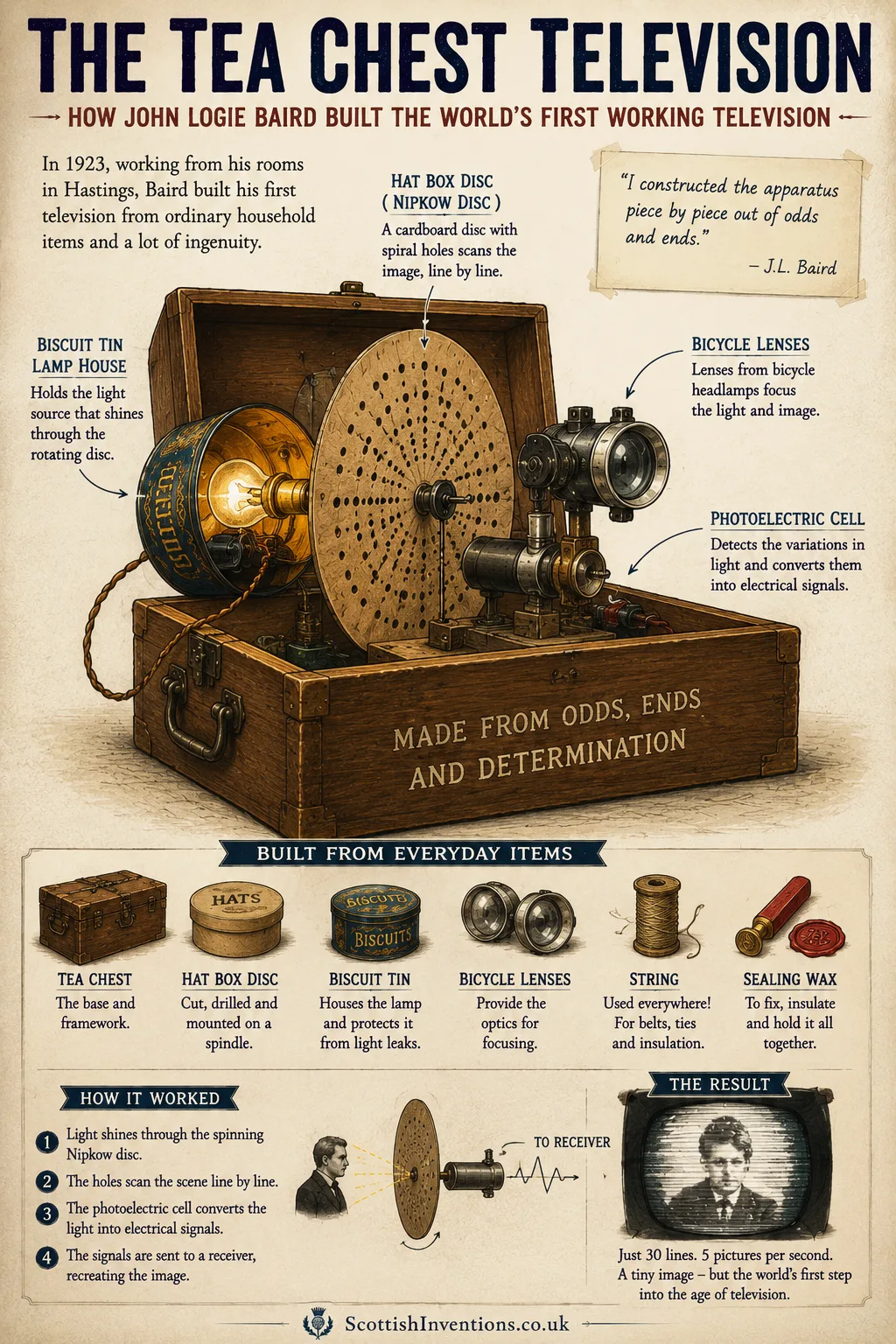
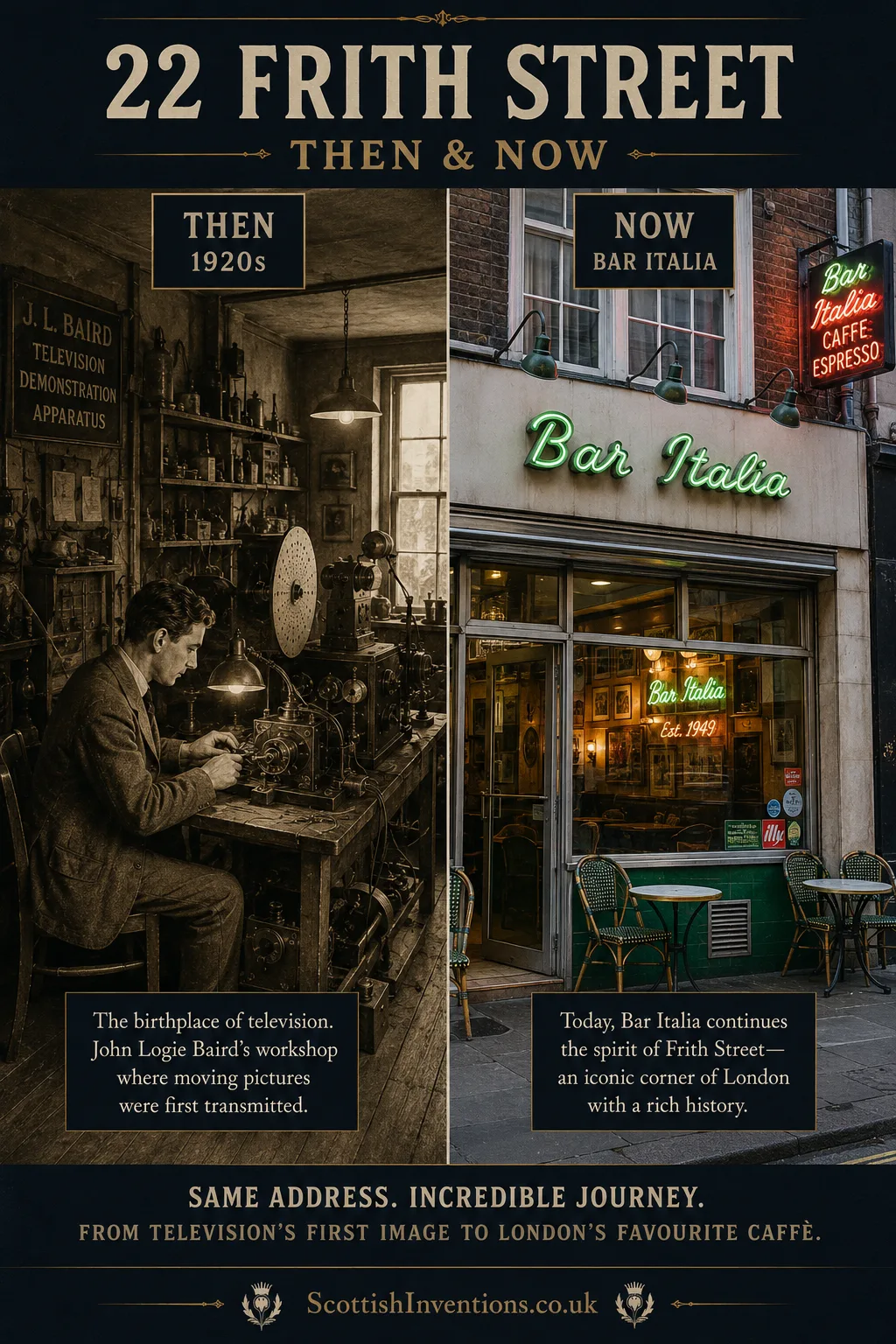
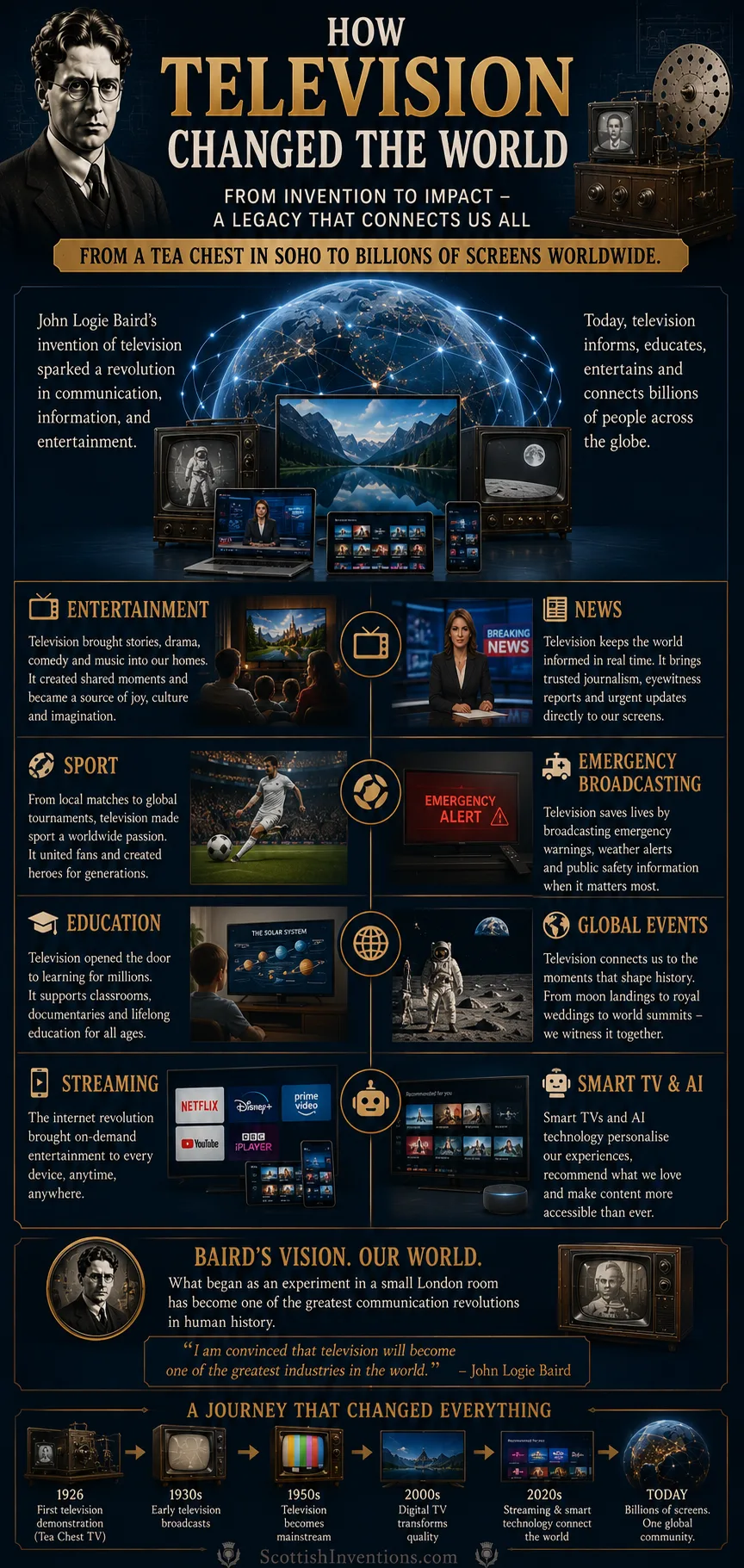
By the early 1920s Baird had moved south for his health, setting up makeshift laboratories first in Hastings and then in an attic at 22 Frith Street in London's Soho. His early apparatus was, frankly, a contraption: a tea chest serving as the base of a motor, a hat box and a pair of scissors for the head, darning needles for spindles, a few discarded electric motors, the lens of a bicycle lamp, sealing wax and glue — all held together with string.
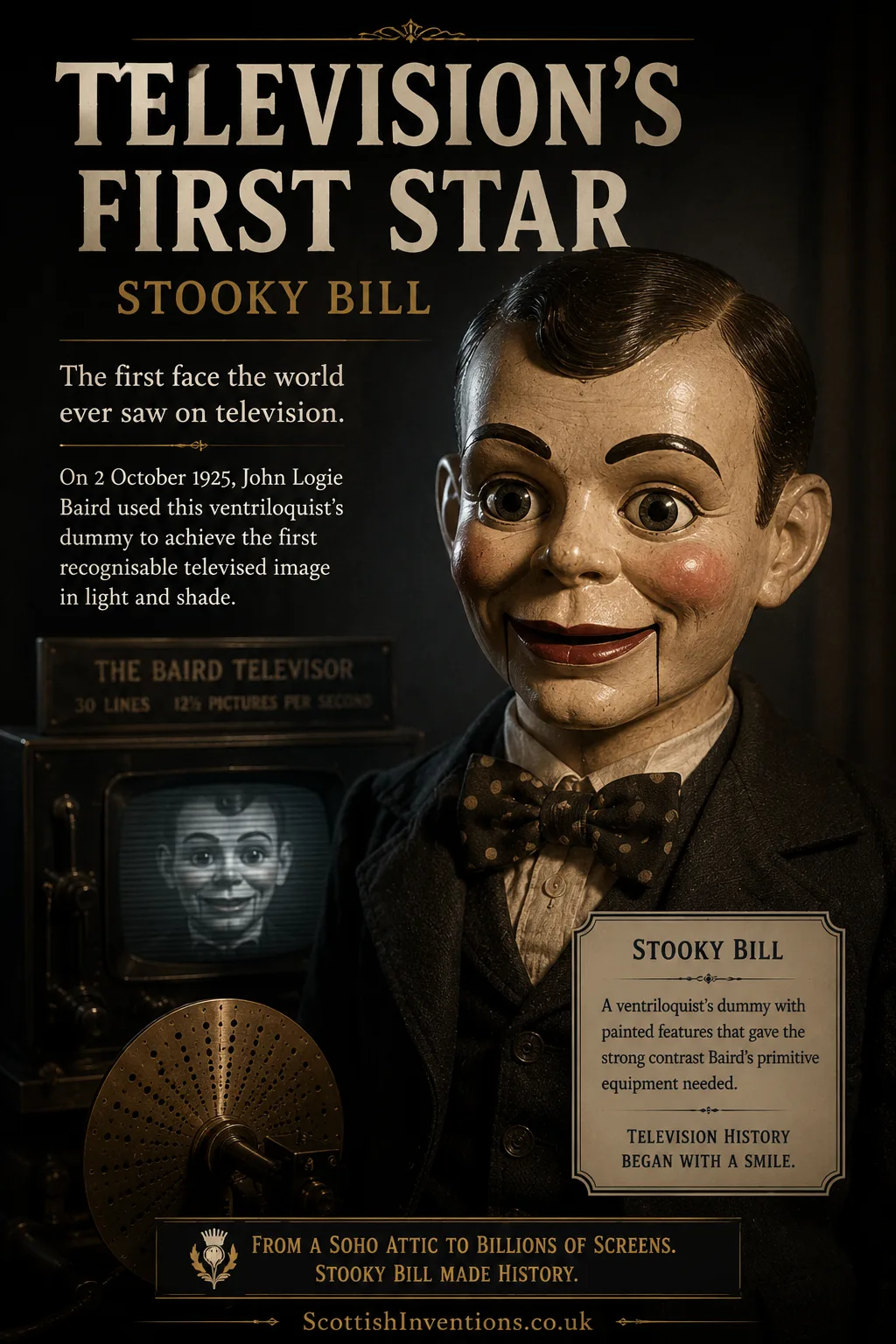
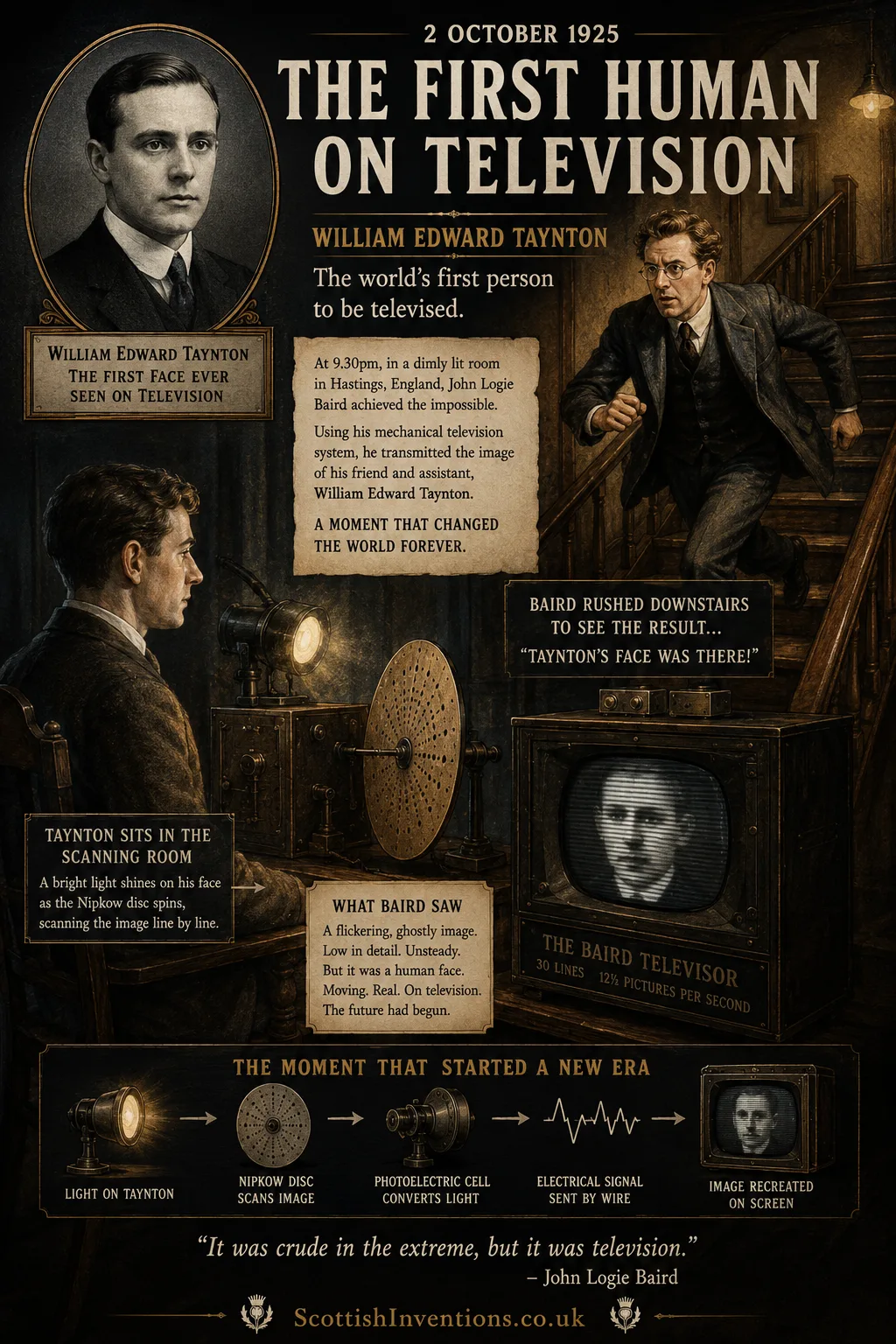
On 2 October 1925 it produced the first recognisable televised human image: the head of a ventriloquist's dummy he called 'Stooky Bill,' whose painted features gave the strong contrast the equipment needed. Baird then rushed downstairs and dragged up a 20-year-old office worker, William Edward Taynton, who became the first living person ever televised in a full range of light and shade. By some accounts Taynton received the first-ever TV appearance fee — half a crown.
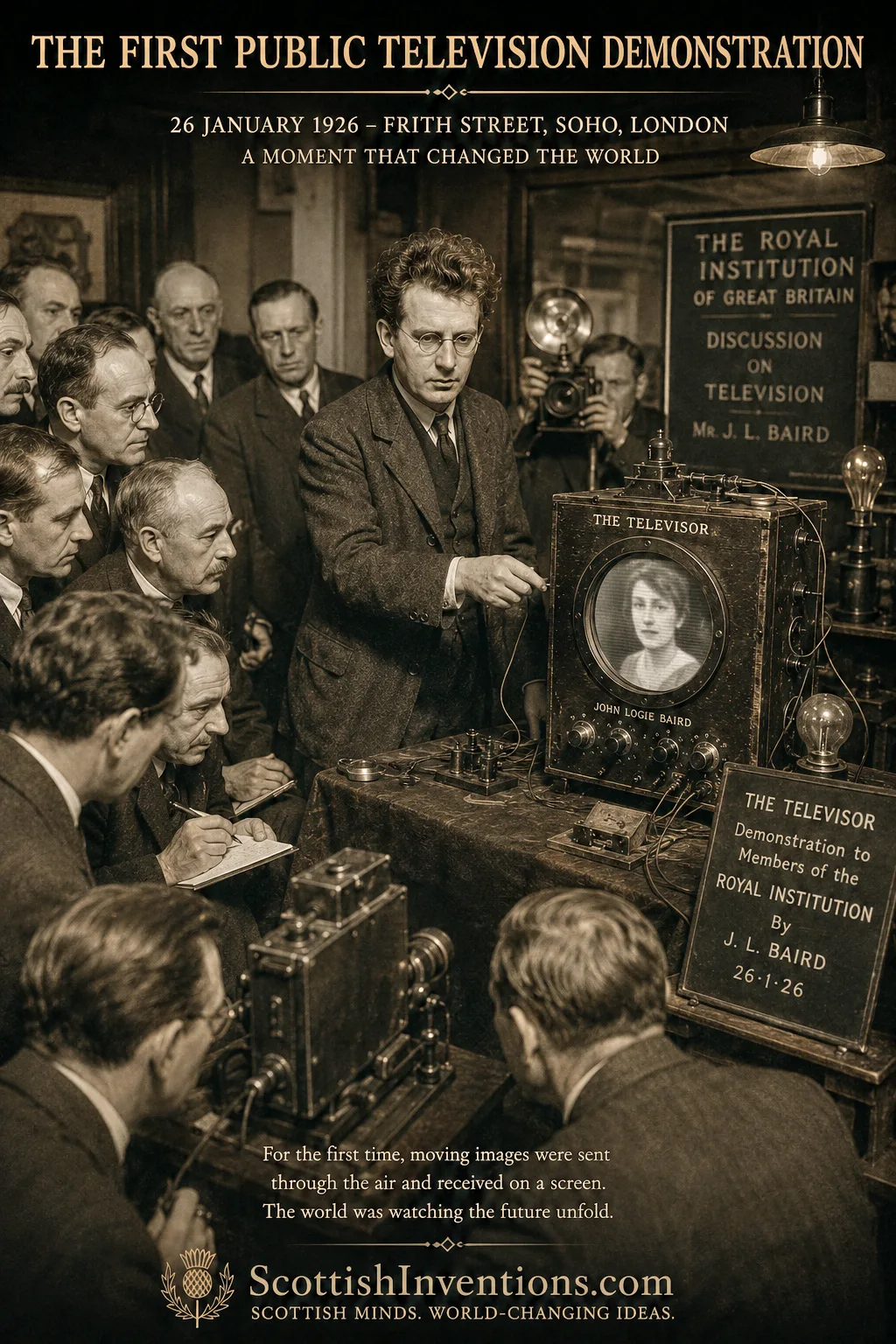
26 January 1926 — the birth of television
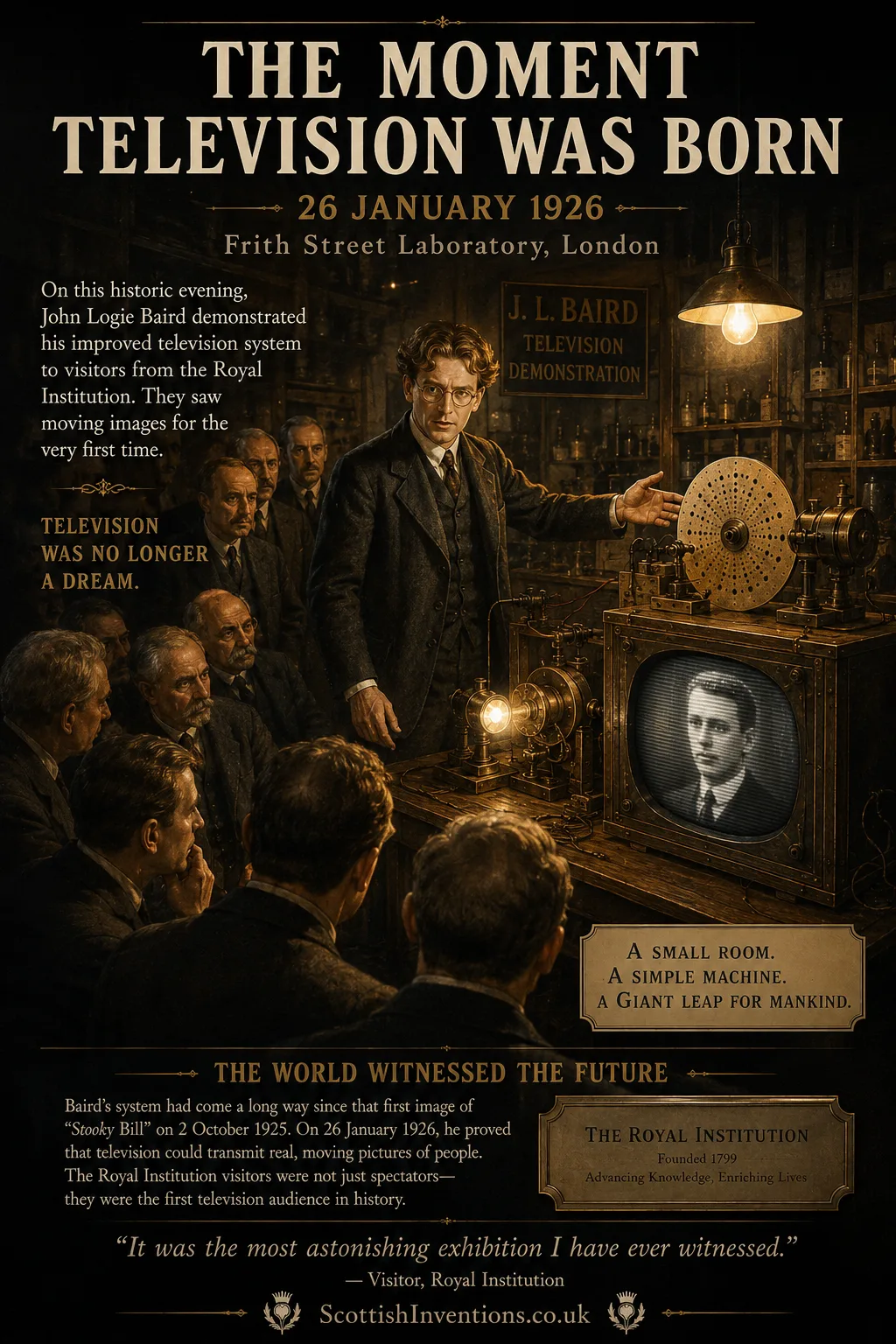
Three months later, on 26 January 1926, Baird invited around 40 members of the Royal Institution and a reporter from The Times to his rented rooms at 22 Frith Street. They watched, astonished, as moving images appeared on his receiver. The Times of 28 January 1926 recorded that the visitors 'saw a demonstration of apparatus invented by Mr. J.L. Baird, who claims to have solved the problem of television,' and that the image was 'faint and often blurred, but substantiated a claim that through the Televisor … it is possible to transmit and reproduce instantly the details of movement, and such things as the play of expression on the face.' This is generally accepted as the world's first public demonstration of a working television system — and the date most often cited as the moment television was invented.
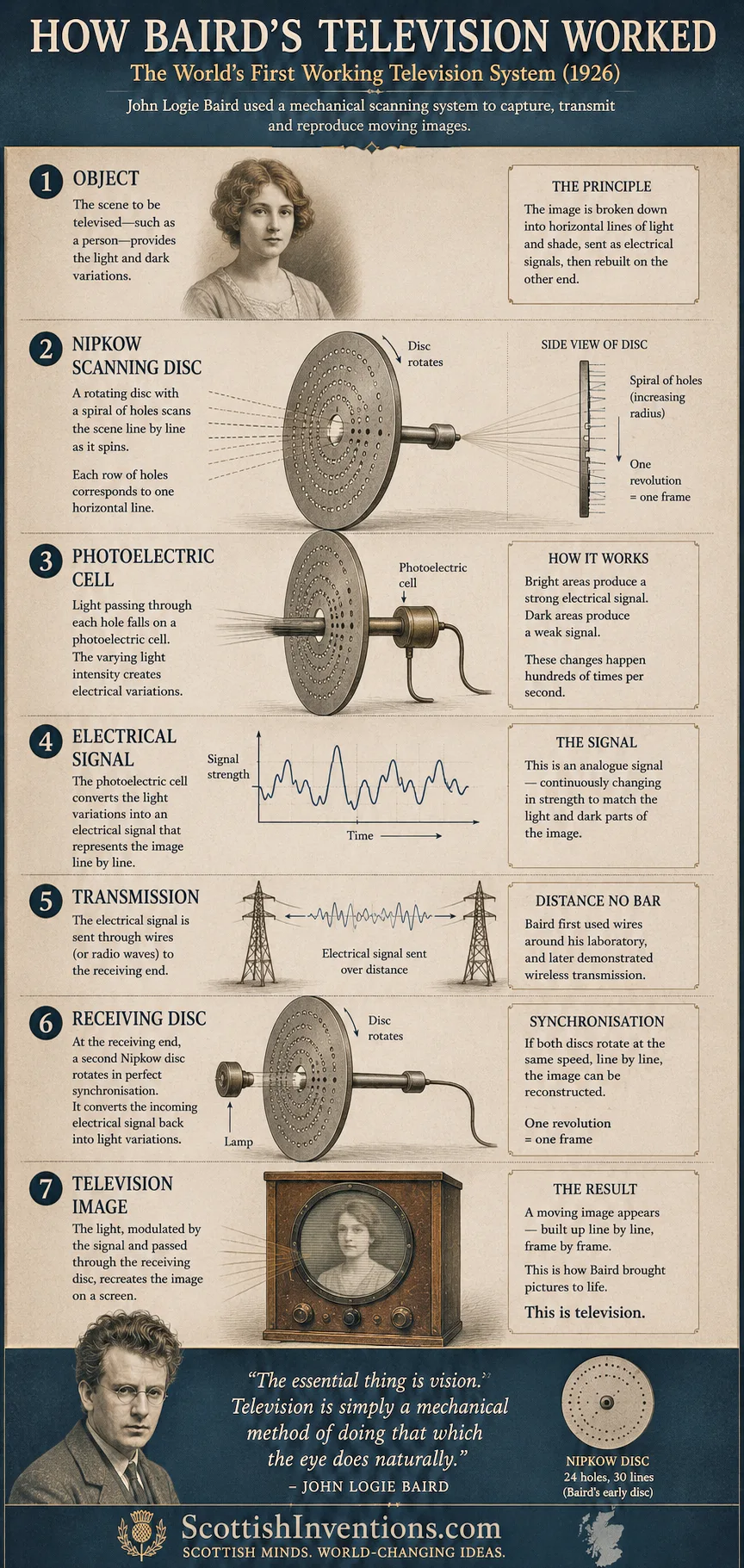
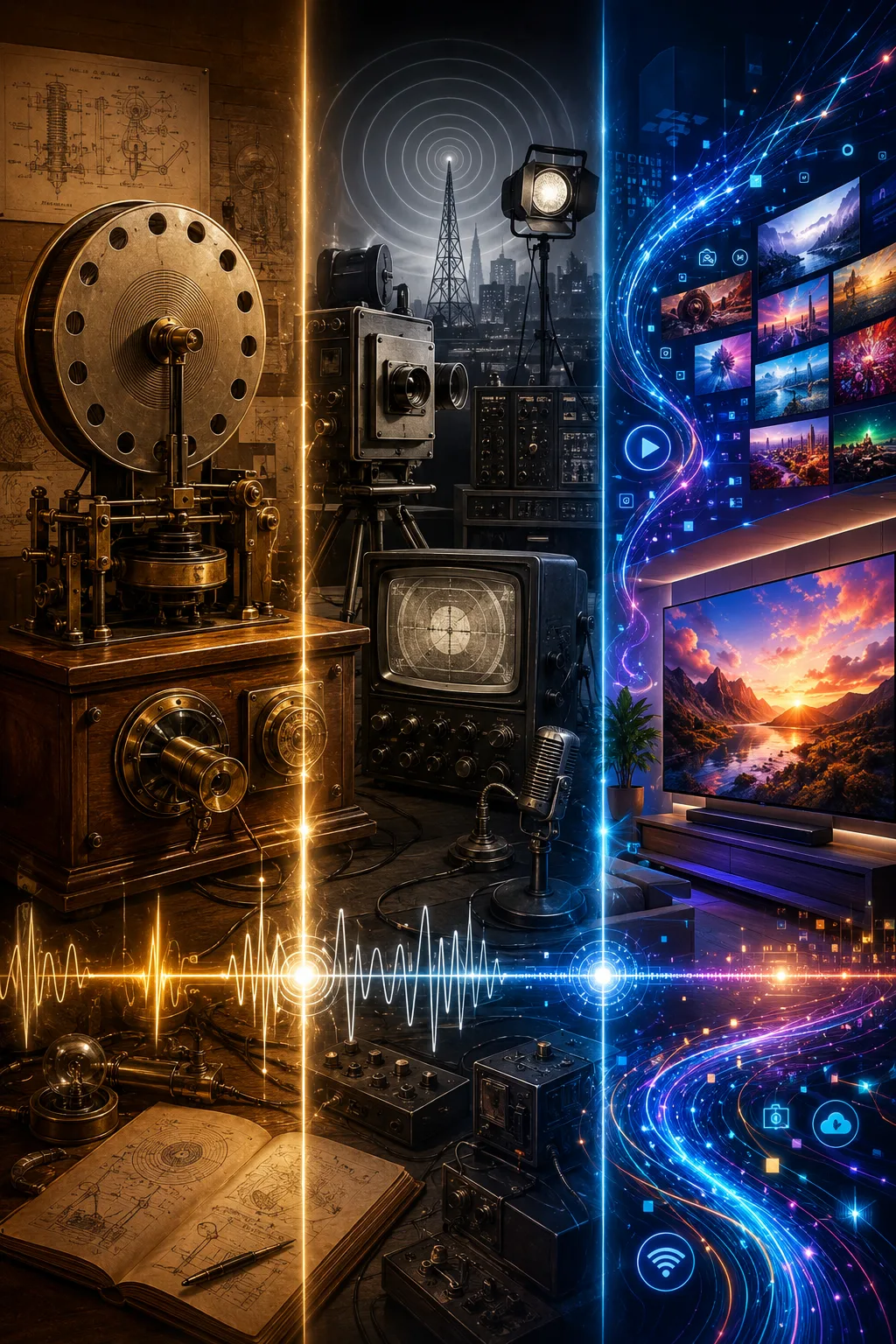
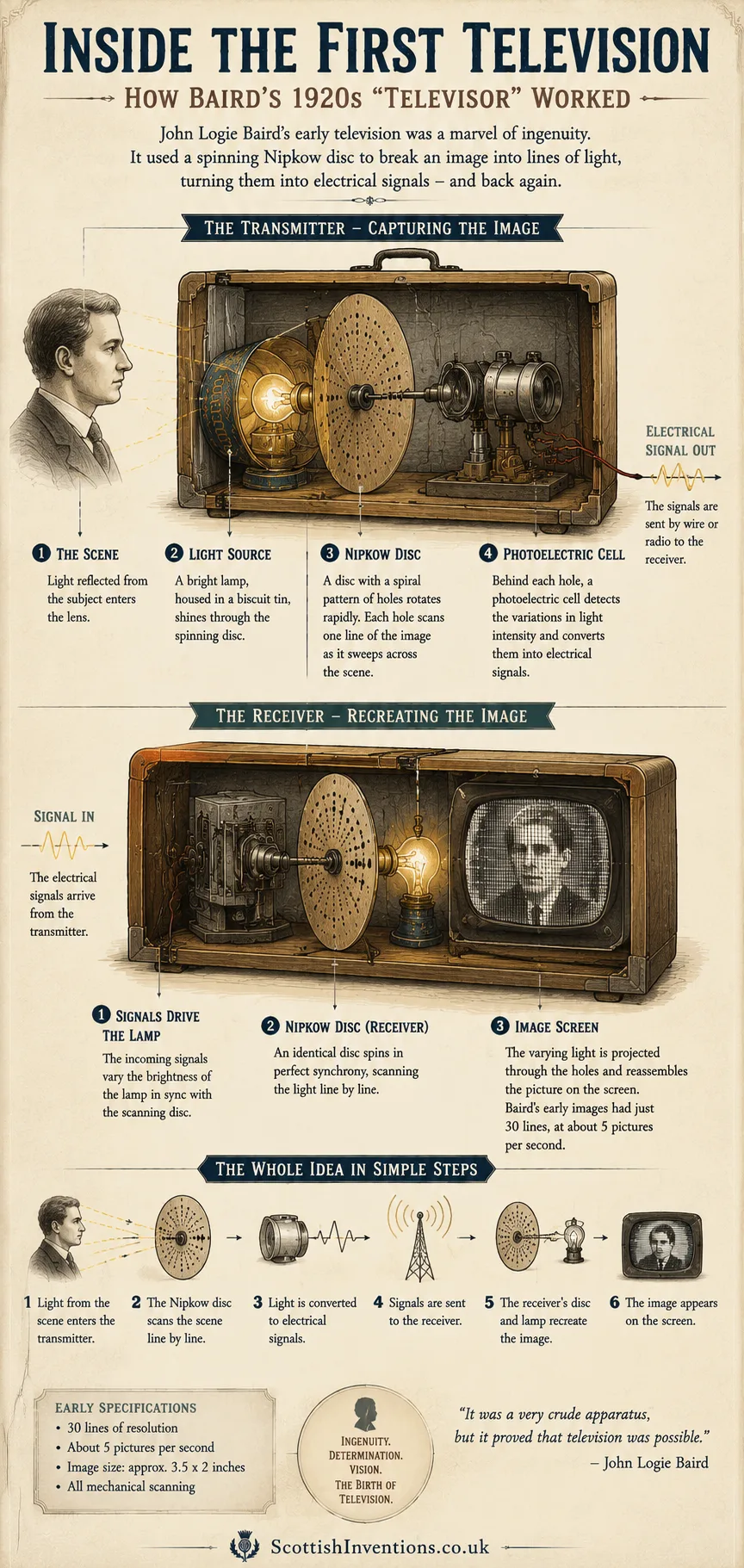
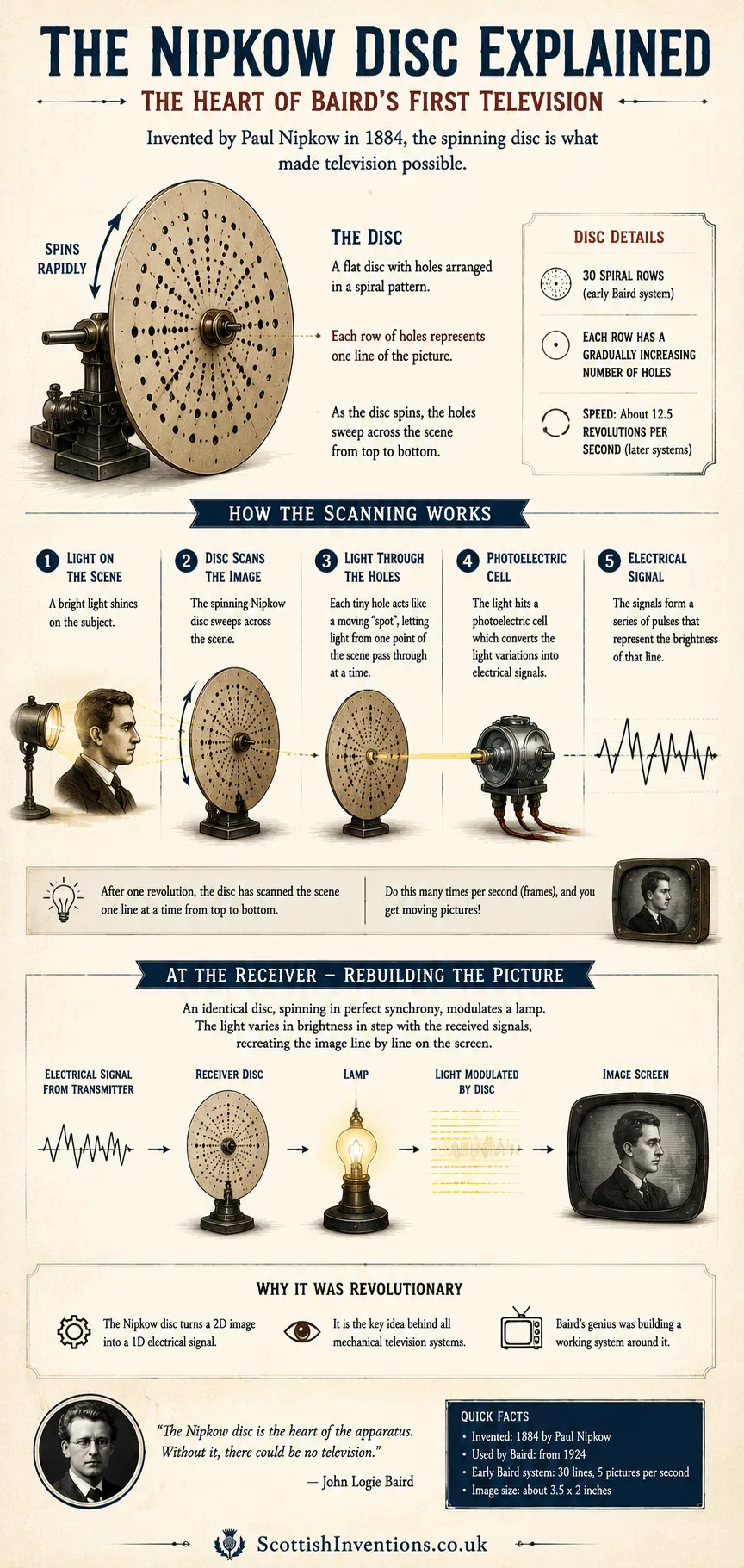
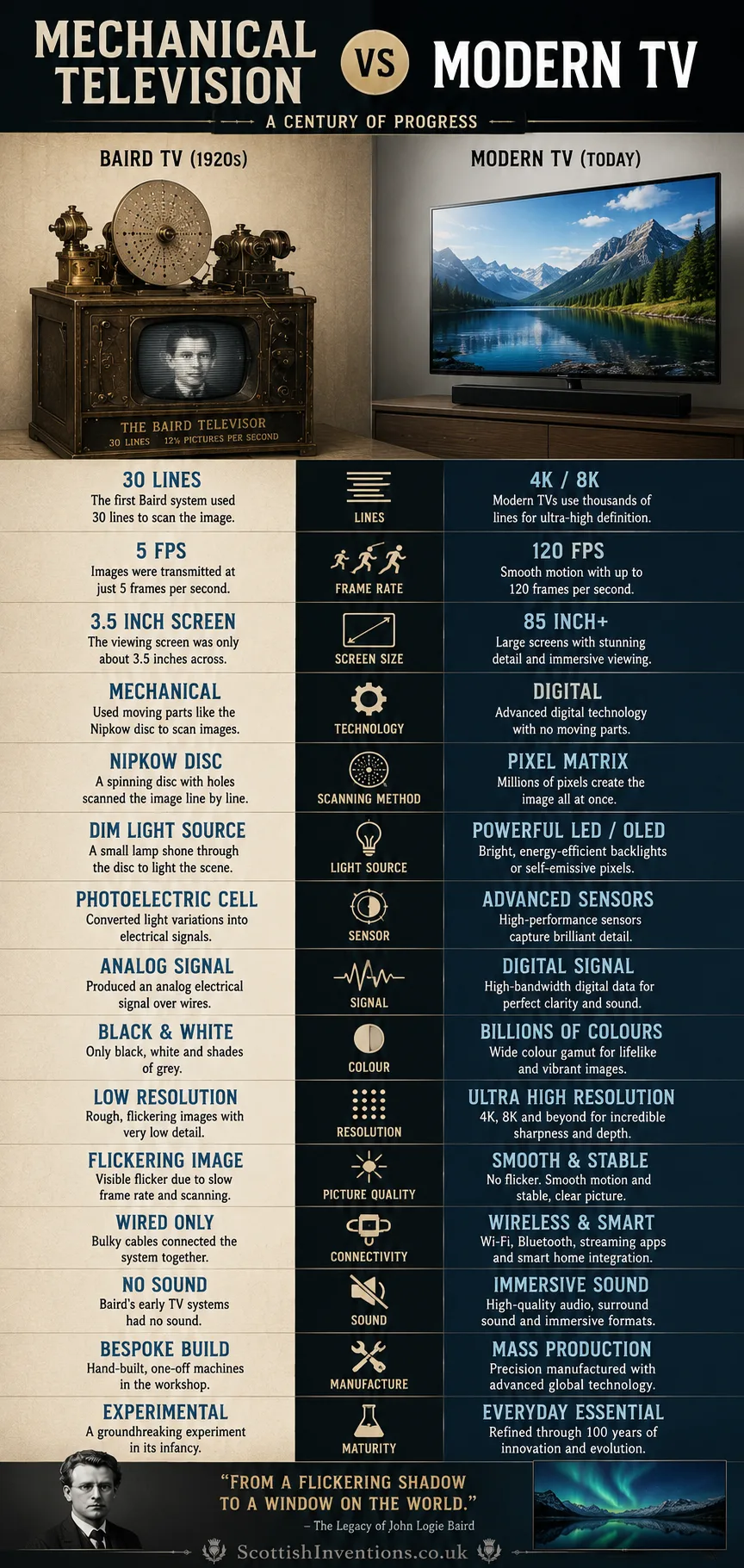
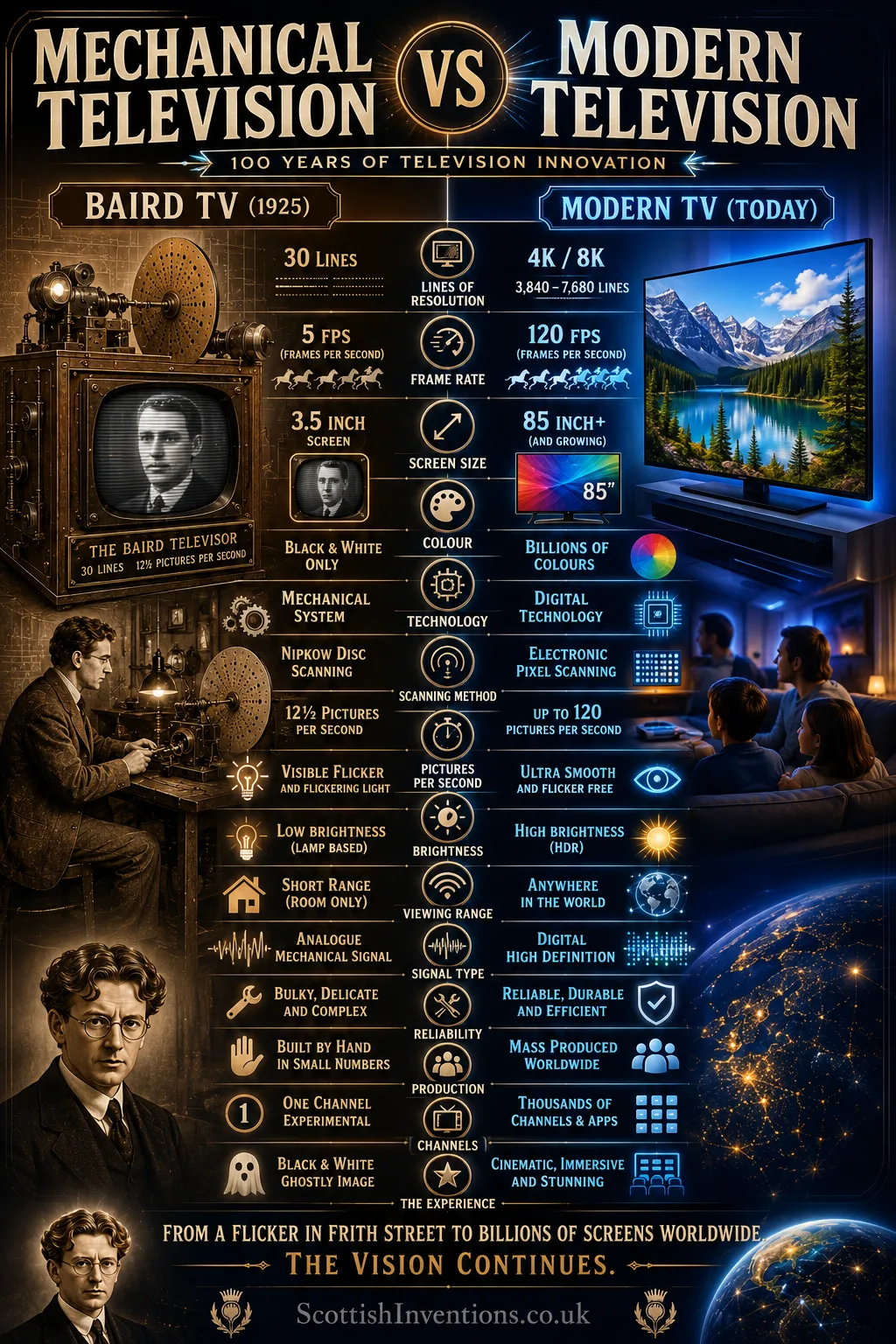
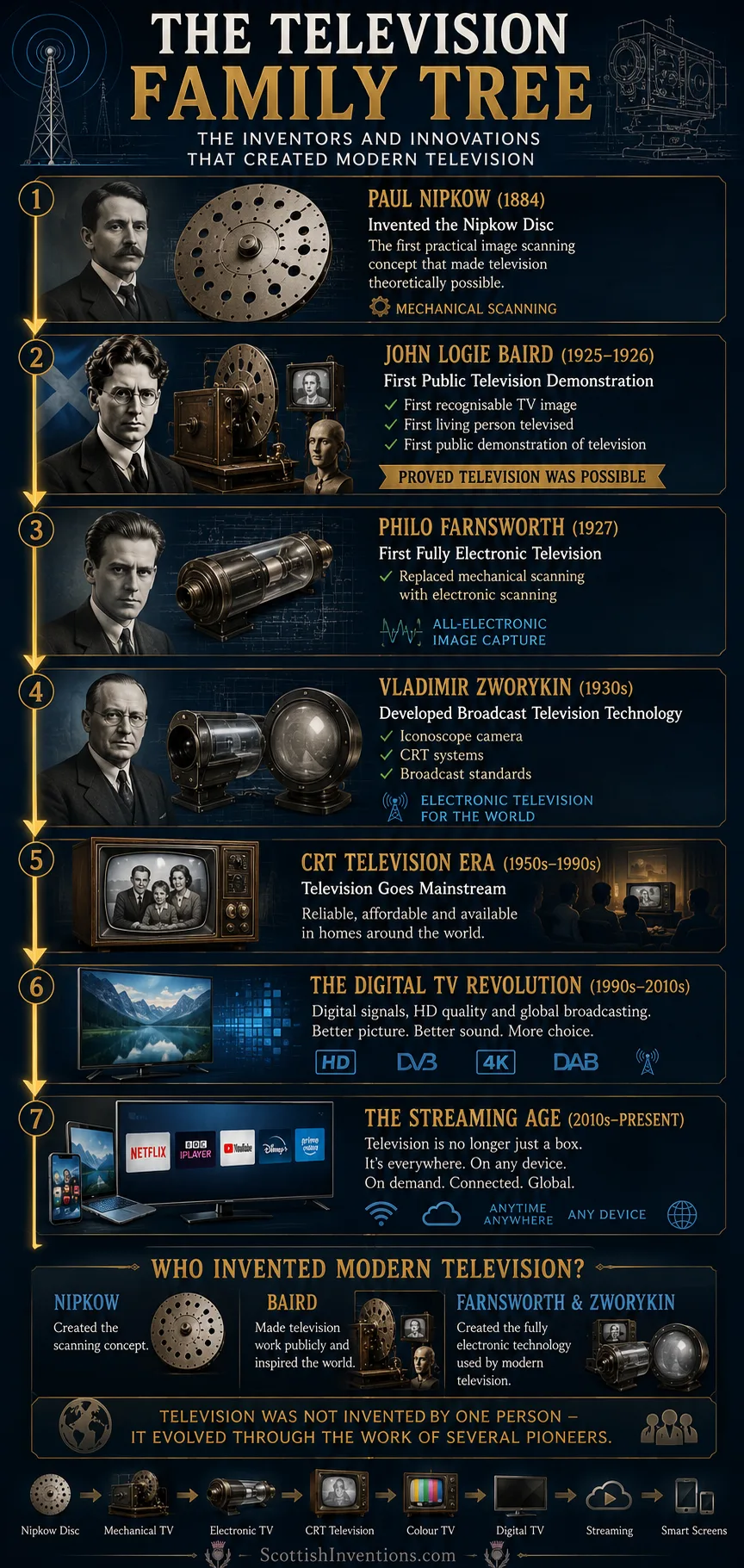
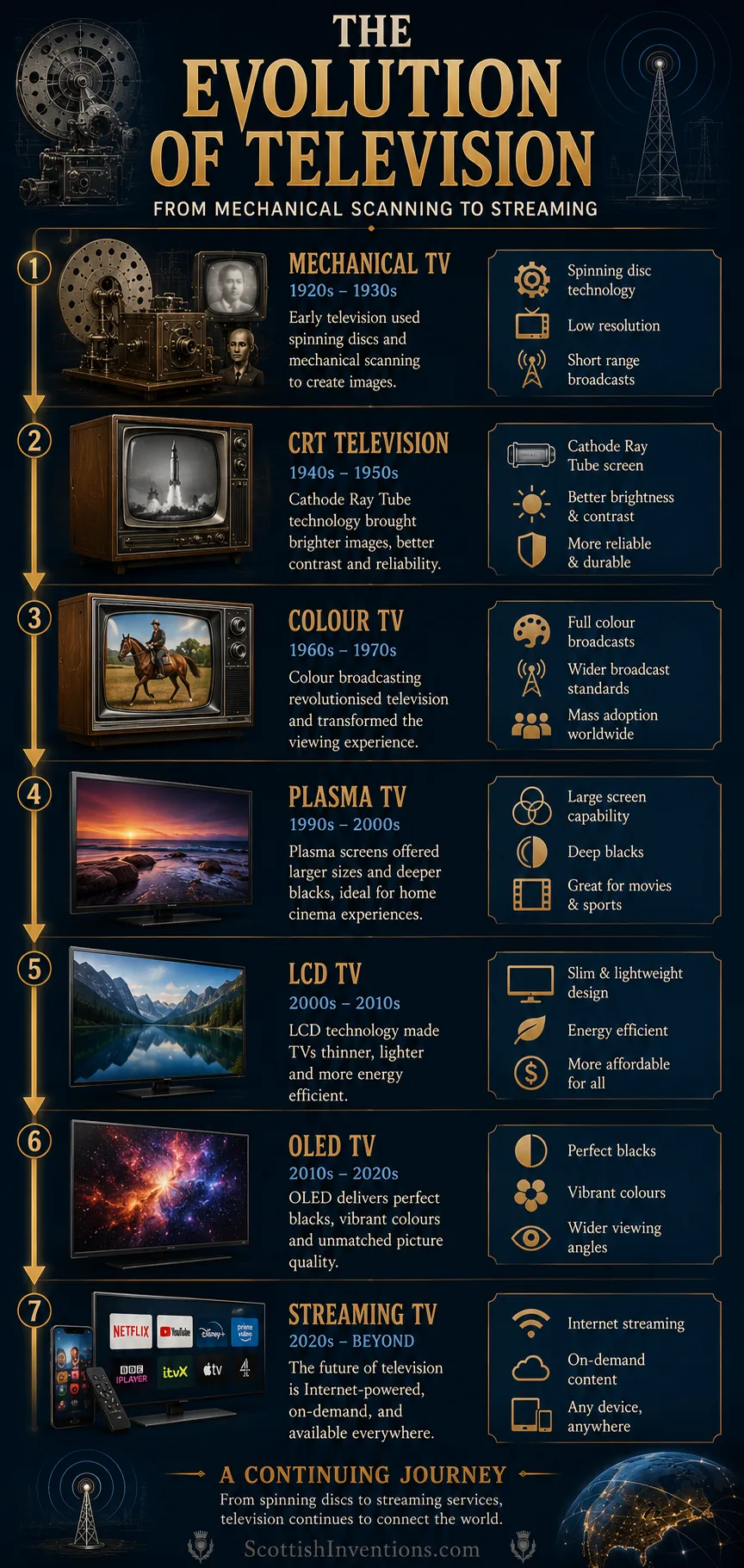
How did it work? Baird's system was mechanical. It relied on the Nipkow disc — a spinning disc, patented by Paul Nipkow in 1884, perforated with a spiral pattern of holes. As the disc rotated, each hole swept across the subject, breaking the image into a sequence of lines that a light-sensitive cell converted into a varying electrical signal. At the receiving end, an identical synchronised disc rotated in front of a modulated lamp, reassembling the picture for the viewer. Baird's early image was just 30 vertical lines, scanned at 5 pictures per second — a tiny, flickering picture roughly 3.5 by 2 inches. He later improved the frame rate to 12.5 pictures per second.
A dazzling run of firsts
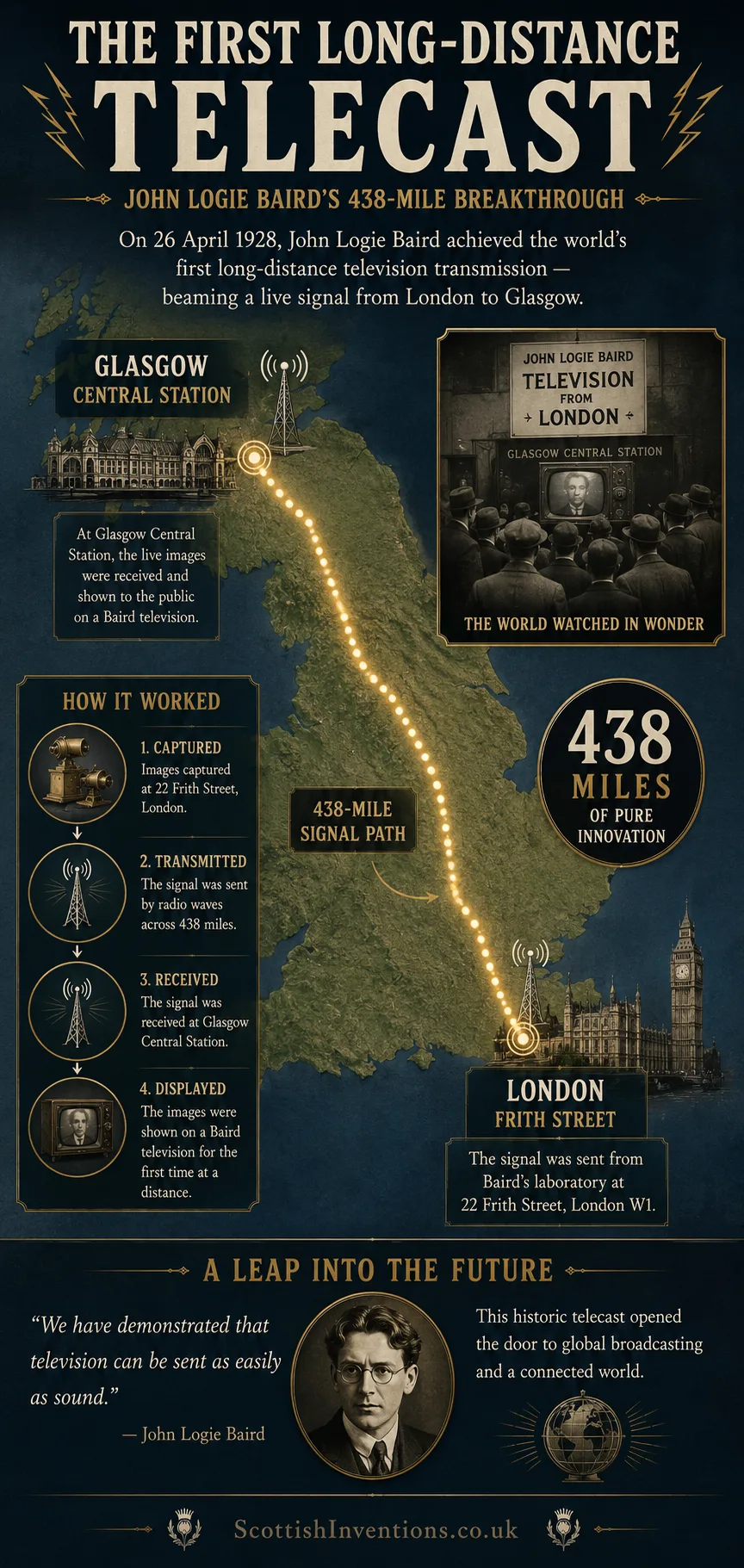
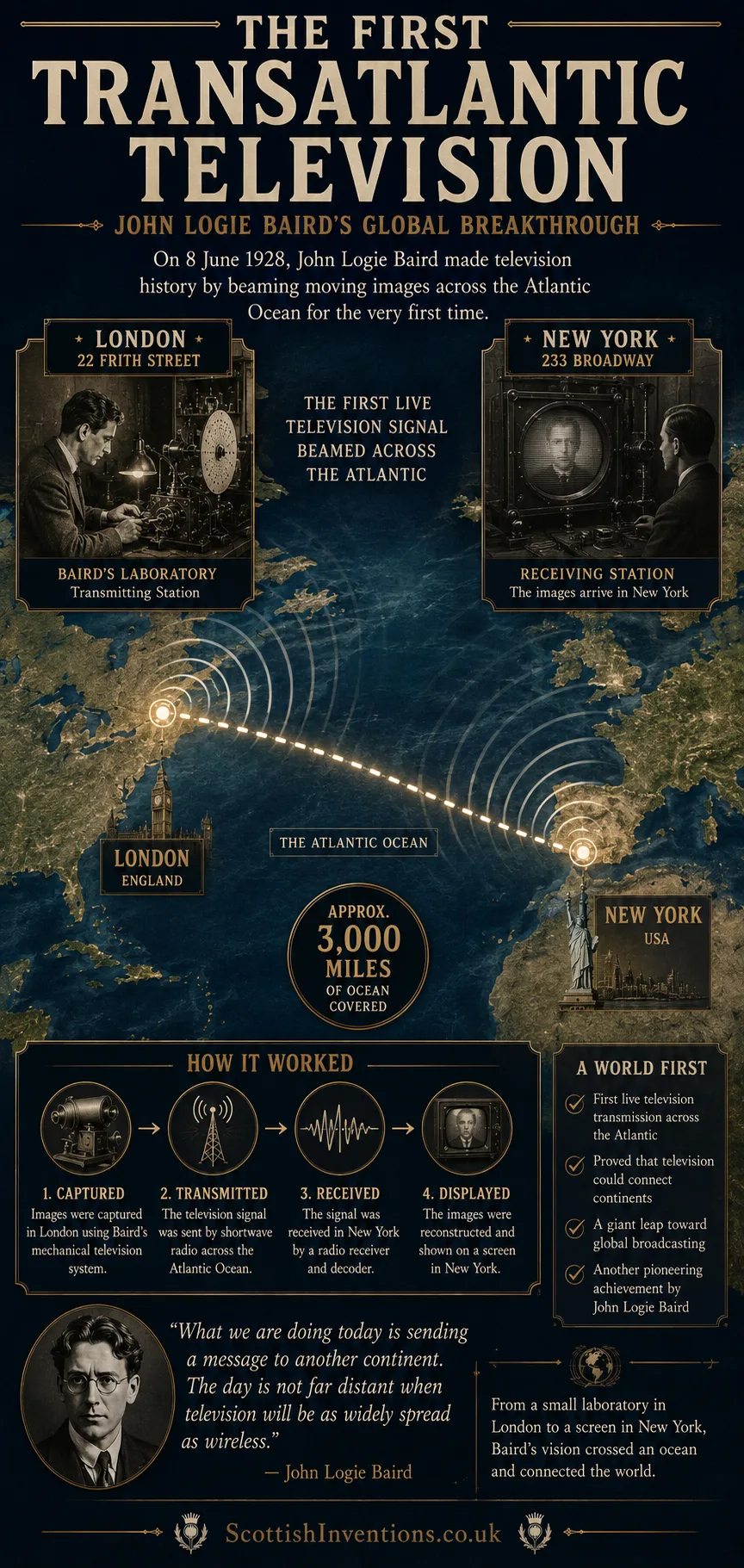
Transatlantic transmission (8 February 1928): Baird transmitted a moving image from London to Hartsdale, New York — the first television signal sent across the Atlantic.
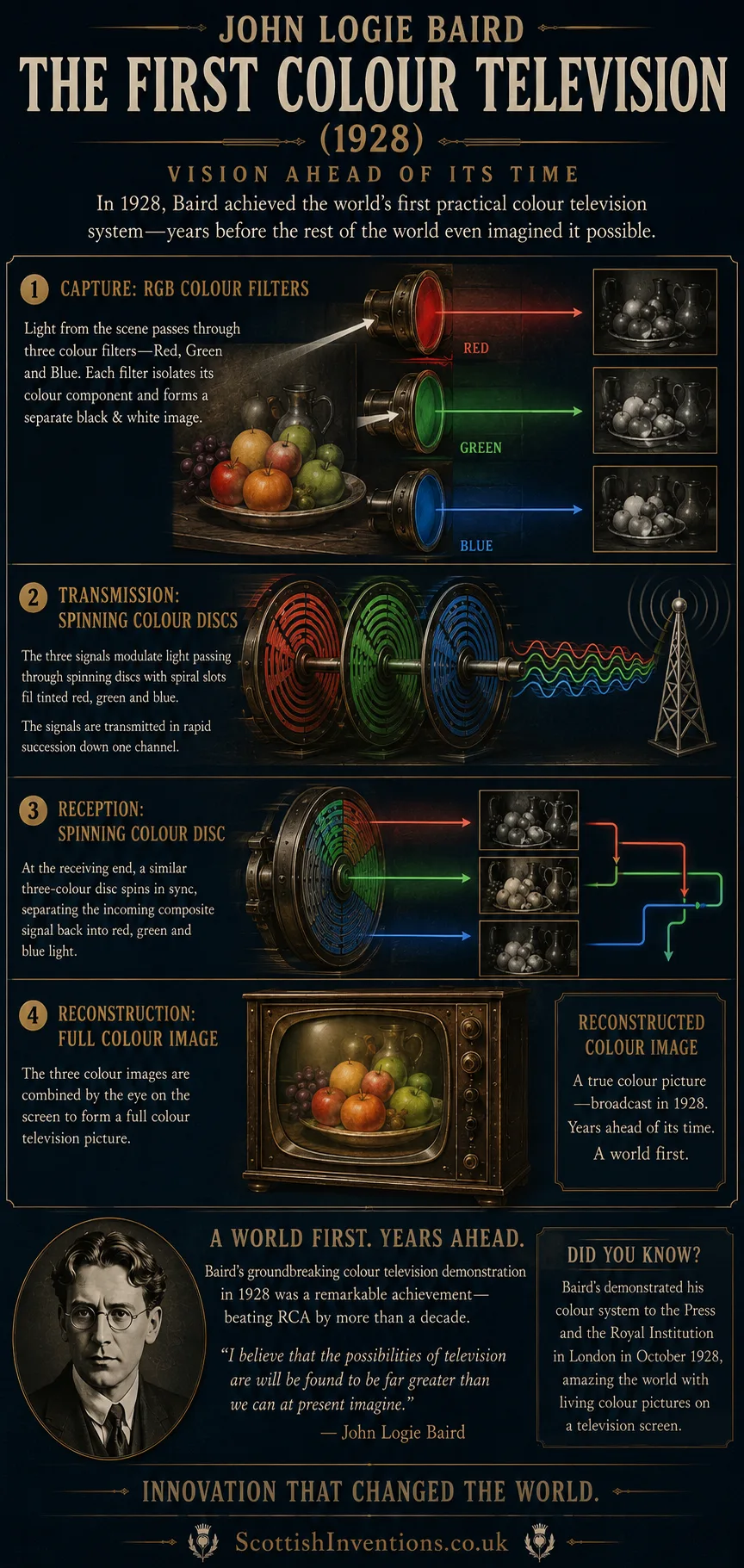
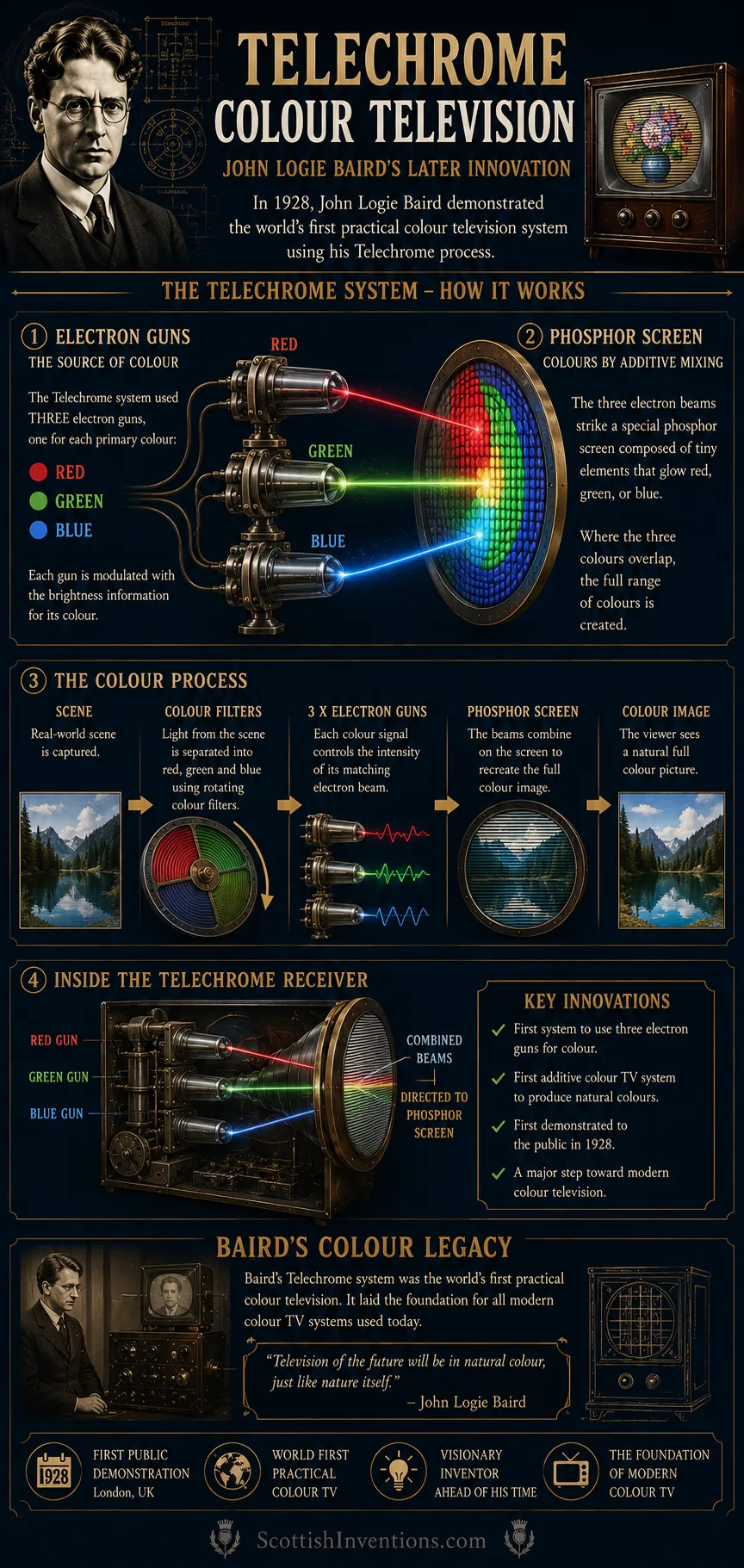
Colour television (3 July 1928): Baird gave the world's first demonstration of colour television, using discs fitted with colour filters over the apertures.
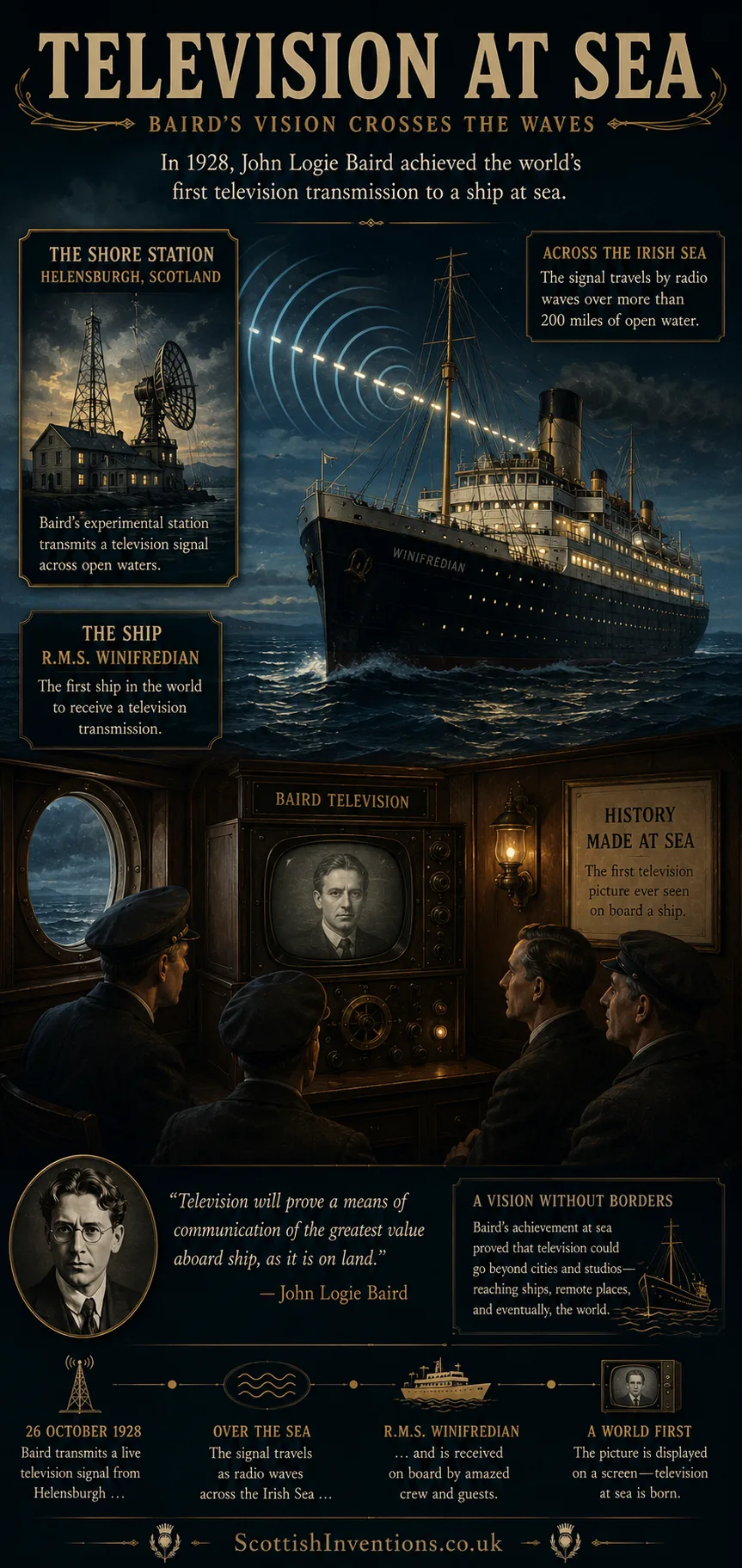
Transmission to a ship (1928): he sent television to a vessel in the mid-Atlantic, another world first.
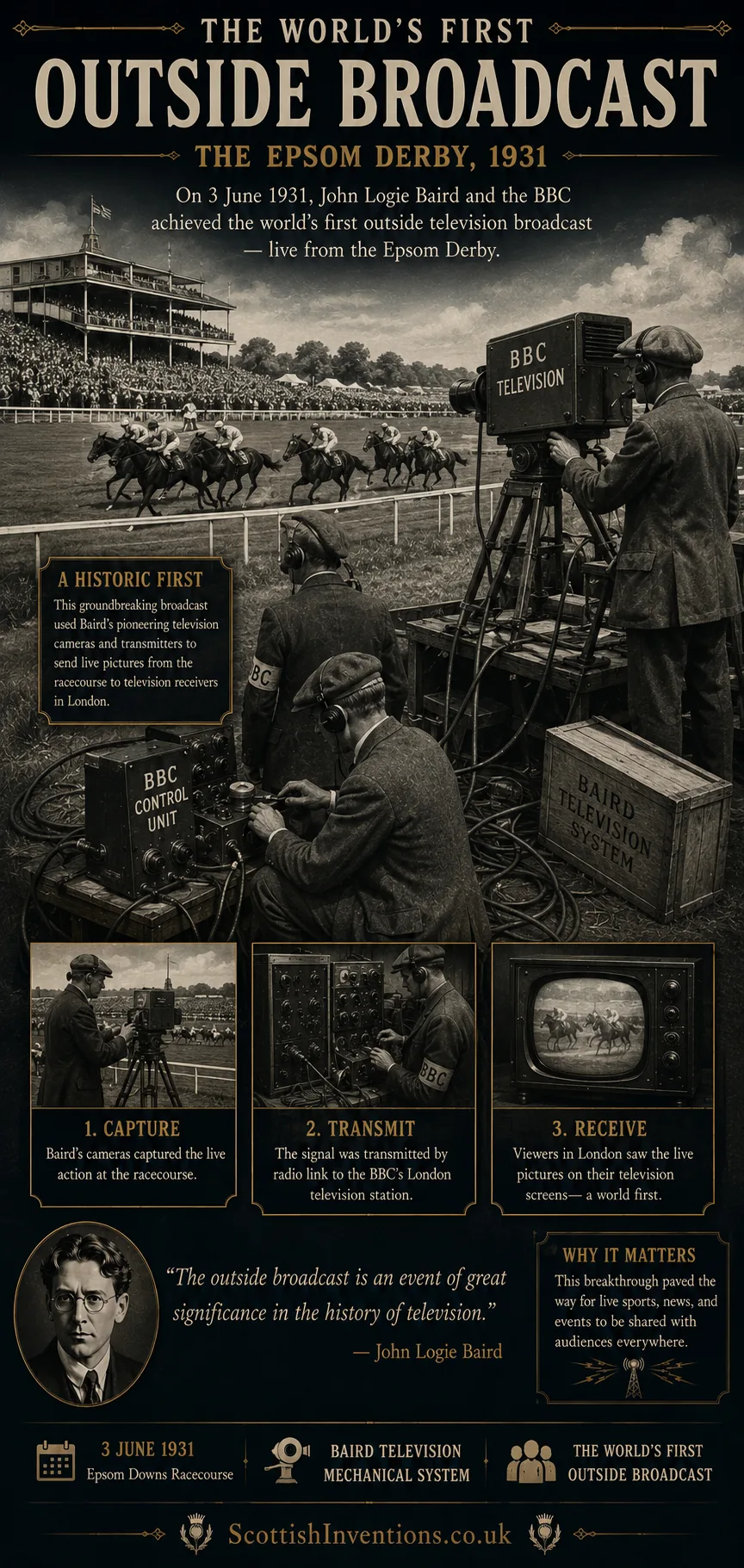
First outside broadcast (3 June 1931): in cooperation with the BBC, Baird's company televised the Epsom Derby live — the world's first outside broadcast. After it Baird noted: 'This marks the entry of television into the outdoor field, and should be the prelude to televising outdoor topical events.' He repeated the feat in 1932, showing the pictures on a large screen at the Metropole Cinema in Victoria.
The BBC began transmitting using Baird's 30-line system from 1929 and, from 1932, ran a regular experimental service — the world's first scheduled television broadcasts.
Beaten by Marconi-EMI at Alexandra Palace
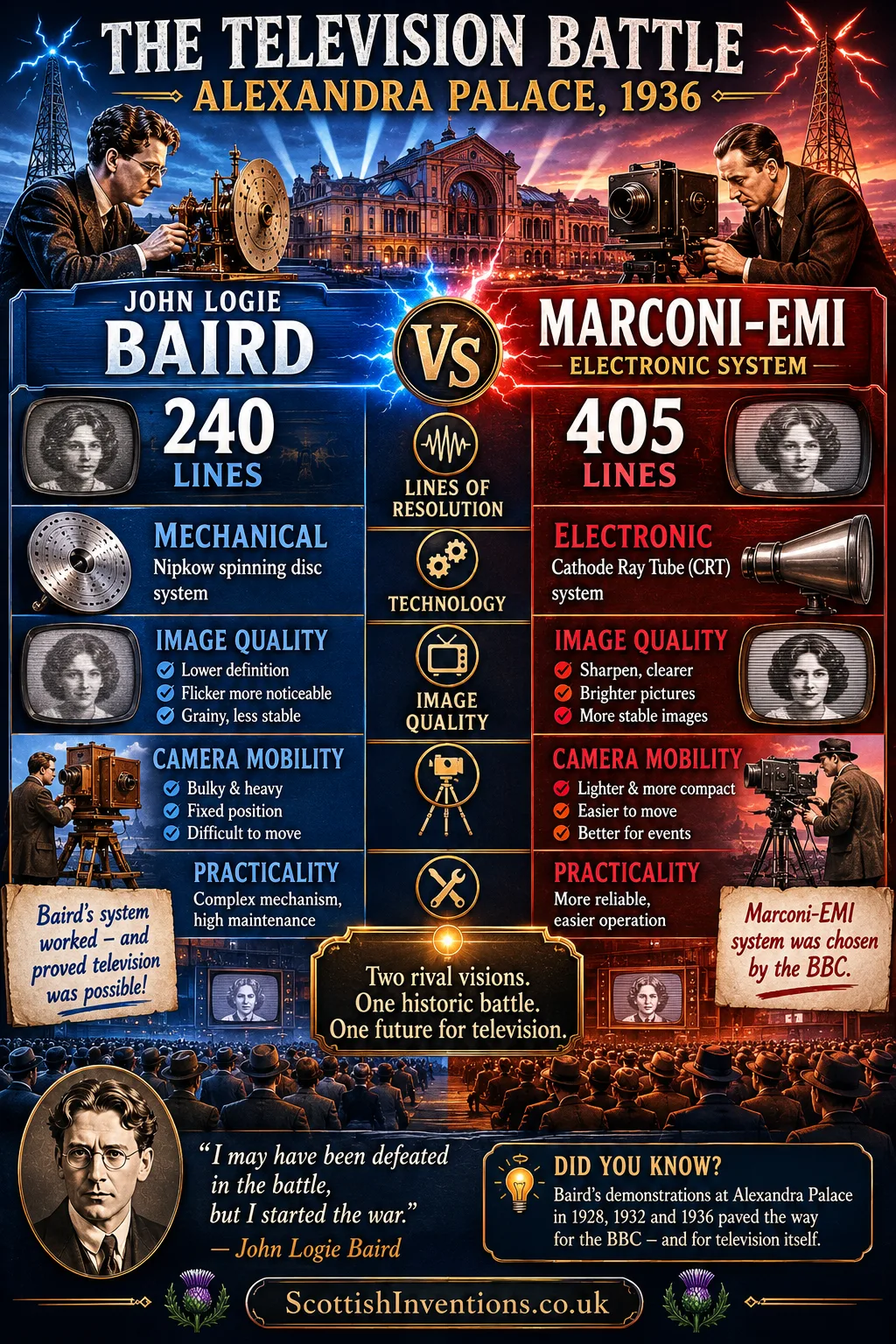
The pinnacle came on 2 November 1936, when the BBC launched the world's first regular, public, high-definition television service from Alexandra Palace in north London. Two rival systems were installed in competing studios: Baird's 240-line system in Studio B and Marconi-EMI's all-electronic 405-line system in Studio A, broadcasting on alternate weeks. Baird's company won the toss of a coin to broadcast first on opening night.
But the contest was effectively decided by technology. Marconi-EMI's system, developed by a team under Isaac Shoenberg, used the fully electronic Emitron camera, whose lightweight, mobile cameras ran rings around Baird's cumbersome equipment — his 'intermediate film' process required film to be shot, developed and scanned almost in real time, complete with tanks, hoses and cables. A disastrous fire destroyed Baird's facilities at the Crystal Palace in late 1936, and in February 1937 the BBC dropped Baird's system in favour of Marconi-EMI's 405-line standard, which served Britain until 1985.
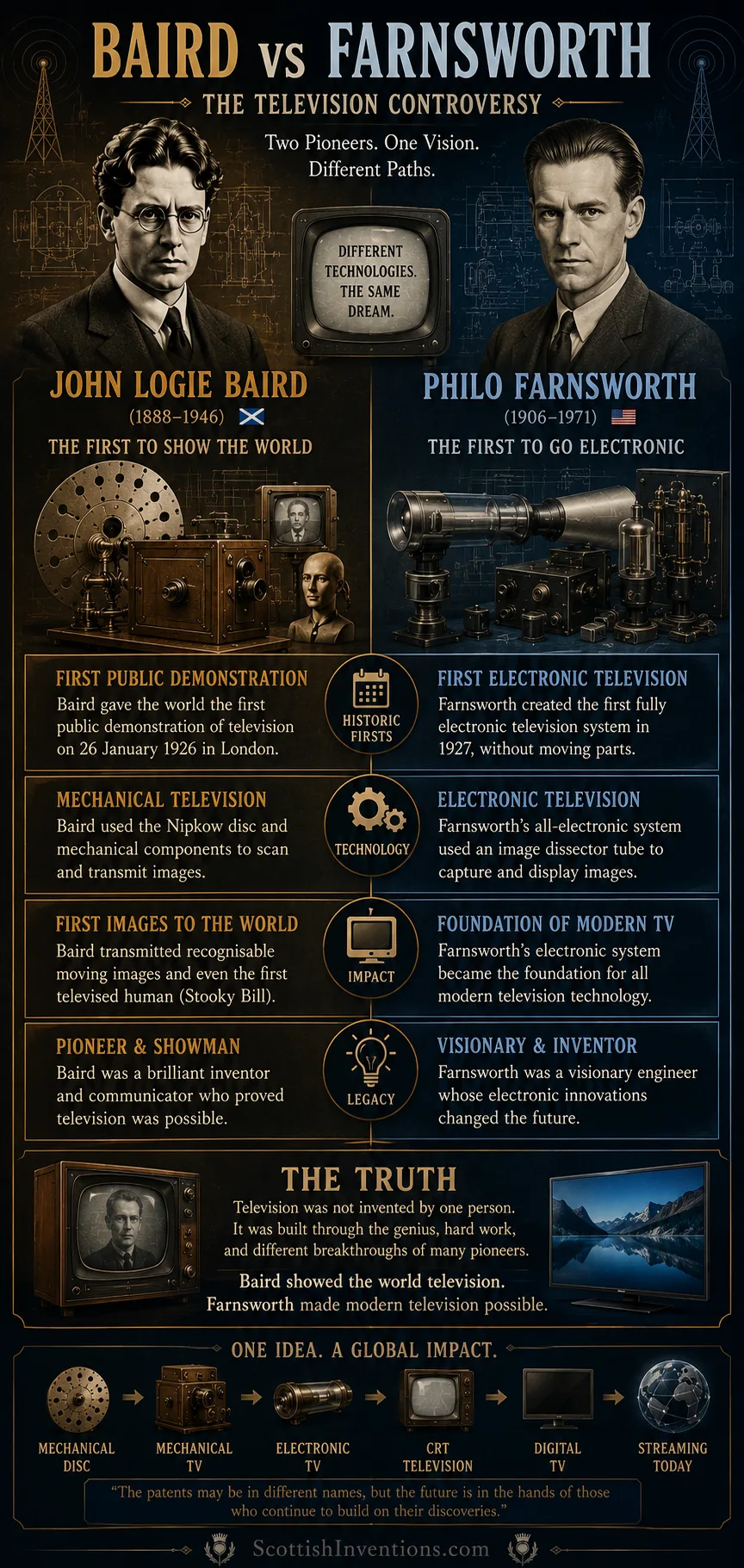
So who invented television? The fairest answer is that television had many parents. Baird was the pioneer who proved — first, and in public — that television was possible, dragging the idea out of theory and into reality and capturing the world's imagination. Farnsworth and Zworykin built the technology we actually still use. Baird's mechanical system was a dead end technologically, but without his demonstrations and his relentless evangelism, it is doubtful the medium would have advanced as fast as it did.
Marriage, family and final years
John Logie Baird married South African concert pianist Margaret Albu in New York on 13 November 1931; she was 19 years his junior. The couple had two children, Diana and Malcolm, and by all accounts the marriage was a happy one, lasting until his death. Baird was famously tone-deaf, once joking that the only tune he could recognise was 'God Save the King' — an irony for a man married to a concert pianist.
His health, fragile all his life, finally failed. He suffered a stroke in February 1946 and died at his home in Bexhill-on-Sea on 14 June 1946, aged 57 — having lived to see the medium he had conjured from a tea chest become a fixture of modern life, and dying only a week after the BBC television service resumed its post-war broadcasts on 7 June 1946. He is buried alongside his parents in Helensburgh Cemetery.
Legacy
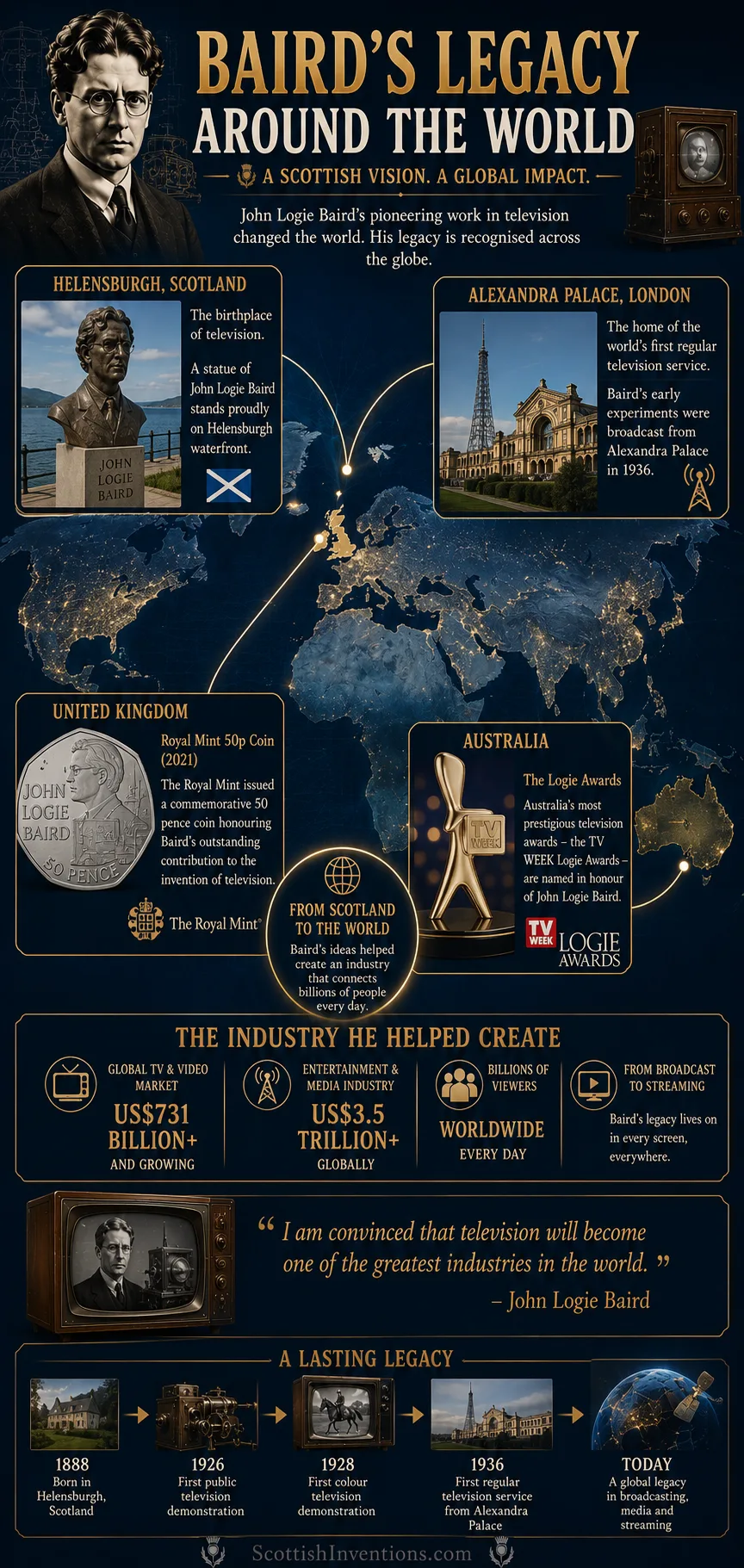
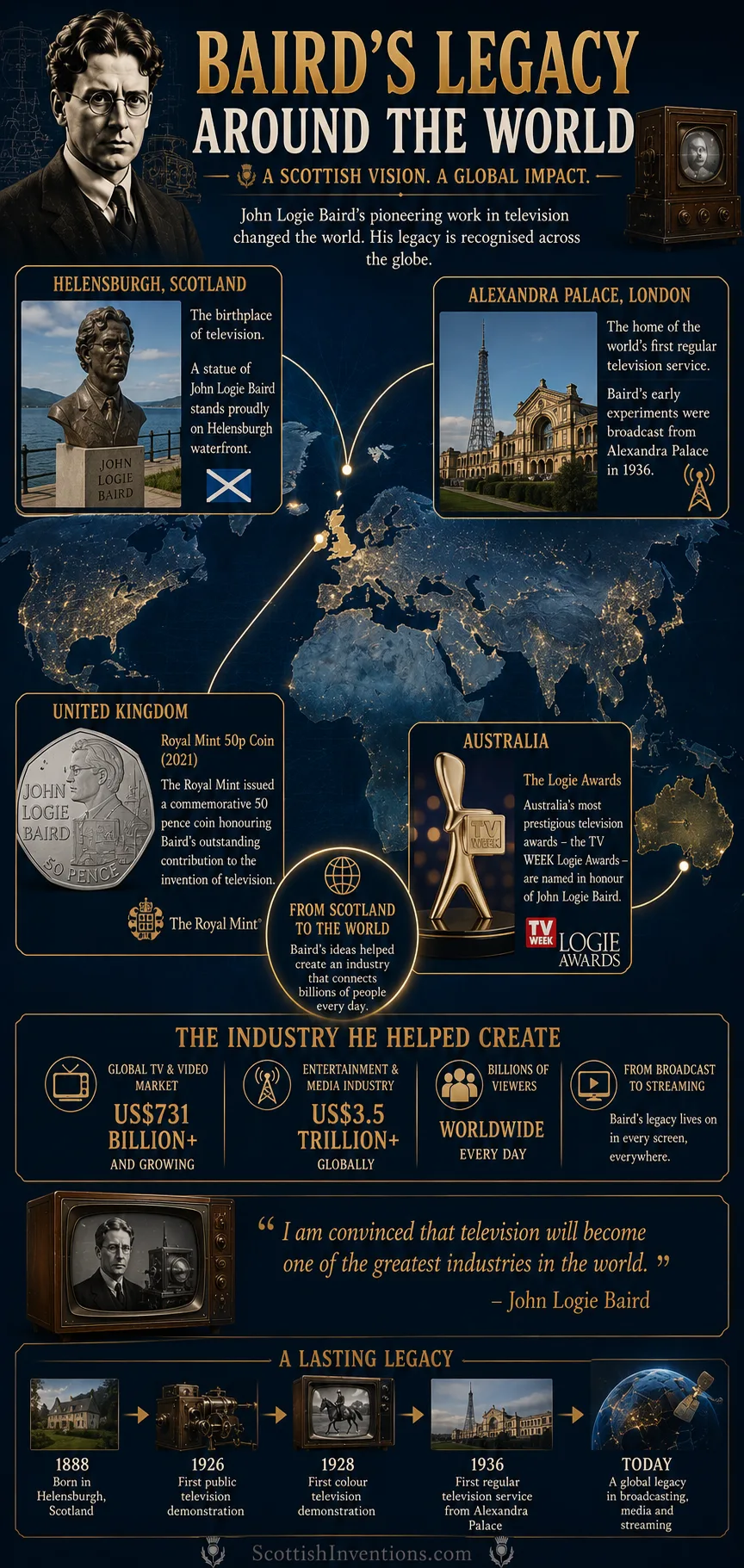
His legacy is everywhere. In his home town of Helensburgh a bronze bust on the West Clyde Street seafront, sculpted by Donald Gilbert, honours the 'native of this town, inventor of television.' Australia's television 'Logie Awards' are named after him. He was ranked No. 44 in the BBC's 2002 '100 Greatest Britons' poll, inducted into the Scottish Engineering Hall of Fame in 2015, and in 2021 the Royal Mint issued a commemorative 50p coin marking the 75th anniversary of his death, hailing him as 'a true British icon and a pioneer of one of the greatest scientific discoveries of the twentieth century.'
The global business he set in motion is colossal: Statista's 2025 outlook projects the worldwide TV & Video market at US$731.24 billion in 2025, rising to US$896.90 billion by 2030, while the broader entertainment-and-media sector is forecast by PwC to reach US$3.5 trillion by 2029.
Gallery
Related Inventions
The BBC
John Reith · 1922
John Reith of Stonehaven invented public service broadcasting and built the BBC.
First Permanent Colour Photograph
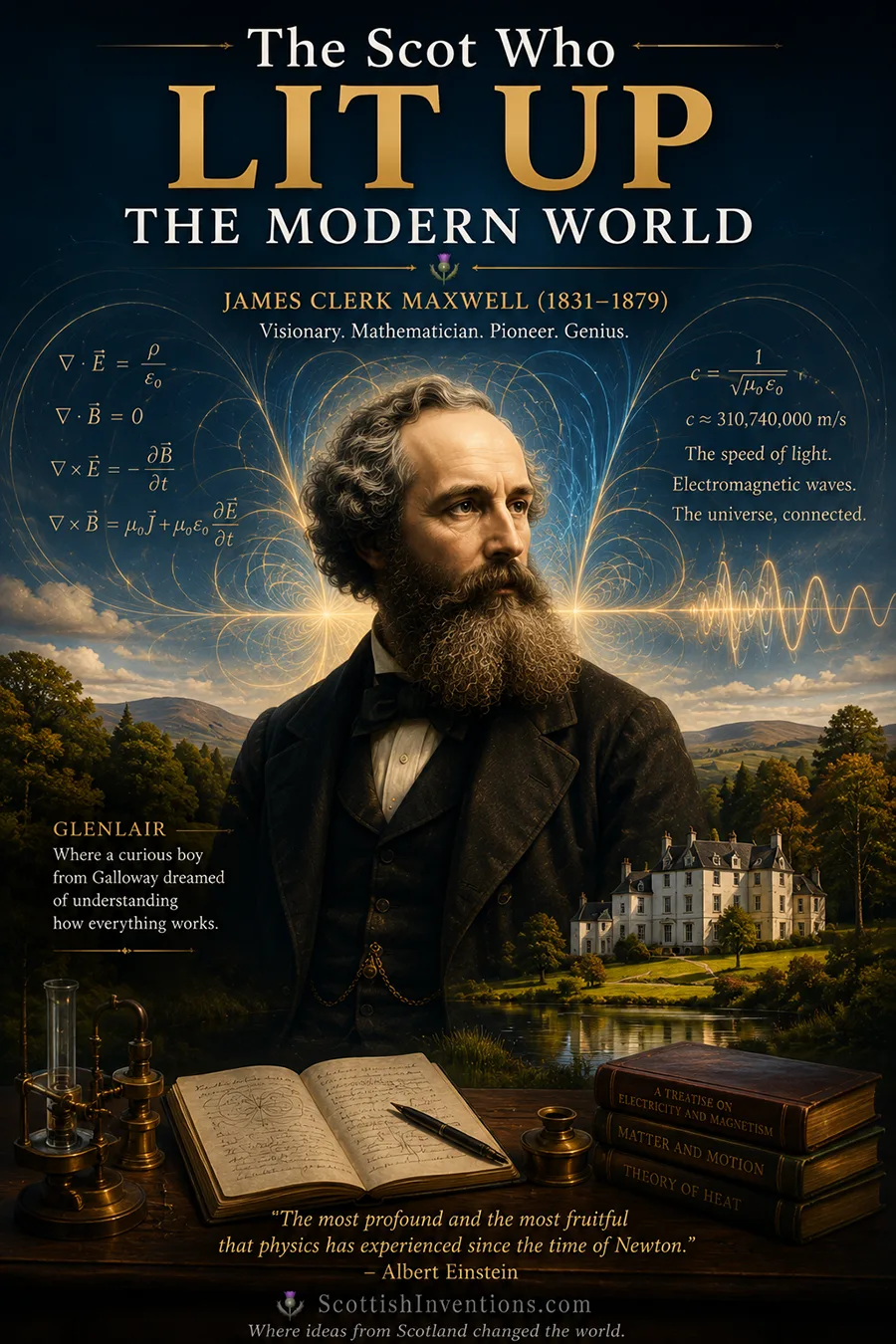
James Clerk Maxwell · 1861
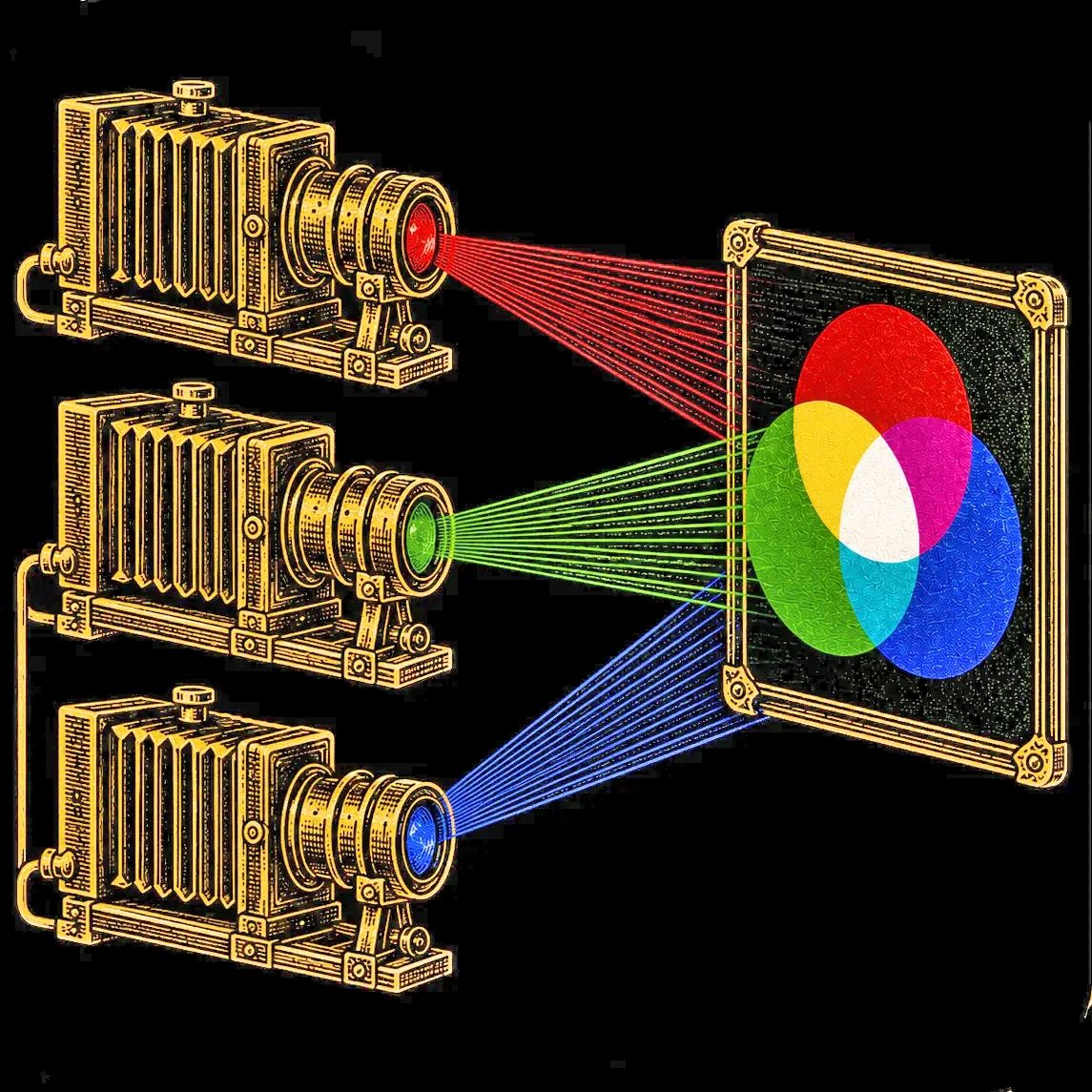
Three-colour-separation photography.
Weekly Scottish Innovation Facts
Delivered to your inbox every Sunday. No spam, just brilliance.